

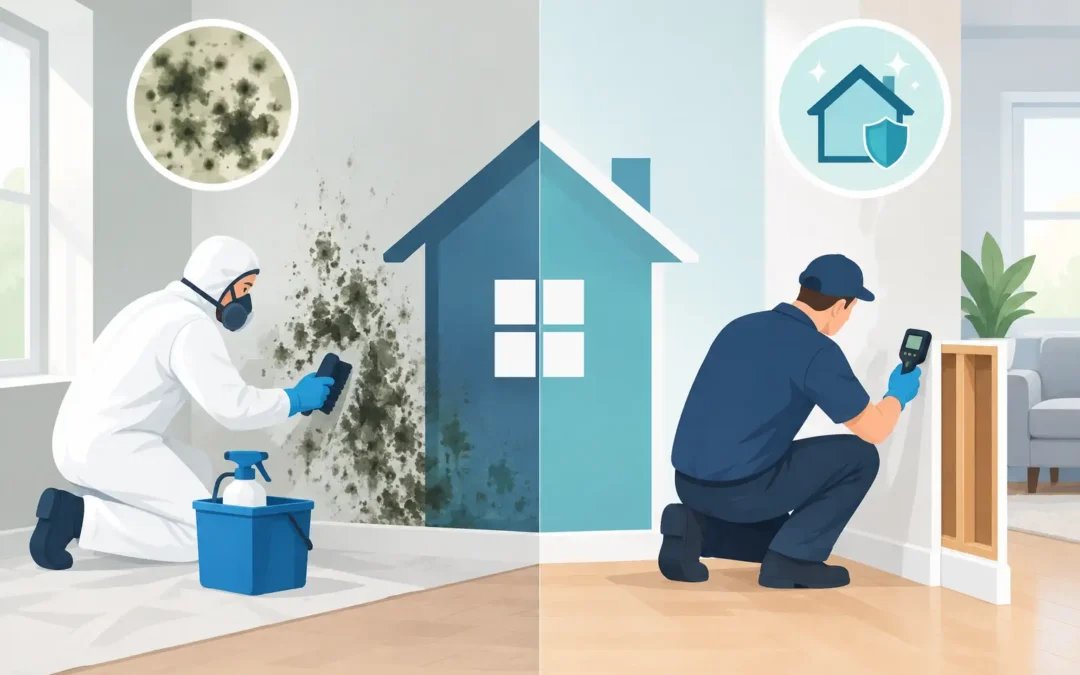
A dark patch on attic sheathing or a musty crawl space can make any homeowner want the mold gone immediately. But mold removal versus remediation is not simply a choice between two names for the same service. One describes taking visible mold away. The other describes correcting the conditions that allowed mold to grow, cleaning affected materials appropriately, and helping prevent the problem from returning.
That difference matters in Southern California homes, where a roof leak, plumbing drip, humid coastal air, poor attic ventilation, or moisture rising from the ground can affect enclosed spaces long before a stain appears indoors. A surface can look clean while damp framing, contaminated insulation, or an unaddressed moisture source continues to threaten indoor air quality and property value.
Mold Removal Versus Remediation: The Core Difference
Mold removal usually refers to the physical cleaning or removal of visible mold growth from a surface. Depending on the material and the extent of damage, that may involve cleaning solid wood, removing heavily affected insulation, or disposing of porous materials that cannot be reliably cleaned. It is one part of a proper response, but it is rarely the whole job.
Mold remediation is the larger process. It starts with identifying where moisture is coming from and how far contamination has spread. The work may include containment, careful removal of affected materials, detailed cleaning, treatment of suitable structural surfaces, drying, and repairs that reduce the chance of recurrence.
Think of it this way: removing mold is addressing what you can see. Remediation is addressing what you can see, what may be affected nearby, and why it happened in the first place. If a contractor cleans the stain but leaves an active roof leak or damp crawl space soil, the home still has the conditions mold needs to return.
Why Attics and Crawl Spaces Need More Than Surface Cleaning
Attics and crawl spaces are particularly vulnerable because they are often out of sight, difficult to access, and affected by several systems at once. A bathroom fan venting into the attic, disconnected ductwork, inadequate ventilation, roof intrusion, or condensation on cold surfaces can introduce moisture above the ceiling. Below the home, exposed soil, plumbing leaks, poor drainage, and outside humidity can leave wood framing and insulation damp for extended periods.
Mold can also be connected to rodent activity. Rodents damage insulation, leave droppings and urine, and create pathways that affect air movement between the attic, crawl space, and living areas. In those cases, cleaning mold without removing contaminated insulation or sealing entry points may leave multiple indoor-air-quality concerns unresolved.
A professional remediation plan considers these connections. It may include insulation removal and replacement, air sealing, vapor barriers, crawl space encapsulation, waterproofing, dehumidification, duct repairs, ventilation improvements, or rodent proofing. Not every project needs every service. The right scope depends on the source of moisture, the materials affected, and the home’s construction.
Porous Materials Often Require a Different Approach
Some materials can be cleaned when mold growth is limited and the material remains structurally sound. Framing lumber, for example, may be cleaned and treated after the moisture issue is corrected. Porous materials are more complicated. Fiberglass insulation, cellulose insulation, drywall, carpet, and some stored belongings can retain mold, moisture, odors, or contamination within their fibers and layers.
In an attic, moldy or rodent-contaminated insulation is often not a candidate for simple surface cleaning. Removing it allows the underlying framing, ductwork, and penetrations to be inspected and cleaned properly. It also creates an opportunity to air seal gaps that waste energy and allow attic air, dust, and contaminants to move toward living spaces before new insulation is installed.
What a Complete Mold Remediation Process Looks Like
A reliable remediation project begins with inspection, not with a spray bottle. The goal is to identify the moisture source, locate visible damage, evaluate affected materials, and look for conditions that can support hidden growth. This is especially valuable when homeowners notice persistent musty odors, recurring ceiling stains, elevated humidity, or insulation that appears compressed, damp, or contaminated.
Once the scope is understood, the work area may need containment to limit the movement of dust and debris during cleaning or material removal. A qualified contractor will use appropriate protective measures and work practices for the area being treated. The specific approach varies with the location, amount of affected material, access conditions, and whether occupants have health sensitivities.
After affected materials are removed or cleaned, drying is essential. Mold control is moisture control. A remediation project that skips drying or repairs only the cosmetic damage is incomplete. The underlying issue could be a roof repair need, a leaking pipe, ground moisture in a crawl space, condensation caused by air leaks, or poor ventilation. The correction should match the cause.
The final stage is restoration and prevention. That may mean replacing insulation to restore thermal performance, installing a vapor barrier over crawl space soil, sealing penetrations, correcting exhaust ventilation, or repairing damaged ductwork. These steps protect more than the treated area. They can improve comfort, reduce unnecessary heating and cooling loss, and help keep the home healthier over time.
When Is Mold Removal Enough?
Limited surface cleaning may be appropriate when mold is confined to a small, nonporous or easily cleanable area, the material has not been damaged, and the moisture event was brief and fully resolved. For example, minor growth on a hard surface after a one-time spill may not require a large remediation project.
Even then, homeowners should be cautious about assuming the visible area tells the whole story. Mold behind insulation, beneath flooring, inside wall cavities, or on the back side of drywall cannot be evaluated by appearance alone. In attics and crawl spaces, conditions often extend beyond the first area you notice because air and moisture travel through connected cavities.
Be especially careful if growth keeps returning, there is a strong odor, building materials are soft or deteriorated, insulation is damp, or water has been present for more than a short period. Those signs point toward a broader moisture and contamination issue rather than a simple cleaning task.
Common Shortcuts That Leave Homeowners Exposed
Painting over stains, applying fragrance, or spraying a surface without correcting moisture can create a temporary appearance of improvement. It does not dry wet wood, remove contaminated insulation, fix a plumbing leak, or stop humid air from entering the structure.
Another common shortcut is replacing insulation before the area has been cleaned and dried. New insulation installed over unresolved mold or moisture can conceal the condition and make a later inspection more difficult. It can also lose performance if it becomes damp or compressed.
Homeowners should also be wary of a one-size-fits-all recommendation. A small area of growth on accessible framing has different needs than a crawl space with wet soil, damaged vapor barriers, and widespread insulation contamination. A dependable scope explains the cause, the affected materials, the proposed corrective work, and how the home will be protected afterward.
Choosing a Contractor for Mold Work
Because mold concerns can involve moisture, building materials, insulation, ventilation, and indoor air, homeowners benefit from a contractor who can see the full system. Ask whether the inspection includes the likely water source and adjacent materials, not just visible staining. Ask how affected insulation or debris will be handled, what drying or moisture-control measures are recommended, and whether the proposed repairs address recurrence.
Credentials and accountability matter as well. For attic and crawl space projects, use a properly licensed and insured contractor with experience in confined areas, contaminated insulation, ventilation, and moisture management. Clear documentation, a defined scope of work, and warranty-backed workmanship can provide meaningful protection when work affects the home’s envelope and indoor environment.
For homes in Los Angeles, Orange, Ventura, and Riverside counties, local conditions can influence the solution. Coastal humidity, seasonal storms, older construction, hot attic temperatures, and slab or crawl space moisture can each play a role. The best remedy is not the most aggressive one. It is the one that solves the actual source of the problem and restores the affected area correctly.
If you see staining, smell persistent mustiness, or suspect moisture in your attic or crawl space, treat it as a reason to inspect the home’s conditions, not just its surfaces. A careful evaluation can turn an unsettling discovery into a clear plan for cleaner air, protected insulation, and a home that stays dry where it matters most.