
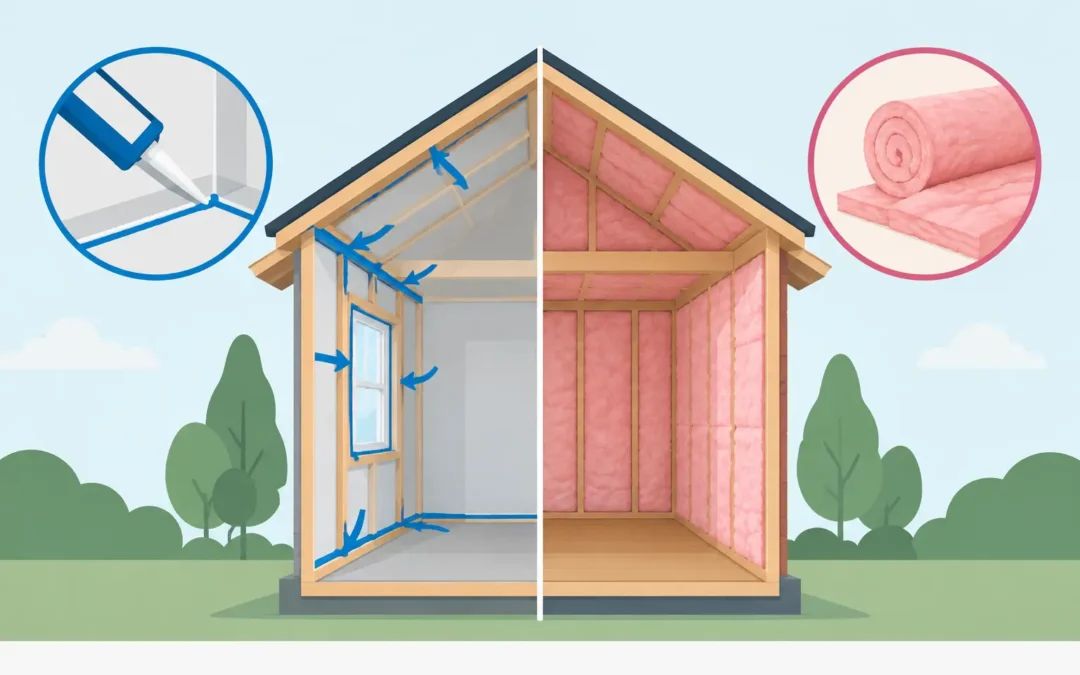
A hot second-floor bedroom, dusty rooms, and high summer cooling bills often point to the same question: air sealing versus insulation – which one will actually solve the problem? For most homes, they are not competing upgrades. They perform different jobs, and the order of work matters. Insulation slows heat transfer. Air sealing stops uncontrolled air movement that can carry heat, dust, moisture, odors, and outdoor pollutants into the home.
In Southern California, attics and crawl spaces can hide the real cause of comfort and air-quality problems. Adding insulation over gaps, rodent contamination, damaged ducts, or moisture issues may cover up a problem without correcting it. A proper home-performance approach begins with identifying what is moving through the building and why.
Air Sealing Versus Insulation: The Core Difference
Air sealing closes unintended openings in the home’s exterior boundary, also called the building envelope. In an attic, these openings may occur around plumbing pipes, electrical wiring, recessed lights, bathroom fan housings, attic hatches, framing joints, and openings around ducts. In a crawl space, common leakage points include utility penetrations, gaps at framing, and openings between the crawl space and living areas.
Insulation is the material that resists the movement of heat. Fiberglass batts, blown-in fiberglass, cellulose, rigid foam, and other approved materials help reduce the amount of outdoor heat entering the home and conditioned air leaving it. Its effectiveness is measured by R-value, but a high R-value alone does not guarantee a comfortable or efficient house.
Think of a winter jacket with the zipper open. The jacket still has insulation, but cold air moves through the opening. A home works the same way. Air leaks can bypass insulation, making rooms harder to heat or cool and allowing dirty attic or crawl space air to enter the living space.
Why Air Sealing Usually Comes First
If insulation is installed before accessible leaks are sealed, much of that new material may need to be moved later so the gaps can be reached. More importantly, leaks can reduce the practical benefit of the insulation from day one.
Warm attic air is a familiar issue in Los Angeles, Orange, Ventura, and Riverside County homes. During hot weather, attic heat can push downward through ceilings. Insulation helps slow that heat. But air leaks around ceiling penetrations can also allow hot, dusty attic air to enter conditioned rooms, especially when the home is under pressure from HVAC operation, exhaust fans, or temperature differences.
The same principle applies during cooler weather. Heated indoor air can escape upward through ceiling gaps, drawing replacement air from outdoors, garages, crawl spaces, or other unconditioned areas. This movement can make a home feel drafty even when there appears to be plenty of insulation overhead.
Air sealing first also helps protect indoor air quality. Attic dust, insulation fibers, rodent debris, and crawl space odors should not have a direct pathway into bedrooms and living areas. When contamination is present, cleanup and remediation need to happen before sealing and insulation work. Sealing over contaminated insulation does not make the contamination disappear.
When Insulation Is the Bigger Problem
There are cases where insulation is clearly the primary deficiency. An attic with little or no insulation, uneven coverage, compressed batts, or insulation that has settled below an effective depth may allow significant heat transfer even after leaks are addressed. Rooms below these areas often become noticeably hotter in summer and colder in winter.
Insulation may also need replacement when it is wet, mold-affected, smoke-damaged, or contaminated by rodents. Rodents can tunnel through insulation, leave droppings and urine, and damage ducts or wiring. In these conditions, simply adding a fresh layer over the old material can preserve odors, contamination, and hidden pest activity.
Wall insulation is another consideration. Some older homes have underinsulated exterior walls, which can create persistent hot or cold wall surfaces and uneven room temperatures. Drill-and-fill wall insulation may be appropriate after an inspection confirms the wall assembly, moisture conditions, and access requirements.
The right answer is rarely just add more insulation. It is to determine whether heat loss is caused by missing insulation, air leakage, duct loss, radiant heat, moisture damage, or a combination of these conditions.
Do Not Confuse Air Sealing With Blocking Ventilation
A common homeowner concern is that sealing an attic will make it unable to breathe. Professional air sealing does not mean closing required attic ventilation. It means separating the conditioned living area from the attic or crawl space by closing unintended leakage paths.
Attic ventilation serves a different purpose. Properly designed intake and exhaust ventilation can help manage attic heat and moisture, depending on the roof design and existing conditions. Blocking soffit vents, ridge vents, gable vents, or other required ventilation openings can create heat and moisture problems rather than solve them.
Bathroom and kitchen exhaust ducts also need special attention. These ducts should terminate outdoors, not dump humid air into an attic. If a bathroom fan is exhausting into the attic, adding insulation without correcting the duct path can contribute to condensation, mold growth, and damaged framing.
Crawl spaces require the same careful distinction. Depending on the foundation design and moisture conditions, a crawl space may need vapor barriers, drainage improvements, encapsulation, dehumidification, ventilation adjustments, or waterproofing. Air sealing alone is not a substitute for moisture control.
What a Complete Attic or Crawl Space Assessment Should Find
A useful inspection looks beyond insulation depth. It should identify the conditions that can undermine new materials or create ongoing health and property risks. These commonly include:
- Open ceiling penetrations, unsealed top plates, and gaps around pipes, wires, chimneys, and duct openings
- Missing, damaged, disconnected, or poorly insulated HVAC ductwork
- Rodent nesting, droppings, urine contamination, and entry points that require exclusion work
- Water staining, roof leaks, plumbing leaks, condensation, mold, and moisture-damaged insulation
- Inadequate attic ventilation, blocked soffit vents, or improperly routed exhaust ducts
- Insulation that is compressed, settled, contaminated, or insufficient for the home’s needs
This investigation is what separates a lasting solution from a one-material upgrade. For example, an overheated upstairs room may need air sealing and insulation, but it could also have a disconnected duct, poor return-air design, inadequate attic ventilation, or excessive radiant heat from the roof. A qualified contractor should explain what is found and recommend work in the order that protects the home.
A Sensible Order of Work
For many homes, the project sequence begins with correcting active leaks and moisture sources. Roof or plumbing leaks, standing water, mold conditions, and wet materials should be addressed before new insulation is installed. Rodent proofing and attic or crawl space cleaning should also come before replacement insulation when contamination is present.
Next comes air sealing of accessible gaps between the living space and unconditioned areas. Ductwork should be inspected and repaired, replaced, or properly sealed where needed. Required ventilation pathways should remain clear, and exhaust ducts should be routed correctly.
Only then is it time to install, restore, or upgrade insulation to an appropriate depth and coverage. Depending on the home, additional measures such as a radiant barrier, attic fan, vapor barrier, crawl space encapsulation, or wall insulation may be recommended. These are not automatic add-ons. Their value depends on the home’s construction, exposure, moisture conditions, and existing ventilation.
Can You Do the Work Yourself?
Homeowners can often spot warning signs, such as uneven room temperatures, dirty insulation near openings, visible rodent droppings, musty odors, or unusually high utility bills. However, attic and crawl space work can involve electrical hazards, recessed-light clearances, asbestos-containing materials in older homes, mold, rodent waste, damaged ductwork, and building-code requirements.
Spray foam and caulking are not universal answers. Certain locations need fire-rated materials, heat-safe clearances, or specialized sealing methods. Sealing the wrong opening can interfere with ventilation or create a safety issue. If contamination, moisture, pests, or damaged ducts are involved, professional evaluation is the safer route.
The best time to address air sealing versus insulation is before discomfort becomes damage. A careful inspection can show whether your home needs a simple insulation upgrade or a coordinated plan that protects comfort, indoor air, energy costs, and the structure itself.