
A hot upstairs room, rising summer cooling bills, or insulation that looks damp and compressed can all point to the same hidden issue: poor attic ventilation. This attic airflow guide explains how air should move through an attic, what can disrupt it, and why a complete inspection matters before adding a fan, more insulation, or another vent.
Why attic airflow affects more than attic temperature
Your attic sits between the outdoor climate and your living space. In Southern California, roof surfaces can absorb intense sun for hours, driving attic temperatures far above the temperature outside. Without a clear path for heat to escape, that heat transfers downward through ceilings, stresses HVAC equipment and ductwork, and makes rooms below harder and more expensive to cool.
Airflow also helps manage moisture. Although our region is known for dry weather, moisture can still enter an attic through bathroom exhaust leaks, duct condensation, roof leaks, humid coastal air, or air escaping from the home below. When warm, moisture-laden air reaches cooler surfaces, it can condense on roof sheathing, framing, ducts, and insulation. Left uncorrected, that moisture can support mold growth, wood damage, insulation degradation, and musty indoor air.
Ventilation is not a substitute for fixing a roof leak, removing rodent-contaminated insulation, sealing air leaks, or repairing damaged ducts. It is one part of a home-protection system. The goal is a dry, properly insulated attic with controlled airflow from outside, not uncontrolled air movement from your living areas.
How proper attic airflow works
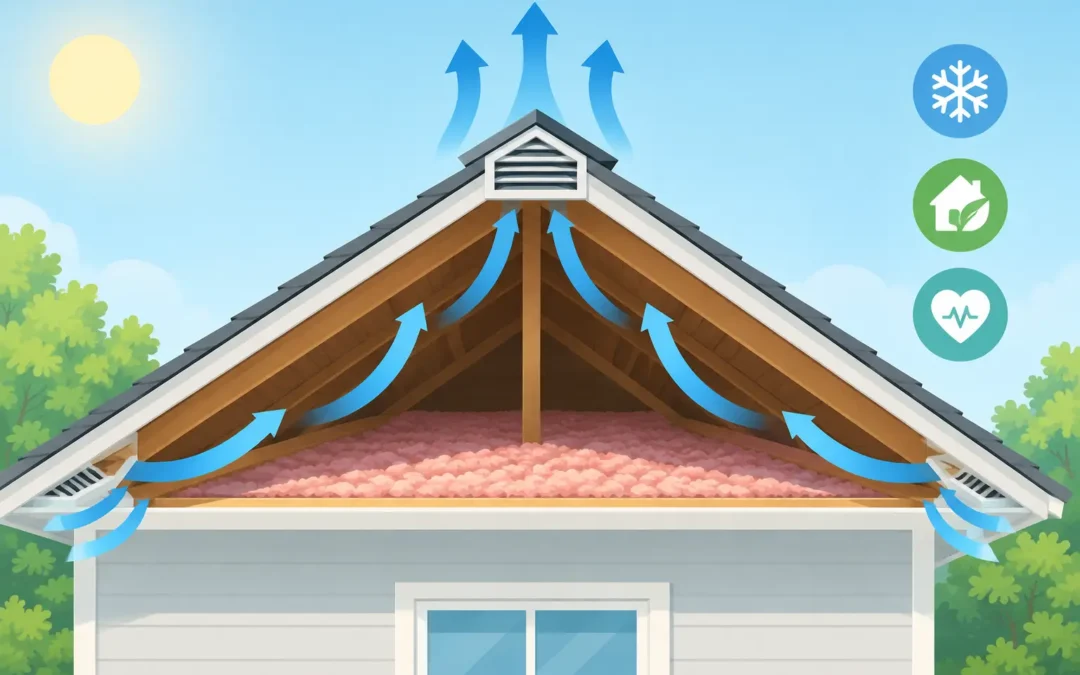
A conventional ventilated attic needs two things: intake air and exhaust air. Cooler outside air enters low on the roof line, usually through soffit or eave vents. As attic air warms, it rises and exits through higher vents, such as ridge vents, roof vents, or properly designed gable vents. This low-to-high path helps release accumulated heat and moisture.
The system only works when there is a continuous path between the intake and exhaust. If intake vents are blocked by insulation, exhaust vents are too limited, or air shortcuts from one opening to another, the attic can remain hot and stagnant even when it appears to have plenty of vents.
Intake ventilation: where many systems fall short
Soffit vents are commonly overlooked because they are located at the eaves. During an insulation upgrade, loose-fill or batt insulation can cover these openings from inside the attic. In other homes, paint, debris, pests, or old construction details restrict the openings from the exterior.
Professional installation uses insulation baffles or ventilation chutes near the eaves. These maintain an open channel from the soffit into the attic while keeping insulation where it belongs. Without baffles, adding insulation can accidentally reduce the airflow the attic needs.
Exhaust ventilation: giving heat and moisture a way out
Exhaust vents must be placed high enough to allow rising hot air to leave. Ridge vents can provide even exhaust along the roof peak when the roof design supports them. Individual roof vents may be appropriate on some homes, while gable vents can work under specific conditions.
More exhaust is not always better. An attic needs balanced intake and exhaust capacity. Too much exhaust with too little intake can cause the system to pull air from gaps in the ceiling plane, around recessed lights, plumbing penetrations, attic hatches, or duct openings. That can draw conditioned air, dust, and household moisture into the attic instead of bringing in outside air through the soffits.
Signs your attic may have an airflow problem
Some warning signs are visible from inside the house, while others require a safe attic inspection. Repeatedly overheated second-floor rooms, high cooling costs, or an air conditioner that runs excessively can indicate that attic heat is affecting the home below.
Inside the attic, common concerns include a stale or musty odor, dark staining on wood, damp insulation, rust on metal components, condensation on ducts, or insulation packed tightly against the roof deck. Rodent activity deserves attention as well. Contaminated insulation, nesting materials, and damaged ductwork can restrict airflow and create health and air-quality concerns that ventilation alone cannot solve.
Roofing symptoms matter too. Premature shingle wear, warped roof decking, or recurring moisture-related repairs can call for a closer look at attic conditions. These symptoms do not automatically prove that ventilation is the cause. A qualified inspection separates airflow issues from roof leaks, plumbing leaks, inadequate insulation, duct failures, and air leakage from the conditioned space.
The attic airflow guide homeowners should use before adding a fan
Attic fans can be useful in certain situations, but they are not an automatic answer to a hot attic. A powered fan may lower attic temperature when the home has adequate, unobstructed intake ventilation and the roof design supports the approach. But a fan can create problems if it is oversized, poorly located, or pulling replacement air from the house through ceiling gaps.
Before recommending a fan, a contractor should evaluate the entire attic system: roof configuration, existing vent area, intake paths, insulation depth and condition, air sealing, duct condition, bathroom and dryer vent terminations, signs of moisture, and electrical requirements. The correct solution may be passive ventilation improvements, new baffles, air sealing, duct repair, insulation replacement, or a combination of measures.
A fan should never be used to mask an underlying moisture source. If there is mold, visible water staining, wet insulation, or an active roof leak, the source must be identified and corrected first. Running a fan through a wet or contaminated attic can spread odors and airborne particles rather than resolve the problem.
Air sealing and insulation make ventilation more effective
A well-ventilated attic can still waste energy if the ceiling below it leaks air. Small openings around electrical boxes, top plates, plumbing pipes, attic access doors, and recessed fixtures allow cooled or heated indoor air to escape. In summer, this brings hot attic air closer to the home. In winter or coastal conditions, it can move moisture into the attic.
Air sealing targets those unplanned openings at the ceiling plane. Once the attic is properly sealed, insulation can do its job of slowing heat transfer. This is why simply adding more insulation is not always the complete fix. New insulation placed over rodent droppings, damaged ducts, moisture-stained materials, or unsealed air leaks can bury problems instead of protecting the home.
Insulation also must be installed without blocking ventilation channels. At the eaves, baffles preserve the path from soffit vents. Around attic access points, proper weatherstripping and insulation reduce heat gain without creating gaps. Around heat-producing fixtures, clearance requirements and code-compliant materials are essential.
Ductwork and exhaust vents deserve special attention
Many Southern California homes have HVAC ducts in the attic. When ducts are disconnected, torn, poorly insulated, or compressed, conditioned air can be lost into one of the hottest areas of the home. That raises utility costs and can leave rooms uncomfortable even when the equipment itself is working.
Attic airflow problems can make duct issues worse, but ventilation does not repair ductwork. A thorough assessment should check for disconnected runs, damaged insulation jackets, failing seals, and condensation risk. Duct repairs, proper support, and insulation improvements may provide more noticeable comfort gains than installing extra roof vents alone.
Bathroom fans and dryer vents should also terminate outdoors, not into the attic. Venting humid air into the attic introduces a direct moisture source and can lead to staining, mold, and wood deterioration. This is a correction that protects both indoor air quality and the building structure.
When a professional attic inspection is the right next step
Homeowners can check for obvious blocked soffits or a hot upstairs area, but attic work has real safety and health risks. Fragile ceiling surfaces, electrical wiring, contaminated insulation, rodent waste, sharp roofing nails, mold, and confined access make guesswork costly.
A professional inspection should identify whether your home needs ventilation changes, insulation work, air sealing, duct repair, rodent cleanup, mold remediation, or moisture correction. It should also consider local code requirements and the roof’s existing design instead of applying the same venting formula to every house.
For homeowners in Los Angeles, Ventura, Orange, and Riverside counties, attic conditions often reflect a mix of sun exposure, aging ductwork, pest activity, and past insulation work. The Attic Insulation Specialists Inc. approaches these concerns as connected parts of the home, helping homeowners address the cause rather than paying for a temporary patch.
If your attic is excessively hot, smells musty, shows moisture damage, or contains damaged insulation, treat it as an early warning from your home. Addressing airflow alongside insulation, air sealing, ducts, and moisture control can protect comfort now while helping preserve the structure and air your family lives with every day.