

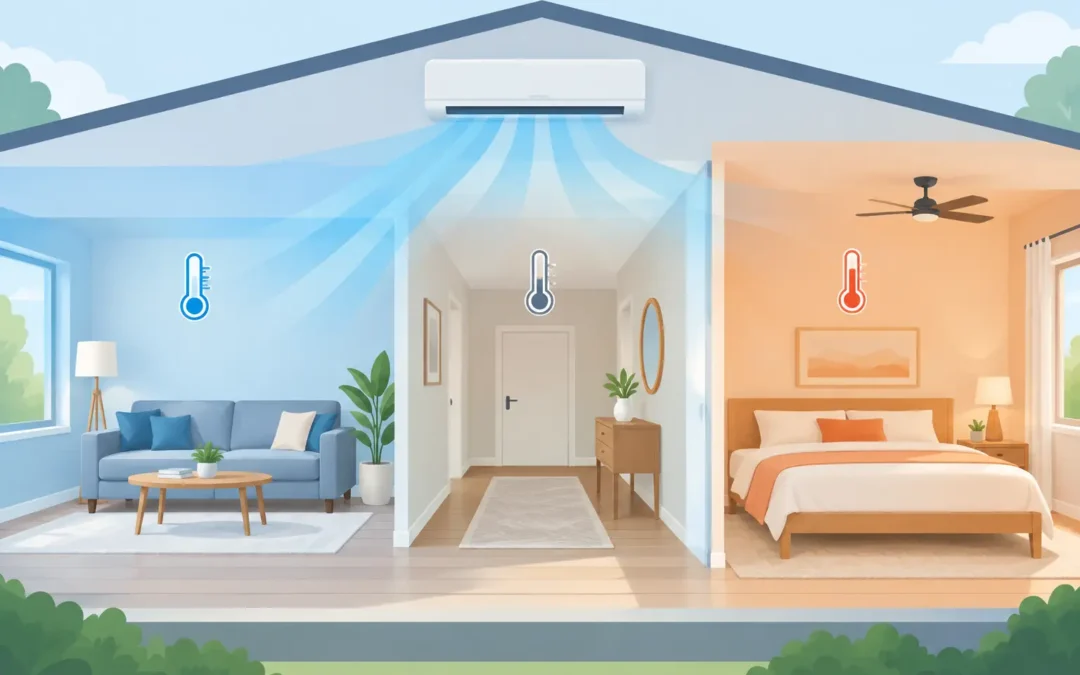
A bedroom that stays warm while the living room feels cold is more than a minor comfort issue. It is often a sign that conditioned air is being lost, blocked, or overwhelmed before it can do its job. Why rooms feel unevenly cooled usually comes down to a combination of insulation, ductwork, air leakage, sun exposure, ventilation, and the way your HVAC system was designed or maintained.
For Southern California homeowners, the pattern can be especially frustrating. A west-facing upstairs room may heat up every afternoon, while a downstairs area becomes too cold because the thermostat is trying to compensate. Turning the thermostat lower may increase the utility bill, but it rarely fixes the underlying problem.
Why Rooms Feel Unevenly Cooled: The House Is Not One Zone
Your air conditioner delivers cooled air through a system, but each room has its own heat gain and heat loss. The room over the garage, the back bedroom with large windows, and the second-floor office below a hot attic do not face the same conditions as an interior downstairs room.
A central thermostat measures the temperature where it is installed, not where you sleep, work, or spend the afternoon. If that thermostat is in a naturally cooler location, the system may shut off before warmer rooms catch up. If it is in a hot hallway or near a sunny window, it may run longer than necessary and overcool other parts of the home.
The answer is not always a larger air conditioner. An oversized system can cool the thermostat area quickly, cycle off too soon, and remove less humidity during periods when moisture is present. In many homes, the better solution is to correct the building conditions that are making one room harder to cool.
Attic Heat Can Overwhelm Upstairs Rooms
The attic is often the largest source of unwanted heat above a second floor. In summer, roof surfaces can absorb intense sunlight for hours. That heat builds in the attic and transfers downward through ceiling drywall, gaps, recessed fixtures, poorly insulated access hatches, and thin or compressed insulation.
When attic insulation is old, uneven, rodent-contaminated, moisture-damaged, or insufficient for the home, the rooms below it feel the difference first. An upstairs bedroom may receive adequate airflow from the vents but still remain warm because heat is constantly entering through the ceiling.
Attic ventilation also matters, but it needs to be handled correctly. Proper intake and exhaust ventilation can help manage attic heat and moisture. It does not replace insulation or air sealing, and adding fans without addressing the full attic system can produce disappointing results. A professional assessment should look at insulation depth and condition, attic bypasses, duct placement, ventilation pathways, and signs of pest or moisture damage together.
Radiant Heat and Sun Exposure Add to the Load
A room with a west- or south-facing wall, large glass areas, or little exterior shade may gain far more heat than the rest of the home. This is common in Los Angeles, Orange, Ventura, and Riverside County homes where strong afternoon sun is a daily reality for much of the year.
Window coverings and exterior shading can reduce solar heat gain, but they cannot solve a damaged duct or bare attic insulation. The key is to separate a normal sun-exposure challenge from a whole-home performance problem. If a room stays warm well after sunset, air leakage, attic heat, insulation gaps, or duct failure may be contributing.
Duct Problems Can Send Cooling Into the Attic or Crawl Space
Your HVAC equipment may be working properly while the duct system is wasting a substantial amount of the air it produces. Leaky, disconnected, crushed, undersized, or poorly insulated ducts are common causes of uneven cooling, particularly when ducts run through a hot attic or crawl space.
A disconnected run can leave one bedroom with very little airflow. A small leak near the air handler may reduce the supply reaching several rooms. Flexible ducts can sag or kink, restricting air delivery. In an attic, poorly insulated ducts absorb heat before cooled air reaches the ceiling register.
Return-air problems matter as much as supply-air problems. For air to enter a closed bedroom, air must also have a path back to the return side of the system. A room with a tightly closed door, inadequate return capacity, or no transfer path can become pressurized. The supply vent may blow, but airflow through the room is still limited.
Duct repair or replacement should be based on an inspection, not guesswork. The work should address connections, support, insulation, sizing, sealing, and the condition of the surrounding attic or crawl space. If rodents have contaminated insulation or damaged duct materials, cleanup and exclusion may be necessary before new materials are installed.
Air Leaks Make Some Rooms Harder to Cool
Cooled air follows the same basic rule as water: it escapes through available openings. Gaps around plumbing penetrations, electrical wiring, attic hatches, recessed lights, wall top plates, and duct openings allow conditioned air to leak into unconditioned spaces.
Air leakage also pulls hot attic air, dusty crawl space air, or outdoor air into the home through pressure differences. This can affect comfort and indoor air quality at the same time. A room that feels stuffy, dusty, or noticeably hotter than the rest of the house may have more than a vent-balancing issue.
Air sealing is especially valuable when it is paired with proper insulation. Insulation slows heat transfer, while air sealing stops uncontrolled air movement. Installing new insulation over major gaps without sealing them first can leave much of the comfort problem in place.
Insulation Can Settle, Deteriorate, or Become Contaminated
Insulation is not permanent simply because it is out of sight. Older fiberglass can compress. Blown-in insulation can settle unevenly. Roof leaks, plumbing leaks, condensation, rodents, and mold can damage or contaminate materials.
In wall cavities, missing or inadequate insulation can create rooms that react quickly to outdoor temperatures. Drill-and-fill wall insulation may be an appropriate option in certain homes where opening walls is not practical. The right approach depends on wall construction, existing materials, moisture conditions, and the source of the uneven temperatures.
Crawl spaces deserve equal attention in homes with raised foundations. Missing floor insulation, a damp crawl space, air gaps at the subfloor, or an exposed duct system can make floors and adjacent rooms uncomfortable. Vapor barriers, encapsulation, waterproofing, dehumidification, and insulation may all be part of a long-term solution when moisture is involved.
HVAC Settings and Equipment Still Need a Check
Not every uneven-cooling issue begins in the attic or crawl space. A dirty filter, failing blower, blocked condenser, low refrigerant charge, poorly set dampers, or an aging system can reduce cooling performance. Furniture, rugs, or curtains blocking registers can also restrict airflow in a particular room.
However, HVAC service alone may not correct a home-envelope problem. If the system is repeatedly adjusted, repaired, or replaced without addressing leaking ducts, poor insulation, attic heat, or air bypasses, the same comfort complaints can continue.
Zoning, balancing dampers, variable-speed equipment, and room-specific controls can help in the right home. They are most effective after the home has been evaluated for heat gain, insulation, duct integrity, and airflow. Technology should support a sound building system, not compensate for preventable losses.
What a Complete Inspection Should Identify
A useful inspection looks beyond the room that feels warm. It should identify where heat is entering, where conditioned air is leaving, whether ducts are delivering air properly, and whether moisture, pests, or contamination have affected the materials around the HVAC system.
Warning signs worth investigating include consistently warm upstairs rooms, weak airflow from one or more registers, high summer utility bills, rooms that become uncomfortable when doors are closed, dusty vents, musty odors, visible attic insulation gaps, rodent evidence, or moisture staining. These symptoms may have one cause or several working together.
The best repair plan is tailored to the house. One home may need duct sealing and attic air sealing. Another may require contaminated insulation removal, rodent proofing, new insulation, and ventilation corrections. A third may need crawl space moisture control before insulation can perform as intended.
Comfort should not require setting the thermostat lower and hoping for the best. When each room is protected from excess heat, supplied with the right airflow, and separated from contaminated or unconditioned spaces, your cooling system can work the way it was meant to – with a more comfortable home and less strain on your energy budget.