

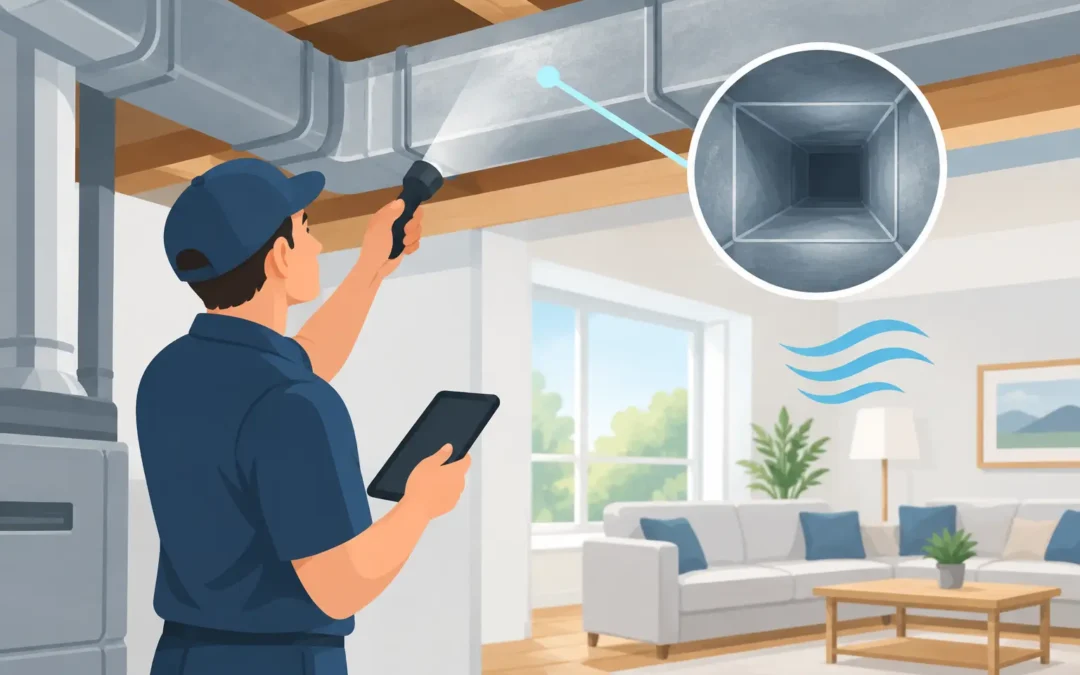
A room that never cools down, a ceiling vent that barely moves air, and a utility bill that keeps climbing can point to the same hidden issue: failing ducts. This ductwork inspection guide helps homeowners recognize what can go wrong above the ceiling or below the floor, what they can safely look for, and when a professional evaluation is the right next step.
Your duct system is the delivery path for heated and cooled air. When it is disconnected, crushed, poorly sealed, contaminated, or inadequately insulated, your HVAC equipment may run longer while parts of the home remain uncomfortable. In Southern California, where hot attic temperatures can put extra stress on duct insulation and cooling systems, small duct problems can become expensive ones.
Why Ductwork Deserves a Close Inspection
Ducts are often out of sight in an attic, crawl space, garage, or wall cavity. That makes them easy to overlook until comfort changes or visible damage appears. Yet ductwork has a direct effect on energy use, indoor air quality, moisture conditions, and the performance life of heating and cooling equipment.
A supply duct leak can release conditioned air into an unconditioned attic or crawl space. A return duct leak can pull dusty attic air, crawl space odors, insulation fibers, or other contaminants into the system before that air reaches living areas. If rodents have entered the attic or crawl space, damaged ducts can also become part of a larger contamination and air-quality concern.
Not every comfort problem starts with the ducts. Low refrigerant, an aging HVAC unit, poor attic insulation, inadequate ventilation, blocked registers, and air leaks around the home can create similar symptoms. That is why a useful inspection looks at the duct system in context rather than treating one visible tear as the entire problem.
Signs Your Ducts May Need Attention
Start with the changes you notice inside the home. One room that is consistently hotter or colder than the rest may have a disconnected branch duct, restricted airflow, or an undersized run. Weak airflow from multiple vents can indicate a return-air problem, crushed flexible ductwork, or a system issue that needs further diagnosis.
Listen for rattling, whistling, or a persistent rushing sound when the HVAC system runs. These noises do not automatically mean the ducts are leaking, but they can reveal loose connections, gaps, pressure imbalances, or ducts rubbing against framing.
Odors deserve attention as well. A musty smell when the air conditioner or furnace starts may come from moisture, microbial growth, a dirty system component, or air being drawn from an attic or crawl space. Rodent odors, droppings near registers, or visible nesting activity should be handled carefully. Contaminated insulation and ductwork may require cleaning, removal, repairs, and rodent exclusion as part of one coordinated scope of work.
Higher utility bills without a clear change in usage are another reason to inspect. A seasonal increase is normal, especially during heat waves. A sudden or continuing increase paired with uneven temperatures is a stronger reason to look for air loss, insulation damage, or HVAC inefficiency.
What a Homeowner Can Check Safely
A homeowner inspection should be visual and limited to accessible, safe areas. Do not walk across attic framing without secure footing, enter a wet crawl space, disturb suspect mold, or handle rodent-contaminated materials. Exposed electrical hazards, damaged ceilings, and sharp sheet metal are also reasons to stop and call a qualified contractor.
With the HVAC system running, check each supply register for relative airflow. You are not trying to measure exact airflow, only looking for obvious differences between similar rooms. Make sure registers are open, clear of furniture, and reasonably clean before assuming there is a duct defect.
If attic access is safe and the area is properly lit, look from the access opening or a stable walkway for obvious concerns. Common visible issues include:
- Flexible ducts that are sagging, sharply bent, crushed, or pulled apart from a collar
- Torn or missing outer insulation jackets, especially near attic access paths
- Loose tape, separated connections, or deteriorated mastic around duct joints
- Dark staining, moisture marks, or compressed insulation around ducts
- Rodent droppings, nesting material, chewed duct insulation, or damaged vapor barriers
Take clear photos and note the room below each affected duct. This information helps a contractor trace the problem and determine whether a repair is practical or whether replacement will provide a more dependable result.
What a Professional Ductwork Inspection Should Include
A professional ductwork inspection goes beyond spotting visible tears. The goal is to determine how the duct system is affecting the home and identify the conditions that caused the damage in the first place.
The inspection should begin with the duct layout, accessible connections, and overall condition of supply and return runs. A technician checks for disconnected sections, kinks, crushed flex duct, unsupported spans, deteriorated insulation, and gaps at boots, plenums, and equipment connections. They also look for signs that prior repairs used unsuitable materials or have failed over time.
Air leakage is a major concern. Proper duct sealing typically involves approved mastic or compatible sealing products at joints and connections, not a quick wrap of general-purpose tape. The correct approach depends on the duct material, accessibility, condition, and local code requirements. In some cases, a leaking joint can be resealed. In others, brittle, contaminated, or extensively damaged ductwork is better replaced.
Insulation around ducts matters in a hot attic. Insulated ducts help limit heat gain before cooled air reaches the rooms below. If insulation is compressed, wet, torn, or missing, the duct system may lose performance even when the inner liner remains connected. A professional should also evaluate whether the attic itself has enough insulation and ventilation, because duct repairs alone may not solve an overheated-home complaint.
The inspection should include moisture and contamination indicators. Condensation around ducts can result from inadequate insulation, air leakage, high humidity, improperly balanced airflow, or water intrusion from another source. Mold-like growth, water-damaged insulation, and rodent contamination should not be covered up with a surface repair. The source must be corrected before the area is restored.
Finally, the HVAC equipment and return-air pathways should be considered. A duct system is not separate from the air handler, filter, registers, attic conditions, or crawl space environment. A complete recommendation explains what should be repaired, what should be replaced, and what supporting work may protect the result.
Repair or Replacement: How to Decide
Minor, localized damage does not always require new ductwork. A single accessible disconnected run, a loose register boot, or a limited joint leak may be repaired effectively when the remaining system is clean, properly sized, and in good condition.
Replacement is often the better value when ducts are old, extensively torn, crushed in multiple locations, poorly routed, heavily contaminated, or damaged by rodents. Replacing only one visible section can leave other weak areas in place. It may also make sense to replace ductwork during attic cleaning, insulation removal, rodent proofing, or a major HVAC upgrade because access is already available and the work can be coordinated.
Material choice and routing matter. Flexible ductwork is common in residential attics because it can be installed around framing, but it must be adequately supported and kept as straight as practical. Sheet metal ducts can be durable and may be appropriate in certain locations, though installation requirements and cost differ. The best option depends on the home layout, available space, system design, and the condition of surrounding building materials.
Protecting Ductwork After the Work Is Done
Duct repair is more durable when the surrounding attic or crawl space is also protected. Rodent proofing helps prevent repeat chewing and contamination. Air sealing can reduce uncontrolled heat and dust movement. Proper insulation and attic ventilation can lower the harsh temperatures surrounding the ducts. Moisture control in a crawl space can reduce conditions that contribute to odor, condensation, and material deterioration.
For homeowners in Los Angeles, Ventura, Orange, and Riverside counties, these connected issues are common because homes vary widely in age, attic access, insulation levels, and past remodeling quality. A complete home-performance inspection can prevent one repair from becoming a temporary patch over a larger problem.
If your home has uneven temperatures, unexplained energy costs, odors at the vents, or visible attic damage, do not wait for a complete duct failure. A careful inspection can turn a hidden problem into a clear plan for cleaner air, dependable comfort, and better protection for the home you have worked hard to maintain.