

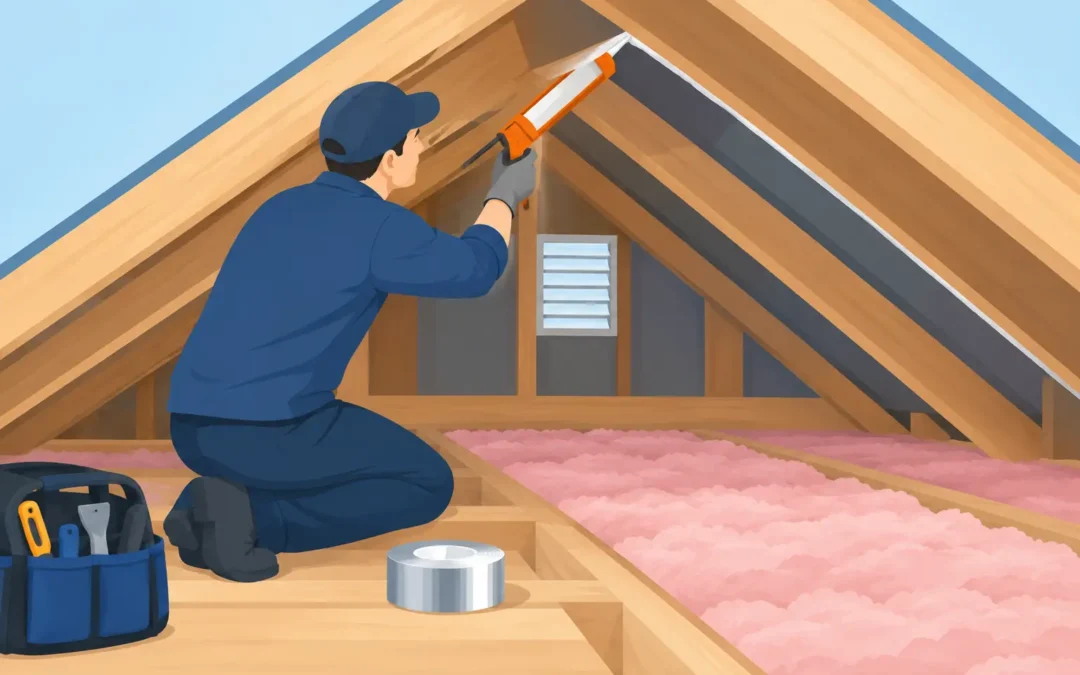
A hot second floor, dusty rooms, and an air conditioner that seems to run without relief often point to a problem hidden above the ceiling. When you fix attic air leaks, you stop conditioned air from escaping into an unconditioned space and prevent attic air, dust, insulation fibers, and pollutants from moving down into the home.
For Southern California homeowners, attic air sealing is more than an insulation upgrade. It is a practical part of protecting comfort, indoor air quality, HVAC equipment, and the condition of the attic itself. The work must be done in the right order: identify leakage paths, address contamination or moisture concerns, seal the openings safely, then install or restore insulation.
Why Attic Air Leaks Create Bigger Home Problems
Most attic leaks are not dramatic holes you can see from across the room. They are small gaps around plumbing pipes, electrical wiring, recessed lights, duct boots, ceiling fixtures, wall tops, and framing transitions. Individually, these openings may seem minor. Together, they can create a large pathway between your living space and attic.
During cooling season, air leaks allow expensive conditioned air to move into the attic. In winter, warm indoor air can rise through the same openings. This air movement makes rooms harder to keep comfortable and increases the workload on the heating and cooling system.
The problem is not limited to utility costs. Air traveling from the attic into the home can carry dust, rodent debris, insulation particles, odors, and other contaminants. If insulation has been affected by pests, mold, moisture, or old duct leakage, air sealing becomes part of a broader cleanup and home-protection plan.
Attic leakage can also contribute to moisture concerns. Warm, humid household air entering a cooler attic area may condense on surfaces under the wrong conditions. Southern California is known for dry weather, but coastal humidity, bathroom moisture, roof leaks, and poorly ventilated attic spaces can still create localized condensation and mold risk.
Signs Your Home May Need Attic Air Sealing
Some symptoms are easy to mistake for an insulation problem alone. Insulation matters, but adding more material over active air leaks can leave the underlying issue in place.
Watch for rooms that are consistently warmer or colder than the rest of the house, rising energy bills without a clear explanation, dusty ceiling registers, or a persistent draft around ceiling fixtures. Uneven temperatures near exterior walls and upstairs bedrooms can also point to a combination of attic leakage, inadequate insulation, duct problems, and radiant heat entering through the roof.
A musty odor, evidence of rodents, stained insulation, or visible moisture damage should raise the priority. Those conditions may require attic cleaning, insulation removal, rodent proofing, mold remediation, or moisture correction before new insulation is installed. Sealing air leaks over contaminated insulation does not make the contamination disappear.
Where Professionals Look for Attic Air Leaks
A thorough inspection starts with access and safety. Attics can contain exposed wiring, unstable walkways, low clearances, vermiculite or older insulation materials, pest waste, and damaged ductwork. A trained crew can inspect the space without compressing existing insulation unnecessarily or missing important conditions.
The most common leakage points include penetrations where plumbing vent pipes and electrical cables pass through the ceiling plane. Openings around exhaust fan housings, recessed can lights, attic hatches, chimney or flue chases, and dropped soffits are also frequent sources of air loss.
Ductwork deserves close attention. A duct boot can be properly connected to a ceiling register while the gap around that boot remains open to the attic. Leaky or disconnected ducts are a separate issue, but they often occur alongside attic bypasses. Repairing ducts, sealing ceiling-plane gaps, and verifying insulation coverage provide a more complete result than treating any one issue in isolation.
Wall-top openings are another overlooked source. Framing cavities, especially at interior partition walls, can connect directly to the attic. These pathways can move air, odors, and dust through the home even when the attic appears to have adequate insulation depth.
How to Fix Attic Air Leaks Safely and Effectively
The right repair method depends on the size, location, and fire-safety requirements of each opening. Small gaps around wires and pipes may be sealed with appropriate caulk or low-expansion foam. Larger openings typically need a durable backing material, such as rigid blocking or sheet metal, before sealant is applied.
Areas around chimneys, furnace flues, and other heat-producing components require special care. Standard foam products cannot be used where clearances to combustible materials must be maintained. Qualified technicians use approved, noncombustible materials and preserve required clearances based on the appliance and local code requirements.
Recessed lighting requires the same caution. Older non-rated fixtures may not be safe to cover with insulation or seal tightly without addressing heat concerns. A professional assessment can determine whether the fixture should be upgraded, protected with an approved cover, or treated with another code-compliant solution.
Attic access hatches need attention as well. An unsealed attic hatch can leak a surprising amount of air because it is a large opening directly over conditioned space. Weatherstripping around the perimeter and an insulated cover or properly fitted hatch assembly can significantly improve performance.
Bathroom and kitchen exhaust fans should vent outdoors, not into the attic. If an inspection finds a disconnected, crushed, or improperly terminated exhaust duct, correcting it is essential. Otherwise, moisture-laden air can continue entering the attic even after nearby gaps are sealed.
Air Seal Before Adding Insulation
The sequence matters. Air sealing should generally happen before insulation is installed or replaced because insulation can hide the bypasses that need repair. In an attic with clean, dry, usable insulation, sections may be carefully moved aside to access the ceiling plane and then returned or supplemented after sealing.
If insulation is heavily contaminated by rodents, damp from a roof or plumbing issue, mold-affected, or badly degraded, removal may be the safer option. This gives the crew clear access to identify leaks, inspect framing and ductwork, clean the attic, and address rodent entry points before installing new insulation.
There is a trade-off to consider. Removing insulation is more involved than simply adding new material, but it may be the responsible choice when the existing material contains droppings, odors, or moisture damage. Installing fresh insulation over a compromised attic can preserve hidden conditions that continue affecting air quality and home value.
Once air sealing is complete, the insulation plan should match the home’s needs. Proper insulation levels help slow heat flow, while air sealing controls air movement. In hot inland areas, a radiant barrier and ventilation assessment may also be worthwhile, particularly when attic temperatures are placing a heavy burden on second-floor comfort and cooling equipment.
Do Not Seal Away a Moisture or Ventilation Problem
Air sealing is not the same as closing off an attic. A healthy attic needs the right balance of air sealing at the ceiling plane and ventilation at the roofline, when the home’s design calls for it. Blocking soffit vents, covering ventilation openings with insulation, or installing an attic fan without evaluating the full system can create new problems.
The source of moisture must always be identified first. Roof leaks, plumbing leaks, bathroom exhaust issues, crawl space moisture, and duct condensation each need a specific remedy. Mold treatment without moisture correction is temporary, and extra ventilation alone will not solve a roof leak or wet insulation.
This is why a complete attic inspection is valuable. The Attic Insulation Specialists Inc. evaluates insulation alongside ductwork, ventilation, contamination, rodent activity, and moisture conditions, so the recommended work addresses the cause rather than only the visible symptom.
When Professional Air Sealing Is the Better Choice
A homeowner can sometimes weatherstrip an accessible attic hatch or seal a small, clearly identified gap. But attic work becomes more complex when insulation is deep, wiring is exposed, ductwork is damaged, rodent contamination is present, or openings are near combustion appliances and recessed fixtures.
Licensed, insured professionals can complete the work with appropriate safety practices, code-aware materials, and a clear plan for insulation restoration. This is particularly helpful when several problems overlap, such as a hot upstairs area, high bills, aging ducts, and contaminated insulation. One coordinated project can prevent the repeated cost and disruption of addressing each symptom separately.
A well-sealed attic ceiling plane is quiet work that pays off every day. It helps your conditioned air stay where it belongs, gives insulation a fair chance to perform, and supports a cleaner, more comfortable home for the years you plan to live in it.