

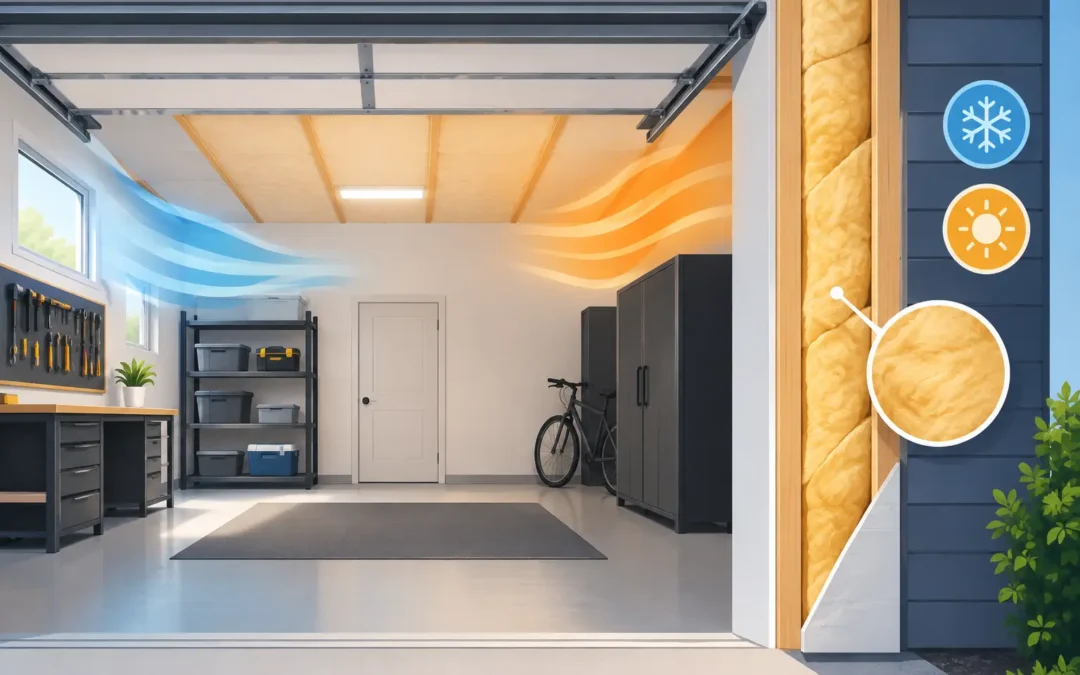
A bedroom, office, or family room over the garage can feel like a separate climate zone: hot under Southern California sun, chilly on winter mornings, and difficult to keep comfortable even when the thermostat is set correctly. To improve garage room insulation comfort, homeowners need to look beyond the floor. The real cause may involve missing insulation, unsealed gaps, exposed ductwork, attic heat, or moisture and pest damage hidden below the room.
A comfortable garage-adjacent room depends on a complete boundary between conditioned living space and the unconditioned garage. When that boundary has gaps, your HVAC system has to work harder, utility costs can rise, and rooms closest to the garage often become the last places in the home to feel comfortable.
Why Rooms Above a Garage Feel So Uncomfortable
The garage is rarely conditioned like the rest of the house. In summer, its roof, doors, slab, and walls absorb heat for hours. That heat can move upward through the garage ceiling and into the floor of the room above it. In cooler weather, the same floor can lose heat to the colder garage below.
Insulation slows that heat flow, but insulation alone does not stop air movement. Openings around wiring, plumbing, recessed lights, duct boots, framing connections, and the garage ceiling can allow hot, cold, dusty, or contaminated air to travel into the living area. A room may have insulation installed and still feel uncomfortable because air sealing was skipped or because the insulation has been compressed, shifted, or damaged.
Garage-adjacent rooms also frequently reveal HVAC problems. Ducts serving the room may run through a hot attic or garage ceiling cavity. If they are leaking, poorly insulated, disconnected, or undersized, the room may receive too little conditioned air regardless of how much insulation is added.
Start With the Garage Ceiling and Room Floor
For a room located directly above a garage, the garage ceiling is usually the first area to evaluate. This ceiling is the underside of the room floor, and it should provide a continuous thermal barrier between the two spaces.
A professional inspection can determine whether insulation is present, whether it meets the needs of the assembly, and whether it has been compromised. Batts that are thin, sagging, wet, rodent-contaminated, or installed with gaps do not perform as intended. In older homes, portions of the garage ceiling may be uninsulated altogether, especially around beams, soffits, and mechanical penetrations.
The right insulation approach depends on access and construction. In some cases, insulation can be installed from the garage side after opening and restoring portions of drywall. In others, a contractor may access floor cavities during a larger renovation. The goal is not simply to add material wherever possible. It is to create full, consistent coverage without leaving bypasses around framing, pipes, and ducts.
Because the garage ceiling is also part of a fire-separated assembly in many homes, work must be planned carefully. Proper drywall restoration, penetrations, and code requirements matter. A licensed contractor can address comfort improvements without compromising safety requirements between the garage and living space.
Air Sealing Is Often the Missing Step
If the room above your garage is uncomfortable only during extreme weather, air leakage may be a major part of the problem. Small openings can have an outsized effect because moving air carries heat far more quickly than insulation alone can resist it.
Common leakage points include holes for electrical cables, plumbing lines, refrigerant lines, duct penetrations, attic access points, and gaps where walls meet the garage ceiling. Open cavities around a dropped soffit or wall chase can connect the garage, attic, and living space. Those pathways can also allow odors, vehicle fumes, dust, and pest-related contaminants to move where they do not belong.
Air sealing should be completed before new insulation is installed. Otherwise, insulation may cover the evidence while leaving the underlying airflow problem in place. The appropriate materials depend on the opening and surrounding conditions. Professional crews use compatible sealants and methods designed for durable performance, accessibility, and applicable fire-safety requirements.
Do Not Ignore the Attic Above the Room
A room over a garage may be affected from both directions. Heat can enter through the garage ceiling below while a poorly insulated attic allows radiant and conductive heat through the ceiling above. This is especially common in homes where the garage-side room has a vaulted ceiling, limited attic space, or uneven insulation coverage.
An attic inspection should look for low insulation levels, bare spots, compacted material, air leaks at ceiling penetrations, and signs of rodent activity or moisture. Rodent-contaminated insulation is not a material to simply cover with more insulation. It may contain droppings, urine, nesting debris, and damaged areas that affect indoor air quality and reduce thermal performance.
Attic ventilation also deserves attention, although it is not a substitute for insulation or air sealing. Proper intake and exhaust ventilation can help manage attic heat and moisture when designed for the home. Adding a fan or vent without evaluating the full attic system can create poor airflow or pull conditioned air from the home through ceiling leaks.
Radiant Barriers Can Help in Specific Conditions
In hot Southern California climates, a radiant barrier may reduce radiant heat transfer from a hot roof into the attic. It can be useful when combined with proper attic insulation, air sealing, and ventilation. It is not a replacement for those essentials.
The benefit depends on roof design, attic configuration, and the existing condition of the insulation. A complete inspection helps determine whether a radiant barrier is a worthwhile addition or whether the larger problem is missing insulation, duct leakage, or attic contamination.
Check the Ductwork Serving the Room
When one room is consistently warmer or cooler than the rest of the home, ductwork should be part of the diagnosis. A duct may have separated at a connection, developed tears, lost insulation, or been crushed by stored items or previous work. Ducts located in attics and garage-adjacent cavities are exposed to severe temperature swings, making defects more noticeable.
Signs of a duct problem include weak airflow from supply registers, a room that takes much longer to heat or cool, visible duct damage in the attic, or a noticeable temperature difference even after insulation upgrades. Register placement and return-air pathways also matter. A closed door can make a room feel stuffy if air cannot circulate back to the central system.
Duct repair or replacement can improve delivered airflow and reduce the amount of conditioned air lost into unconditioned spaces. It should be coordinated with insulation work so that duct connections remain accessible where needed and ducts are properly supported and insulated afterward.
Address Moisture, Pests, and Garage Conditions
Not every comfort problem is strictly an insulation problem. Water intrusion, condensation, and rodent activity can damage insulation and create conditions that require remediation before replacement materials are installed.
A musty odor, staining, visible mold, rusted metal components, or damp insulation calls for an investigation into the moisture source. Leaks from plumbing, roof penetrations, exterior walls, or HVAC equipment can affect garage ceilings and adjacent wall cavities. Installing new insulation over wet materials can trap the problem and lead to further deterioration.
Garages should also be evaluated for pest entry points. Rodents can travel through gaps around utility lines, damaged vents, roof intersections, and wall openings. Once inside, they can contaminate insulation and chew ductwork or wiring. Exclusion and cleanup are part of protecting the repair, not optional add-ons.
A Better Plan to Improve Garage Room Insulation Comfort
The most effective solution is based on the actual path heat, air, and moisture are taking through your home. For many properties, the work includes air sealing the garage-to-home boundary, replacing damaged insulation, correcting attic deficiencies, repairing ductwork, and addressing moisture or pest conditions before materials are installed.
This approach may cost more than adding a thin layer of insulation in one location, but it avoids paying for a partial fix that leaves the room uncomfortable. It also helps protect the home from hidden contamination, mold growth, energy waste, and structural damage.
For homeowners in Los Angeles, Orange, Ventura, and Riverside counties, seasonal heat makes these weak points especially noticeable. The Attic Insulation Specialists Inc. evaluates insulation as part of the whole home system, including attic conditions, ductwork, ventilation, contamination, moisture, and air leakage.
A garage-adjacent room should feel like part of your home, not a space you avoid during the hottest or coolest parts of the day. A careful inspection of the boundaries around that room can point to the right repair and help protect comfort, air quality, and long-term home value.