

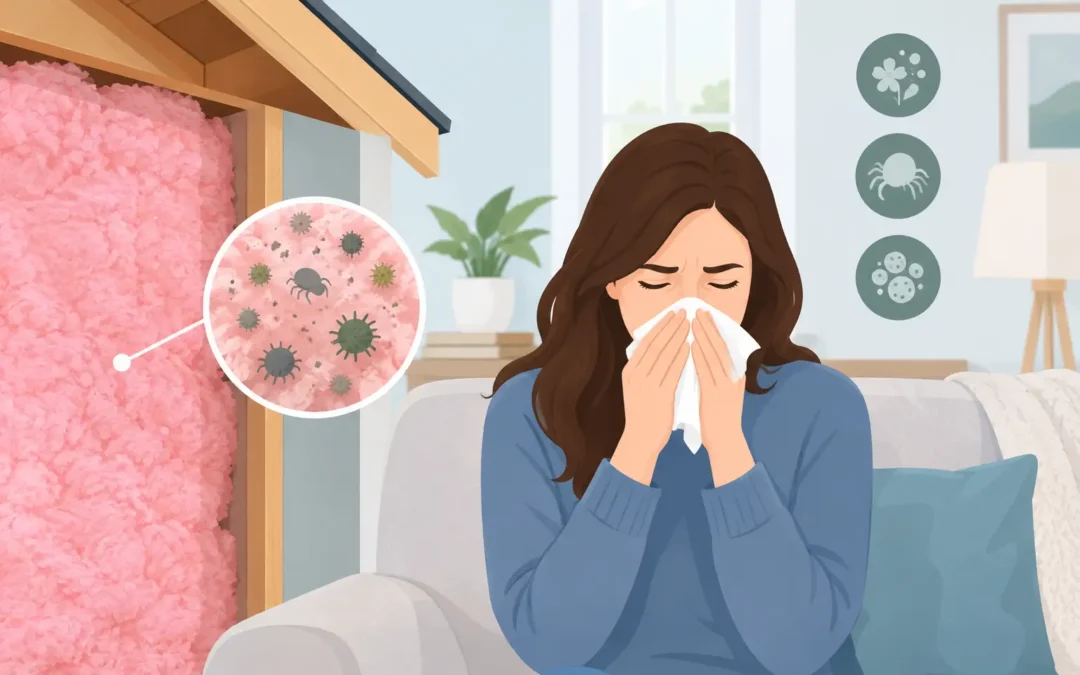
A stuffy nose that starts after you spend time in the attic is worth investigating. But can insulation cause allergies? Sometimes the insulation is connected to the problem, though it is often not the material itself that is causing a true allergic reaction. In many homes, old or damaged insulation holds dust, pest waste, mold spores, and other contaminants that can move into living areas through gaps around fixtures, ductwork, and ceiling penetrations.
The difference matters. Replacing insulation without finding a roof leak, rodent entry point, or ventilation problem can leave the underlying indoor-air issue in place. A proper inspection looks at the full attic or crawl space system, including moisture, pests, air leakage, duct condition, and the insulation itself.
Can Insulation Cause Allergies or Allergy-Like Symptoms?
Most common insulation products are not considered allergens in the same way as pollen, pet dander, or dust mites. Fiberglass, for example, can release small fibers and dust when it is disturbed. Those particles may irritate the eyes, nose, throat, skin, or lungs, especially during installation, removal, or a do-it-yourself attic project. Irritation can feel very similar to allergies, but it is not necessarily an immune-system allergy.
Cellulose insulation can also create dust when handled. Mineral wool may cause temporary skin and respiratory irritation if fibers become airborne. Spray foam insulation deserves separate consideration: while it cures, its chemical components and odors require careful handling, ventilation, and professional installation. Once properly cured and installed, it is generally far less likely to create an ongoing exposure issue. Problems are more likely when the product was mixed or applied incorrectly, remains exposed where it should be covered, or is affected by fire or water damage.
For a homeowner who has symptoms only in certain rooms or at certain times of year, the more likely concern is often what is in, on, or around the insulation. That can include dust accumulation, mold growth from moisture, rodent contamination, insect debris, or air leaking from an unconditioned attic into the home.
The Conditions That Turn Insulation Into an Indoor-Air Concern
Insulation is meant to stay relatively clean, dry, and undisturbed. It becomes a concern when another home problem compromises it.
Rodent-contaminated insulation
Rodents commonly nest in attics and crawl spaces, where insulation provides warmth and cover. Urine, droppings, nesting material, and dead animals can contaminate wide areas of insulation. Beyond the odor, this contamination can aggravate respiratory symptoms and introduce airborne particles when the material is disturbed or when air leaks connect the attic to the home.
This is not a situation for simply placing new insulation over the old material. The affected insulation should be removed using appropriate containment and protective procedures. The attic also needs to be cleaned, disinfected as appropriate, sealed against rodent entry, and reinsulated after the source of the problem has been corrected.
Moisture and mold
Wet insulation loses performance and can support conditions that allow mold to grow on nearby wood, paper backing, dust, or debris. In Southern California homes, moisture problems may come from roof leaks, plumbing leaks, bathroom exhaust vents that terminate in the attic, condensation around ducts, or damp crawl spaces.
Mold does not always appear as a large visible patch. A musty odor, dark staining, damp framing, compressed insulation, or recurring condensation can all indicate a moisture issue. If mold or water damage is present, the solution should include the leak repair or moisture-control work, safe remediation, drying, and replacement of insulation that cannot be restored.
Dust, debris, and air leakage
Even a clean attic can affect indoor air if it is connected to the house through unsealed openings. Recessed lights, attic hatches, plumbing penetrations, wiring holes, and gaps around duct boots can allow hot, dusty attic air to enter the living space. Leaky return ducts can make the problem worse by pulling attic or crawl space air into the HVAC system.
Air sealing is often the missing step in an insulation project. It helps keep pollutants out of the home while also reducing conditioned-air loss, improving room-to-room comfort, and lowering strain on heating and cooling equipment.
Signs Your Attic or Crawl Space Needs Attention
Symptoms alone cannot identify the source of an allergy or irritation. Seasonal pollen, pets, household dust, cleaning products, and outdoor pollution can all play a role. Still, a home inspection is sensible when symptoms occur alongside building-related warning signs.
Pay attention if you notice a persistent musty or animal-like odor, visible droppings, unusual dust near ceiling vents, water stains, uneven temperatures, a sudden increase in energy bills, or insulation that looks flattened, damp, or disturbed. You may also notice that symptoms become worse when the HVAC system runs or after strong winds, which can point to duct leakage or attic air infiltration.
If anyone in the home has serious breathing symptoms, ongoing wheezing, or a known sensitivity to mold or airborne irritants, speak with a qualified medical professional. A contractor can identify building conditions and contamination sources, but should not diagnose allergies.
What a Complete Professional Solution Looks Like
The right scope depends on what the inspection finds. For clean, dry, properly installed insulation, no removal may be needed. If the material is old but still effective and uncontaminated, improving air sealing or ventilation may provide the better value.
When insulation is contaminated or damaged, a complete project usually addresses several connected items: removal of affected material, attic or crawl space cleaning, treatment of contamination where appropriate, rodent proofing or moisture repair, air sealing, and installation of new insulation to the appropriate depth and coverage. Ductwork should also be evaluated when it is damaged, disconnected, poorly insulated, or pulling air from the attic or crawl space.
In crawl spaces, vapor barriers, drainage corrections, encapsulation, waterproofing, or dehumidification may be necessary before new insulation is installed. Otherwise, moisture can continue to degrade materials and create conditions that affect the home above.
Licensed, insured work is especially valuable when contamination, mold, electrical hazards, or difficult attic access are involved. Professional crews use protective equipment and controlled removal practices to avoid spreading dust and debris into the occupied home. They can also identify code-related issues, such as blocked soffit vents or improperly vented bathroom fans, that contribute to recurring problems.
How Homeowners Can Reduce Exposure
Avoid disturbing attic insulation without the right protective equipment, particularly if there are signs of pests, water damage, or mold. Do not use the attic as a storage area if doing so compresses insulation or damages ducts and wiring. Keep bathroom and kitchen exhaust systems functioning properly, and address roof or plumbing leaks promptly.
It also helps to replace HVAC filters on schedule and have suspicious ductwork inspected rather than assuming a new filter will solve the issue. Filters can capture particles moving through the system, but they cannot correct a return leak that is drawing contaminated air from an attic or crawl space.
A cleaner attic or crawl space is not just about insulation. It is about stopping moisture, pests, and unwanted air from turning hidden parts of the house into a source of discomfort. When the source is corrected first, new insulation can do what it is supposed to do: protect comfort, energy efficiency, and the air your family lives with every day.