A summer afternoon can turn an unprotected Southern California attic into one of the hottest spaces in the home. That trapped heat works its way down through ceilings, puts added strain on air conditioning equipment, and exposes ducts and insulation to punishing conditions. So, is attic ventilation necessary? For many homes, yes – but ventilation is only effective when it is part of a properly designed attic system.
The right answer depends on how the attic is built, whether it is vented or conditioned, the condition of the insulation and ductwork, and whether air or moisture is entering where it should not. Simply adding roof vents or a powered fan without correcting underlying problems can leave homeowners with the same high utility bills, uneven temperatures, and hidden damage.
Is Attic Ventilation Necessary for Every Home?
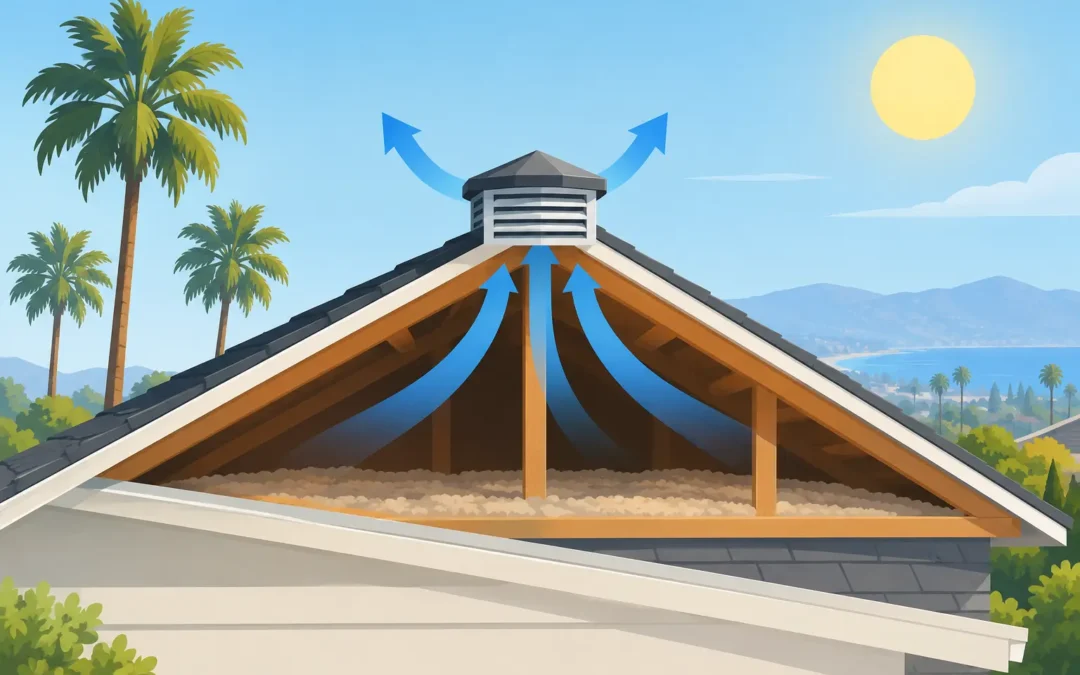
Most conventional attics need ventilation. These are the unfinished attic spaces above the ceiling insulation, with outside air entering through low intake vents and leaving through high exhaust vents. Proper airflow helps limit extreme attic temperatures and removes moisture that can accumulate from indoor air leaks, bathroom exhaust ducts, roof leaks, or condensation.
Ventilation is especially useful in Los Angeles, Orange, Ventura, and Riverside County homes where intense sun can heat roof surfaces for hours. A well-designed vented attic does not make the attic cool, but it can reduce heat buildup and help the roofing system and insulation perform under less severe conditions.
However, not every attic should be vented. Some homes are designed with an unvented, conditioned attic assembly. In that setup, insulation and air sealing are installed at the roofline rather than on the attic floor, and the space becomes part of the home’s conditioned envelope. This approach requires careful design and code-compliant materials. It is not a situation where additional vents should be added casually.
That distinction matters. The goal is not to put as many openings in the roof as possible. The goal is to manage heat, airflow, and moisture in a way that protects the structure and supports the home’s heating and cooling system.
What Proper Attic Ventilation Actually Does
A vented attic needs balanced airflow. Fresh air enters through intake vents, commonly located at the soffits or eaves, while warmer air exits through ridge vents, roof vents, or other high-mounted exhaust vents. As warm air rises, this intake-to-exhaust pathway helps move it out of the attic.
When the system is working as intended, ventilation can help reduce several common risks:
- Excessive attic heat that transfers into living areas and increases air conditioning demand.
- Moisture buildup that can contribute to wood staining, mold growth, corrosion, or insulation deterioration.
- Premature stress on roofing materials caused by prolonged heat exposure.
- Condensation around cold air conditioning ducts or metal components when humid indoor air leaks into the attic.
Ventilation is not an air-conditioning system for the attic. It will not solve a poorly insulated ceiling, an oversized cooling bill caused by leaky ducts, or rooms that receive direct afternoon sun. Its job is to support a healthy attic environment and work alongside the rest of the home-performance system.
Air sealing comes before airflow
A common misconception is that outdoor attic ventilation can make up for air leaking from the house into the attic. It cannot. In fact, attic vents can worsen comfort problems if large ceiling penetrations allow conditioned air to escape upward.
Recessed lights, attic access hatches, plumbing openings, electrical penetrations, and gaps around duct boots can all allow indoor air into the attic. During hot weather, that loss raises cooling costs. When indoor air carries moisture, it can also create condensation concerns around cooler surfaces.
Before adding or replacing insulation, a professional inspection should identify air leaks and seal them appropriately. Once the attic floor is air sealed, insulation can provide the thermal barrier it was meant to provide.
Insulation and ventilation have different jobs
Insulation slows heat transfer between the attic and the living space below. Ventilation helps manage the attic environment itself. One does not replace the other.
For example, an attic may have plenty of roof vents but thin, compressed, rodent-damaged, or contaminated insulation. The home can still feel hot, and the HVAC system can still run longer than necessary. Likewise, adding thick new insulation over active moisture damage, an unsealed bypass, or a disconnected bathroom fan can conceal the problem rather than correct it.
A complete solution may involve attic cleaning, removal of damaged insulation, rodent proofing, air sealing, proper insulation installation, duct repairs, and ventilation improvements. The needed scope should follow the conditions found in the attic, not a one-size-fits-all recommendation.
When Ventilation Problems Become Visible
Some attic issues remain hidden until they have already affected comfort, energy use, or building materials. Warning signs include bedrooms that stay warm long after sunset, unusually high cooling bills, hot ceilings, musty odors, damp or stained wood, rusted metal components, or insulation that looks matted and dirty.
Rodent activity is another reason to inspect the entire attic system. Contaminated insulation can lose effectiveness and affect indoor air quality, while openings used by pests may also disrupt intended airflow. A ventilation project is a good time to identify entry points, protect vulnerable areas, and address damaged materials rather than treating each issue separately.
Bathroom fans deserve special attention. They should exhaust outdoors, not terminate inside the attic. A loose, crushed, or disconnected exhaust duct can release warm, humid air into the space every time someone showers. In a dry climate, homeowners sometimes assume moisture cannot be a problem. But repeated indoor moisture exposure in a closed attic can still cause localized condensation and mold conditions.
Are Attic Fans Worth Installing?
Powered attic fans can be useful in certain homes, but they are not automatically the best answer. Their effectiveness depends on adequate intake ventilation, proper sizing, roof design, and whether the fan may pull conditioned air from the house through ceiling leaks.
If the attic floor has significant gaps, a powerful fan may draw expensive air-conditioned air out of the living space and into the attic. The homeowner then pays more to cool air that is being pulled out of the home. For this reason, air sealing and insulation should be evaluated before relying on a fan.
Solar attic fans can reduce electrical operating costs, but the same design questions still apply. They should be installed as part of a complete plan, not as a quick response to a hot upstairs room. In some situations, improved soffit-to-ridge ventilation, better insulation coverage, sealed ductwork, and a radiant barrier will provide a more dependable result.
What a Professional Attic Evaluation Should Cover
The most useful inspection looks beyond visible vents. A qualified contractor should evaluate whether intake and exhaust ventilation are balanced, whether insulation blocks soffit vents, and whether the roof configuration allows air to travel through the attic.
The assessment should also check the condition and depth of insulation, air leaks at the ceiling plane, ductwork damage, disconnected exhaust vents, pest contamination, roof leak evidence, mold indicators, and signs of condensation. For homes with HVAC equipment or ducts in the attic, protecting those components is a major part of reducing energy waste and maintaining reliable comfort.
At The Attic Insulation Specialists Inc., this whole-system view helps homeowners avoid spending money on a single upgrade that does not address the actual source of the problem. Licensed, insured work and code-aware installation matter because the attic is tied directly to the roof, electrical systems, HVAC equipment, indoor air, and structural materials.
The Practical Answer for Your Home
If your home has a traditional unfinished attic, ventilation is usually necessary, but it must be correctly designed and paired with air sealing and sufficient insulation. If it has an unvented conditioned attic, the right solution may be to preserve that assembly and correct insulation or moisture details without adding conventional vents.
The best next step is not guessing based on a hot day or copying a neighbor’s roof vent layout. Have the attic evaluated as a complete home-protection system. A clear inspection can show whether your home needs better ventilation, cleaner insulation, sealed leaks, repaired ducts, pest exclusion, or a coordinated combination that protects comfort, air quality, and long-term property value.