
A few droppings in the attic can be more than a pest-control problem. Urine, nesting material, moisture, mold, and smoke particles can settle deep into insulation, where they affect air quality, odors, comfort, and the condition of the home itself. Homeowners often ask when replace contaminated insulation is necessary versus when a targeted repair will do. The answer depends on what caused the contamination, how far it traveled, and whether the insulation can still perform safely.
Insulation is not meant to act as a filter for animal waste, water, or airborne contaminants. Once loose-fill or batt insulation is saturated, heavily soiled, compressed, or mold-affected, cleaning the surface rarely restores its condition. A professional inspection should look beyond the insulation itself to find the source – rodents, roof leaks, plumbing leaks, poor ventilation, duct problems, or crawl space moisture – before replacement begins.
When to Replace Contaminated Insulation
Replacement is usually the responsible choice when contamination is widespread, has penetrated the insulation, or continues to threaten the home. The goal is not simply to make an attic or crawl space look cleaner. It is to remove compromised material, correct the conditions that caused the problem, and rebuild the area as part of a healthier home-protection system.
Rodent urine, droppings, and nesting
Rodent contamination is one of the most common reasons for insulation removal in Southern California homes. Rats, mice, and other pests travel through attic insulation, leave droppings and urine, and create nests that compress the material. Odors can move through ceiling penetrations, recessed lights, duct openings, and gaps around plumbing or wiring.
A small, isolated issue may allow for limited removal if the area can be safely contained and the infestation has been fully resolved. However, replacement is generally recommended when droppings and urine are found across multiple areas, when insulation has a persistent odor, or when nesting has created paths throughout the attic. The same standard applies in crawl spaces, where rodent waste can combine with damp soil and humidity.
Removing the insulation without rodent proofing leaves the home exposed to repeat contamination. Entry points around rooflines, vents, utility penetrations, and foundation openings should be identified and sealed as part of the corrective work.
Water-damaged or wet insulation
Insulation loses much of its value when it gets wet. Fiberglass batts can slump and compact. Loose-fill insulation can clump, mat down, and lose its intended depth. Wet material may also hold moisture against wood framing, ceiling drywall, or subflooring, increasing the risk of mold and structural deterioration.
Replacement is usually needed if insulation was soaked by a roof leak, plumbing failure, condensation, or crawl space flooding. Even after the visible water is gone, moisture can remain trapped in the material or surrounding building components. Drying equipment may help save unaffected areas, but it does not make saturated, stained, or mold-affected insulation reliable again.
The cause matters. A roof leak needs repair before attic insulation is installed. A damp crawl space may need drainage improvements, vapor barrier installation, waterproofing, dehumidification, or ventilation corrections. Installing new insulation over an unresolved moisture problem only restarts the damage cycle.
Mold growth or musty odors
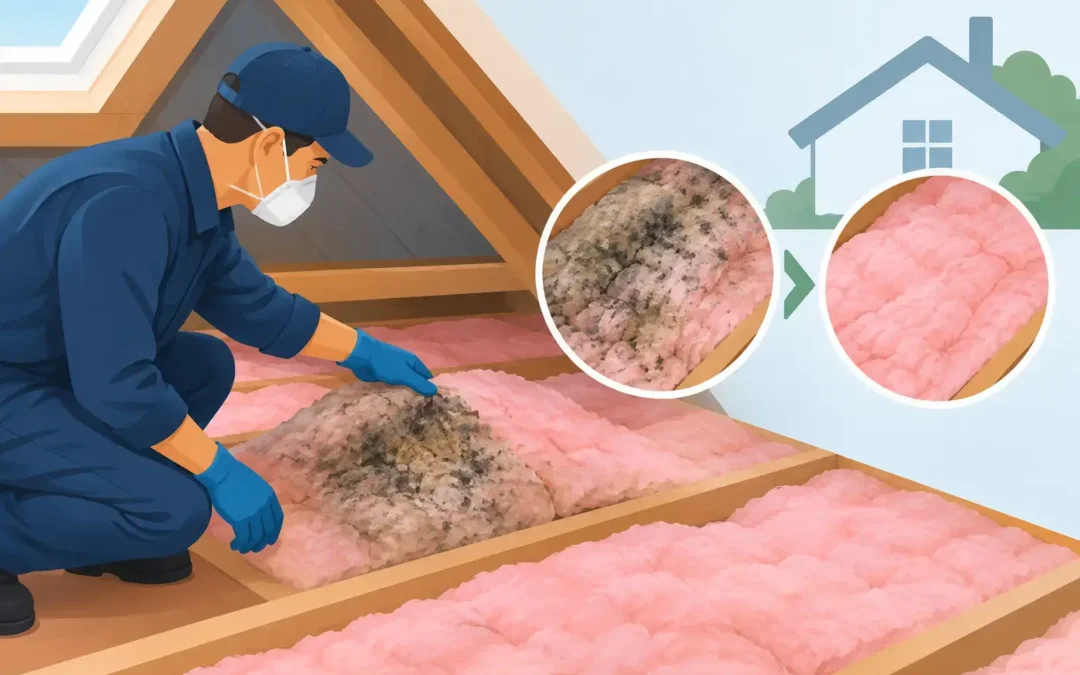
Mold does not always mean every inch of insulation must be removed. The scope depends on the type of insulation, the extent of growth, the moisture source, and whether surrounding materials are affected. But insulation with visible mold, a persistent musty odor, or significant moisture exposure is often not a good candidate for cleaning.
Porous materials can retain mold spores and moisture below the surface. In an attic, mold may be linked to roof leaks, bathroom exhaust fans venting into the space, inadequate attic ventilation, or warm indoor air leaking through ceiling gaps. In a crawl space, the usual drivers are ground moisture, plumbing leaks, poor drainage, and humid outside air.
A proper remediation plan should address containment, safe removal of affected materials, treatment of eligible structural surfaces, drying, and correction of the moisture source. New insulation belongs at the end of that process, not the beginning.
Smoke, fire, or chemical contamination
Smoke can leave fine particles and odors throughout an attic or crawl space, even when no flames reached the insulation directly. Materials exposed to significant smoke, soot, or firefighting water may need replacement because odors are difficult to remove completely from porous insulation. Chemical spills, pest-control misuse, or unknown residues also warrant professional evaluation.
If a home was built before modern material standards or contains insulation of uncertain age and composition, do not disturb it until it has been assessed appropriately. Some older materials require specialized testing and handling. A qualified contractor can help determine the proper next step without spreading dust or contaminants through the home.
Signs the Insulation Is No Longer Doing Its Job
Contamination is not always visible from the attic hatch. Homeowners may first notice the effects downstairs: a musty smell after warm weather, rooms that are hard to cool, unexplained allergy-like irritation, or rising heating and cooling bills. These signs do not prove that insulation is contaminated, but they justify an inspection.
Look for odors that return after cleaning, droppings near attic access points, stained ceiling areas, damp or compressed insulation, visible mold on framing, insect activity, and torn or disconnected ductwork. Insulation that is thin, uneven, or packed down may also be underperforming even if contamination is limited.
An attic inspection should include more than a quick look at insulation depth. The condition of ventilation, air leaks, ducts, roof penetrations, bathroom exhaust termination, and wood framing all affect whether replacement will deliver a lasting improvement. In crawl spaces, inspect for standing water, wet soil, damaged vapor barriers, foundation vents, plumbing leaks, and signs of wood decay.
Why Cleaning Alone Is Not Always Enough
Homeowners understandably want the least disruptive and least expensive solution. When contamination is localized and the insulation remains dry and intact, selective removal may be appropriate. The trade-off is that hidden contamination is easy to miss, especially in loose-fill insulation where urine and small droppings can spread below the surface.
Deodorizing products may reduce a smell temporarily, but they do not remove rodent waste, restore wet insulation’s thermal performance, or correct a mold-producing moisture source. Covering contaminated insulation with a new layer is also a poor solution. It traps the problem underneath and makes future inspection and removal more difficult.
Full removal is a larger project, but it gives the contractor access to the attic floor or crawl space framing. That access makes it possible to clean, sanitize where appropriate, locate entry points, seal air leaks, repair duct damage, and assess moisture conditions before new insulation is installed.
What a Complete Replacement Project Should Include
A reliable project begins with a clear diagnosis. Before work starts, you should understand what contaminated the insulation, how extensive the problem is, and what repairs are needed to prevent recurrence. A written scope is especially valuable when multiple issues are involved, such as rodents and duct damage or a roof leak and mold.
During removal, containment and controlled handling help limit the spread of dust and debris into living areas. After the old insulation is removed, the exposed space can be evaluated for sanitation needs, damaged wiring or ducts, mold-affected framing, air leakage, and pest entry points.
The final installation should match the home’s needs and applicable code requirements. In many homes, this may include air sealing before adding new attic insulation, repairing or replacing damaged ductwork, improving ventilation, or installing a vapor barrier in the crawl space. These details affect comfort and energy use as much as the insulation material itself.
For homeowners in Los Angeles, Ventura, Orange, and Riverside counties, attic conditions can be especially demanding because high summer heat exposes weaknesses in insulation, air sealing, and ventilation quickly. A complete solution helps keep conditioned air inside, reduce attic heat transfer, and protect the home from another round of contamination.
Do Not Wait for the Problem to Spread
Contaminated insulation rarely improves with time. Rodents multiply, small leaks become larger leaks, and damp conditions can affect more framing and finishes than homeowners expect. Acting early may limit the scope of removal and protect the parts of the home that are still in good condition.
The right decision is not always to replace every inch of insulation. It is to remove what is compromised, correct the source, and install clean insulation only after the space is dry, sealed, and ready to perform. That approach protects cleaner indoor air, more consistent comfort, and the long-term value of the home.