

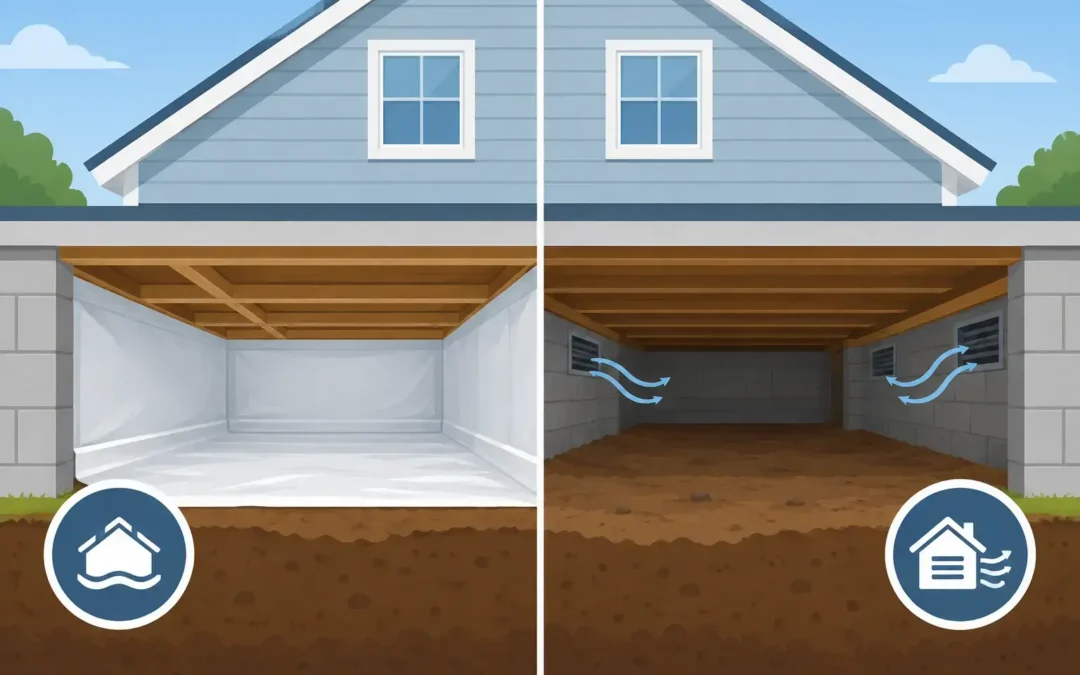
A crawl space can affect far more than the floor beneath your feet. When weighing sealed versus vented crawlspaces, the real question is how each design will manage moisture, outside air, pests, insulation, and the air your family breathes. A musty odor, cold floors, rodent activity, sagging insulation, or rising utility bills can all point to conditions below the home that need attention.
For many Southern California homes, the best answer is not simply to close vents or add more of them. It is to identify where water, humid air, pests, and air leaks are entering, then build a crawl space system that protects the structure for the long term.
What Is a Vented Crawl Space?
A vented crawl space has openings in the foundation walls that allow outdoor air to move beneath the house. This was the traditional approach for decades. The idea was straightforward: outside air would circulate through the area and carry away moisture.
That approach can work under the right conditions, especially in a dry climate with good site drainage, an intact ground vapor barrier, no plumbing leaks, and adequate clearance around the foundation. But vents do not control moisture on their own. They simply introduce outdoor conditions into an enclosed area of the home.
When outdoor air is humid, damp, or carries wind-driven rain, that air can increase crawl space moisture rather than reduce it. It can also bring in dust, pollen, wildfire smoke particles, insects, and rodents. In homes with leaky subfloors, crawl space air may be pulled upward into living areas through pressure differences created by exhaust fans, duct leaks, or HVAC operation.
Common problems in vented crawl spaces
A vented crawl space is more likely to struggle when the soil is exposed, the property has poor drainage, or ductwork and insulation are hanging below the floor. Moisture can enter through the ground, foundation walls, plumbing leaks, or wet outdoor air. Over time, this may lead to mold growth, wood damage, rusted metal components, deteriorated insulation, and pest-friendly conditions.
Vents can also become access points for rodents. Once animals enter, they may contaminate insulation, damage ductwork, and leave droppings that affect indoor air quality. Closing or screening vents without addressing the rest of the crawl space, however, can trap an existing moisture problem inside.
What Is a Sealed Crawl Space?
A sealed, or encapsulated, crawl space is intentionally separated from outdoor air and ground moisture. The work generally includes a durable vapor barrier across the soil and up foundation walls, sealed wall vents and penetrations, air sealing around access points, and moisture management suited to the home.
Depending on the property, a sealed crawl space may use a dedicated dehumidifier, carefully designed conditioned air, drainage improvements, sump equipment, or a combination of these measures. The goal is not merely to make the crawl space look clean. It is to maintain a stable, dry environment that protects wood framing, insulation, ductwork, and indoor air.
A proper encapsulation project begins with correction of active water entry. If surface water is reaching the foundation, a plumbing line is leaking, or groundwater is rising through the soil, those conditions need to be addressed before the space is sealed. A vapor barrier is highly effective against ground moisture, but it is not a substitute for waterproofing or drainage repair.
Why encapsulation can improve home performance
When a crawl space is brought into a more controlled environment, the floor above it often feels more comfortable. Ductwork and pipes are less exposed to temperature swings and moisture. Insulation can stay dry and perform as intended rather than sagging, compressing, or becoming contaminated.
Air quality can improve as well. Many homes draw air from the crawl space into wall cavities and living areas. Reducing mold spores, damp odors, soil gases, and pest contamination below the home helps reduce what can migrate upward. For homeowners with allergies, asthma concerns, or recurring musty smells, this connection matters.
Sealed Versus Vented Crawlspaces: The Key Differences
The most meaningful difference between sealed versus vented crawlspaces is control. A vented system depends on outside conditions that change daily. An encapsulated system reduces those outside influences and gives the home a more predictable moisture-management strategy.
Vented crawl spaces usually cost less at the outset if they are already in good condition. They can remain a reasonable option when there is no evidence of moisture, pest activity, or insulation failure, and when ventilation complies with applicable local requirements. Even then, the ground should be covered with an appropriate vapor barrier, and the vents, foundation, plumbing, and insulation should be inspected periodically.
Sealed crawl spaces generally require a larger initial investment because the work is more comprehensive. The project may involve cleaning and removal of contaminated debris, rodent proofing, mold remediation, vapor barrier installation, air sealing, drainage correction, insulation improvements, and dehumidification. For a crawl space with persistent moisture or contamination, that broader scope is often what produces a durable result.
Energy performance also depends on the details. Sealing a crawl space can reduce uncontrolled air leakage and protect HVAC ducts located below the floor. But it must be paired with an appropriate moisture-control plan. A tightly sealed crawl space without dehumidification, drainage, or proper conditioning can still develop high humidity.
When a Vented Crawl Space May Be the Better Choice
Not every home needs full encapsulation. If a crawl space is dry year-round, properly drained, free of pests and mold, and equipped with intact insulation and a well-installed ground vapor barrier, maintaining a vented design may be practical.
This option may also make sense when a homeowner is addressing limited repairs rather than a whole-space renovation. For example, replacing damaged insulation, repairing a small plumbing leak, improving foundation drainage, and installing pest-resistant vent covers may solve the immediate issue. The decision should be based on inspection findings, not a one-size-fits-all recommendation.
A professional should also consider local code requirements, the home’s foundation configuration, and any combustion appliances near or within the crawl space. Changes to ventilation and air sealing can affect combustion safety and should never be handled casually.
When a Sealed Crawl Space Is Worth Considering
Encapsulation is often the stronger solution when the crawl space has recurring dampness, visible mold, condensation on ducts or pipes, rodent contamination, wet or missing insulation, strong odors, or wood deterioration. It is also worth considering when heating and cooling ducts run through the crawl space and the home has persistent comfort problems.
Homes in areas with seasonal rain, poor grading, shaded foundations, or high local soil moisture can benefit from a controlled crawl space environment. In Los Angeles, Orange, Ventura, and Riverside County, conditions can vary dramatically by neighborhood, elevation, proximity to the coast, and the age of the home. An inspection should look at the actual moisture sources, not make assumptions based on a ZIP code.
Before sealing, contractors should remove debris and damaged materials, identify leaks, evaluate drainage, inspect for mold and pest entry, and check the condition of framing and ductwork. This is why crawl space work should be treated as a home-protection project, not just a vapor barrier installation.
Do Not Ignore Drainage, Pests, and Existing Damage
The crawl space system is only as effective as the work around it. Rainwater that pools beside the foundation can enter through cracks or raise moisture levels below the home. Missing downspout extensions, poor grading, and plumbing leaks can defeat both vented and sealed approaches.
Pests require equal attention. Sealing a crawl space without rodent exclusion can leave animals trapped inside, while installing a clean vapor barrier over contaminated soil without cleanup can preserve odors and health concerns. Mold should be evaluated and remediated safely before new materials are installed.
The Attic Insulation Specialists Inc. approaches crawl space projects by looking at the complete condition of the space: moisture, insulation, air leakage, contamination, pests, ductwork, and structural protection. That broader assessment helps homeowners avoid paying for a partial repair that leaves the original cause unresolved.
Choose the System That Solves the Actual Problem
A vented crawl space is not automatically wrong, and a sealed crawl space is not automatically the best investment. The right choice depends on the home’s moisture history, drainage, insulation, duct location, pest exposure, local requirements, and the condition of the materials already below the floor.
If your crawl space smells damp, shows signs of rodents, has fallen insulation, or contributes to uncomfortable rooms and high energy use, do not wait for visible structural damage. A careful inspection can identify whether targeted repairs, improved ventilation, or full encapsulation will give your home the cleaner, drier, more protected foundation it needs.