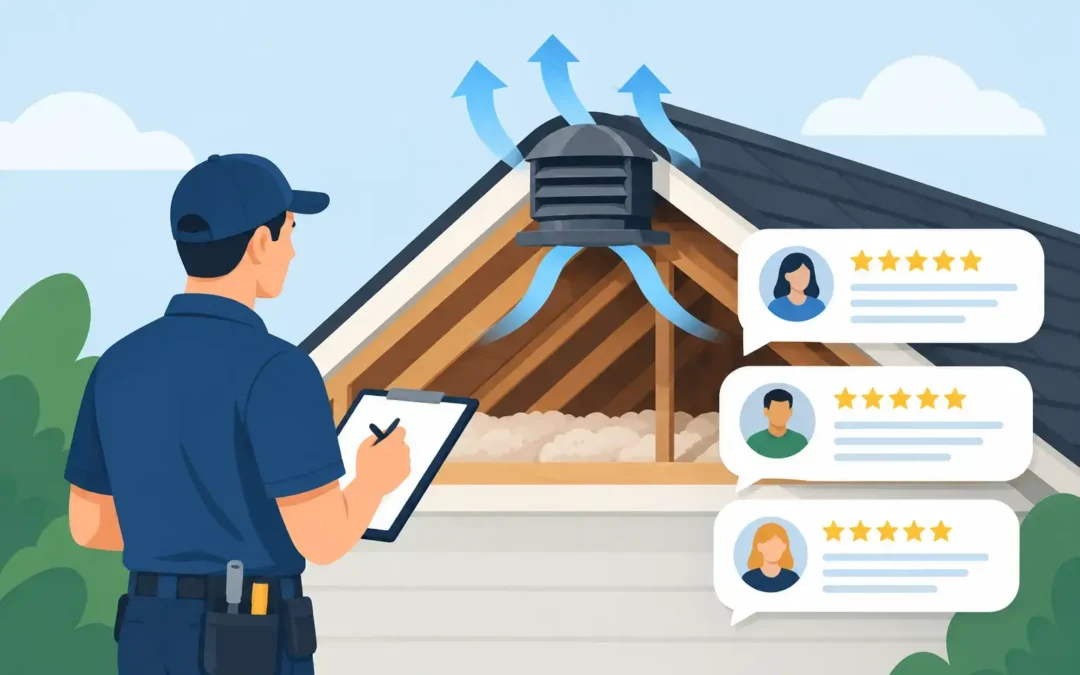
A hot upstairs bedroom, rising summer cooling bills, or condensation around attic ductwork can make attic ventilation contractor reviews feel urgent. But a five-star rating alone does not tell you whether a contractor identified the actual source of the problem, designed a code-appropriate solution, or simply recommended an attic fan.
Ventilation affects more than attic temperature. It can influence moisture conditions, roof-deck durability, insulation performance, HVAC efficiency, and indoor comfort. For Southern California homeowners, the right contractor is the one who evaluates the entire attic system before proposing work.
What Attic Ventilation Contractor Reviews Should Reveal
The most useful reviews describe the homeowner’s original condition, the work performed, and what changed afterward. A brief comment such as “great service” may reflect a pleasant appointment, but it offers little evidence about technical quality. Look for details that show a contractor listened, inspected carefully, explained findings clearly, and completed the agreed scope of work.
A strong review may mention problems such as excessive attic heat, weak airflow at vents, damaged ductwork, rodent-contaminated insulation, bathroom exhaust terminating in the attic, mold staining, or moisture around roof sheathing. Those details matter because ventilation problems often overlap with other attic conditions. A contractor who notices those connections is more likely to protect the home rather than treat one visible symptom.
Pay close attention when reviewers explain what happened after installation. Did rooms become more comfortable? Did the homeowner receive before-and-after photos? Was debris removed and the work area left clean? Did the contractor return to address a concern? Specific outcomes are more meaningful than broad praise.
Look for process, not just praise
Professional attic work is usually visible in the process. Reviews that mention a thorough inspection, written estimate, photographs, permit guidance when required, and clear communication suggest a contractor has established job procedures. Those procedures help prevent surprises once insulation is moved, ducts are exposed, or hidden damage becomes visible.
It also helps when reviews mention respectful crews and careful protection of living areas. Attic access often runs through a hallway, closet, or garage. A contractor should treat your home as an occupied living space, not just a jobsite.
Why More Ventilation Is Not Always the Answer
An attic needs balanced intake and exhaust ventilation designed around the roof configuration, existing vent openings, insulation level, and local code requirements. Adding a powered fan without considering make-up air, air leaks from the house, or roof ventilation can create new issues instead of solving old ones.
For example, an attic fan may lower attic temperature under certain conditions, but it can also pull conditioned air from the house if ceiling penetrations, recessed lights, attic hatches, or duct connections are not properly sealed. That can increase cooling demand and bring humid indoor air into the attic. The appropriate solution depends on the home.
A reliable contractor reviews the whole attic environment, including:
- Existing intake and exhaust vents, their condition, and whether airflow paths are blocked
- Insulation depth, coverage, contamination, and whether insulation is restricting soffit ventilation
- Air leaks between the living space and attic
- Ductwork condition, connections, and insulation
- Signs of roof leaks, condensation, pest activity, or microbial growth
This is why the best reviews often describe a contractor who recommended a combination of services. Air sealing, insulation replacement, duct repair, rodent proofing, attic cleaning, and ventilation improvements may all be necessary when the attic has been neglected for years. That is not automatically upselling. The key is whether the contractor can show you the evidence, explain why each item matters, and separate urgent repairs from optional improvements.
How to Read Reviews for Technical Credibility
Start by checking whether reviewers describe the company as licensed, insured, organized, and responsive. Ventilation work may involve electrical connections, roof penetrations, structural access, insulation handling, and moisture-related conditions. Appropriate licensing and insurance are basic protections, not extras.
Next, read a mix of recent and older reviews. Recent feedback shows how the company is currently scheduling, communicating, and completing projects. Older reviews can reveal whether workmanship held up and whether the contractor remained available if a customer needed follow-up.
Do not dismiss every negative review. Instead, look at the pattern and the company response. A single scheduling complaint during a busy season is different from repeated reports of incomplete work, unclear charges, roof damage, or unanswered warranty requests. A professional response should be factual, respectful, and focused on resolving the concern rather than arguing publicly.
Be cautious with reviews that sound identical or provide no project details. Authentic feedback is not always perfectly written, but it commonly includes practical specifics: a difficult attic access point, a quote that matched the final invoice, photos that documented contaminated insulation, or a noticeable improvement in comfort after the work was completed.
Questions reviews cannot answer for you
Even excellent reviews cannot determine whether a contractor is right for your house. Your roof design, attic size, existing vents, insulation type, duct layout, and moisture history are unique. Use reviews to create a shortlist, then ask each contractor how they will inspect and diagnose your conditions.
A qualified contractor should be able to explain whether the issue is ventilation, heat transfer, air leakage, insulation failure, duct loss, roof leakage, or a combination of factors. If the answer is a one-size-fits-all fan recommendation before an inspection, keep looking.
Questions to Ask Before You Hire
Ask what the inspection includes and whether the contractor will document conditions with photos. Ask how they calculate or evaluate required ventilation, how they protect intake pathways from insulation blockage, and whether the proposed work will comply with applicable building requirements.
You should also ask what happens if the attic inspection reveals rodent contamination, mold-like growth, damaged ducts, or moisture intrusion. These conditions can affect the scope and cost of the project. A dependable contractor will explain the options plainly and provide a written scope rather than pressuring you into an immediate decision.
If a powered attic ventilator is proposed, ask why it is appropriate for your home, where it will draw replacement air from, how it will be powered, and whether air sealing is recommended first. If roof work is involved, clarify who is responsible for weatherproofing and whether warranties cover both the product and the installation.
Finally, compare estimates by scope, not by price alone. A lower proposal may omit removal of contaminated insulation, air sealing, duct repairs, vent corrections, cleanup, or warranty coverage. The least expensive quote can become costly if it leaves the underlying moisture, pest, or energy-loss problem unresolved.
A Better Standard for Choosing an Attic Contractor
The contractor you choose should see your attic as part of your home’s protection system. Ventilation should work alongside insulation, air sealing, ductwork, moisture control, and pest exclusion – not in isolation. That approach can help preserve the roof structure, improve comfort, reduce unnecessary energy loss, and support cleaner indoor air.
For homeowners in Los Angeles, Ventura, Orange, and Riverside counties, attic conditions can be shaped by intense heat, aging housing stock, roof design, and long periods of cooling use. The Attic Insulation Specialists Inc. evaluates these connected conditions so homeowners can make informed decisions based on the home in front of them.
The most valuable review is not the one with the most enthusiastic wording. It is the one that shows a contractor found the real problem, explained the remedy, performed careful work, and stood behind the result. That is the standard worth bringing into every attic inspection.