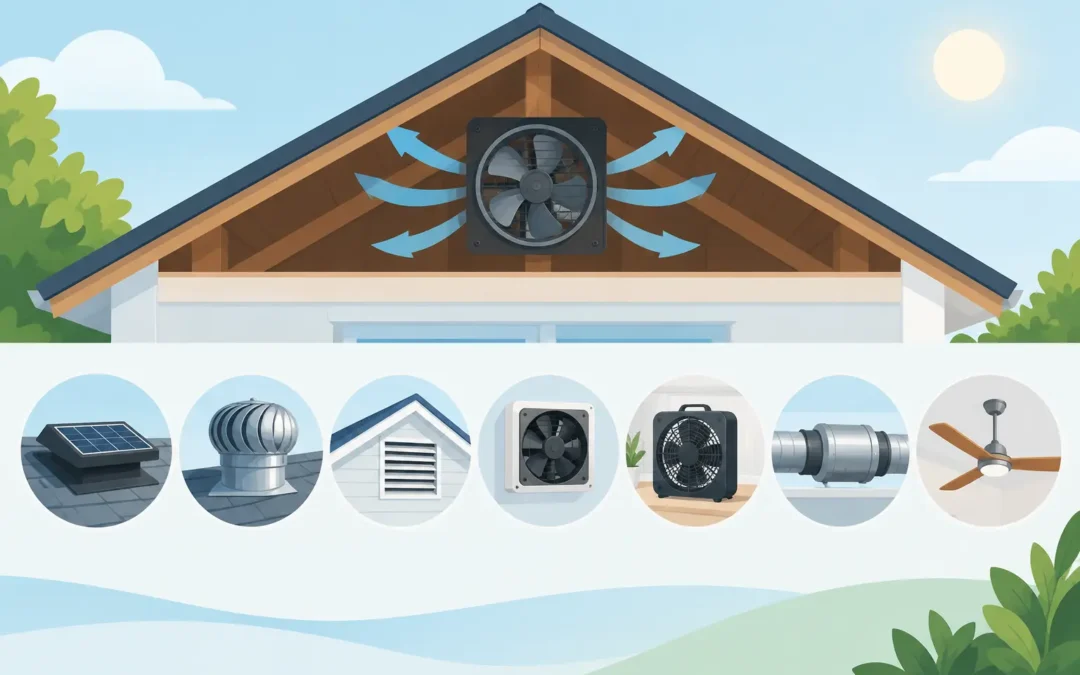
A hot attic can make a Southern California home feel impossible to cool, especially when the upstairs rooms stay warm long after the thermostat has been lowered. An attic fan may seem like the obvious answer, but attic fan alternatives often solve the underlying problem more effectively: unwanted heat entering the home, conditioned air leaking into the attic, failing insulation, or ducts baking in extreme temperatures.
A powered attic fan has a place in certain ventilation designs, but it is not a universal fix. If the attic floor has air leaks, a fan can pull expensive cooled air out of the living space. If soffit and roof ventilation are blocked, the fan may not move enough outdoor air to perform as intended. Before adding mechanical equipment, it makes sense to identify why the attic is hot and whether that heat is actually reaching your home.
Why an attic fan is not always the best first step
Attics get hot because the roof absorbs solar heat. In summer, roof deck temperatures can rise dramatically, and that heat radiates downward toward insulation, ductwork, and ceiling surfaces. A fan may lower the attic air temperature under the right conditions, but it does not stop radiant heat, seal openings, repair damaged ducts, or restore insulation that has been compressed or contaminated.
The larger concern is house-to-attic air leakage. Recessed lights, plumbing penetrations, attic hatches, wiring openings, and unsealed wall tops can allow conditioned air to escape upward. A powerful attic fan can increase that pressure difference and draw more indoor air into the attic. The result can be higher cooling costs, dusty rooms, and less consistent comfort.
For most homes, the best approach starts with the building envelope. Control air movement, restore insulation coverage, and make sure ventilation is balanced and code-appropriate. Then determine whether a fan is still necessary.
Attic fan alternatives that address the real problem
1. Air sealing the attic floor
Air sealing is often the most valuable improvement for a hot, inefficient home. This work closes the gaps between the air-conditioned living area and the attic. A professional inspection can identify openings around electrical boxes, exhaust fans, plumbing stacks, duct penetrations, attic access points, and framing transitions.
The benefit is not just energy savings. Air sealing helps keep attic dust, insulation fibers, rodent-related contaminants, and outdoor pollutants from being pulled into living areas. It also helps insulation perform closer to its intended R-value because moving air can reduce its effectiveness.
Air sealing must be completed carefully. Kitchen, bath, and dryer exhaust ducts need proper termination outdoors, and combustion appliances require safe clearances and ventilation planning. This is not a job for simply spraying foam into every visible gap.
2. Upgrading or replacing attic insulation
Insulation slows heat transfer between the attic and your ceilings. When insulation is thin, uneven, wet, rodent-contaminated, or crushed beneath storage materials, rooms below the attic can gain heat quickly. In many older homes, the insulation level is simply not sufficient for current comfort and efficiency expectations.
A properly designed insulation upgrade can make a noticeable difference in bedrooms, hallways, and second-floor spaces. The right material and depth depend on the attic layout, existing conditions, duct location, wiring, and moisture history. Blown-in insulation can provide continuous coverage around framing and obstructions, while batt insulation may suit certain accessible areas when installed without gaps or compression.
If insulation has been contaminated by rodents, mold, or water damage, adding new material on top is rarely the right answer. Removal, cleaning, sanitation, and source control should come first. Otherwise, the home can retain odors, allergens, and pest-related debris beneath the new layer.
3. Installing a radiant barrier
A radiant barrier reduces radiant heat transfer from a hot roof toward the attic below. In Southern California, where long sunny seasons put heavy heat on roof surfaces, this can be a useful part of a complete attic strategy. It is particularly helpful when ductwork runs through the attic or when roof heat is a major contributor to indoor discomfort.
Radiant barrier is not a replacement for insulation. Insulation resists conductive heat flow, while radiant barrier reflects radiant energy. Used together with adequate insulation and air sealing, the two measures can reduce the heat load reaching ceilings and HVAC equipment.
Installation details matter. The material must be positioned correctly and should not block required attic ventilation. A professional assessment can also determine whether existing roof leaks, moisture stains, or pest activity need attention before any material is installed.
4. Repairing and insulating attic ductwork
Leaky attic ducts are a frequent reason homeowners feel that their air conditioning system cannot keep up. Cooled air can escape through disconnected joints, torn flexible ducts, deteriorated tape, and poorly sealed boots. At the same time, return ducts can draw superheated attic air or dust into the HVAC system.
Duct repair is one of the most direct attic fan alternatives because it protects the cooling you are already paying for. Properly sealed, supported, and insulated ductwork delivers more conditioned air to the rooms that need it. It can also reduce strain on the HVAC system during high-demand periods.
A duct inspection should look beyond visible damage. Crushed runs, oversized or undersized ducts, poor routing, disconnected returns, and inadequate insulation can all affect performance. If ducts are heavily damaged or contaminated, replacement may provide a safer, longer-lasting result than repeated patching.
5. Improving passive attic ventilation
Passive ventilation uses intake and exhaust openings rather than an electric fan. Intake vents are usually located at the soffits or eaves, while exhaust may be provided through ridge vents, roof vents, or gable vents. When designed as a balanced system, this arrangement allows hot air and moisture to leave naturally while fresh outdoor air enters lower in the attic.
More ventilation is not automatically better. Mixing vent types without a plan can cause short-circuiting, where air moves between nearby openings instead of sweeping through the attic. Blocked soffits, missing baffles, and insulation pushed into eaves can also prevent the system from working.
A professional evaluation can verify that intake and exhaust are balanced, openings are unobstructed, and ventilation changes will not conflict with the roof design. In some cases, restoring existing passive ventilation is more effective and quieter than adding a powered fan.
6. Sealing and insulating the attic access
The attic hatch is easy to overlook because it is used infrequently, yet it can be one of the largest openings in the ceiling plane. A thin piece of plywood without weatherstripping allows heat and dust to move between the attic and the home. Pull-down stairs can be even more vulnerable because of their large perimeter gaps.
An insulated, gasketed attic access cover helps maintain the air seal and insulation boundary. It is a relatively focused improvement, but it works best when combined with air sealing around the opening and sufficient insulation across the surrounding ceiling.
7. Considering a whole-house fan carefully
A whole-house fan is different from an attic fan. It pulls cooler outdoor air through open windows and exhausts it into the attic, where the air leaves through properly sized attic vents. During cool evenings and early mornings, it can reduce indoor temperatures without running the air conditioner as heavily.
This option depends on local weather, outdoor air quality, noise tolerance, security considerations, and the home’s ventilation capacity. It may not be appropriate during wildfire smoke events, high pollen periods, or hot nights when outside air does not provide meaningful cooling. It also needs enough attic exhaust area to prevent pressure problems.
For homeowners in Los Angeles, Orange, Ventura, and Riverside counties, a whole-house fan can be useful in the right microclimate, but it should be selected as part of a ventilation plan rather than as a stand-alone purchase.
When a powered attic fan may still make sense
A powered attic fan can still be appropriate where a qualified inspection confirms adequate intake ventilation, limited air leakage from the living space, and a roof design that benefits from mechanical exhaust. Solar-powered models may reduce electrical operating costs, but they still require correct sizing and placement.
The key is to avoid treating the fan as a cure for every hot attic. If insulation is inadequate, ducts are leaking, pests have damaged materials, or moisture is present, the fan will not correct those conditions. It may hide the symptoms while the home continues to lose energy and comfort.
A hot attic is usually a system issue, not a single-equipment issue. The most durable solution begins with an inspection that looks at insulation, air leaks, ductwork, ventilation, contamination, and moisture together. That approach protects the parts of your home you cannot see every day and helps your cooling system work for your family instead of against the attic.