

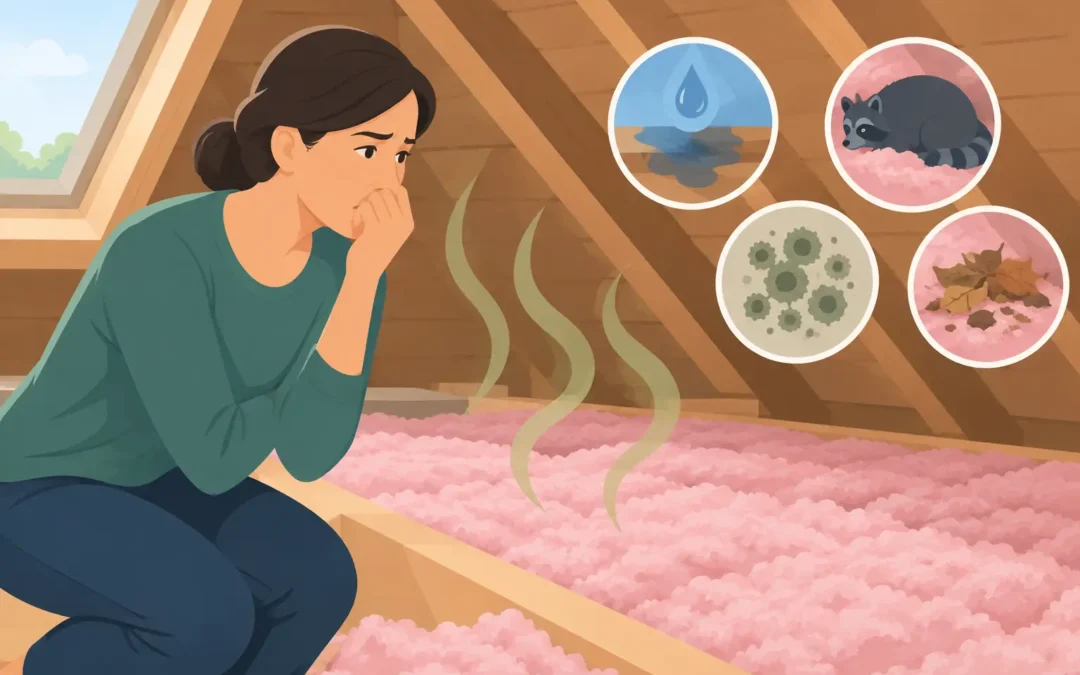
A strange odor near a ceiling vent, attic hatch, or upstairs bedroom is easy to dismiss – until it gets stronger on hot afternoons or after rain. If you are asking, why does attic insulation smell, the insulation itself may not be the original problem. In many homes, insulation has absorbed odors from rodents, moisture, mold, damaged ductwork, or materials stored above the living space.
That matters because your attic is connected to the air you breathe. Gaps around light fixtures, plumbing penetrations, duct openings, and ceiling access panels can allow attic air to move into the home. Finding the source early can protect indoor air quality, prevent further structural damage, and avoid replacing insulation before the underlying issue is corrected.
Why Does Attic Insulation Smell in the First Place?
Insulation is porous. Loose-fill fiberglass, cellulose, and older batt insulation can trap airborne particles, urine, nesting debris, moisture, and odors over time. Southern California attics also experience intense heat, which can make a mild odor far more noticeable. Heat warms contaminated materials and pushes odor-laden attic air toward conditioned living areas.
The smell can provide useful clues, but it is not a reliable diagnosis on its own. A musty smell may point to moisture or mold, while a sharp animal odor can suggest active or past rodent activity. A professional inspection looks beyond the odor to identify contamination, entry points, ventilation conditions, air leaks, duct problems, and evidence of water intrusion.
Rodents and animal contamination
Rodent contamination is one of the most common reasons attic insulation develops a persistent odor. Rats, mice, squirrels, and other animals may nest in insulation, leave droppings and urine, chew ductwork, and damage wiring. Urine can create an ammonia-like or sour smell that becomes stronger when the attic heats up.
Even after pests are gone, contaminated insulation can continue holding odor. Spraying a deodorizer over the material may temporarily mask the smell, but it does not remove droppings, nesting material, or urine saturation. Effective correction usually involves rodent proofing, careful removal of contaminated insulation, cleaning and sanitizing affected surfaces, and installing new insulation after entry points are sealed.
Moisture, mold, and mildew
A damp, earthy, or musty odor often means moisture has reached the attic. The source could be a roof leak, plumbing leak, bathroom fan venting into the attic, condensation on ducts, or poor attic ventilation. In a crawl space, ground moisture can also affect the home’s air if there are openings between the crawl space and living areas.
Wet insulation loses thermal performance and can support mold growth on nearby wood, paper facings, dust, and debris. Mold may not always be visible from the attic hatch. It can develop under insulation or around roof sheathing, framing, HVAC equipment, and penetrations. Moisture control needs to come first. Replacing insulation without correcting the leak, condensation issue, or ventilation deficiency can lead to the same odor and damage returning.
Dead animals or insects
A sudden, unpleasant decay odor can indicate an animal has died in the attic or wall cavity. The odor may be strongest for several days or weeks, depending on temperature and access. Insects can also contribute to odors when nests or organic debris accumulate in undisturbed insulation.
Removal should be handled carefully, particularly when there is evidence of droppings or nesting. Disturbing contaminated material without appropriate containment and protective equipment can spread dust and particles into the home.
Ductwork and air leaks
Sometimes the insulation is only where the odor is collecting, not where it began. A disconnected return duct can pull dusty, musty attic air into the HVAC system. Damaged flex ducts, unsealed boots, and gaps around registers can create similar problems. Air leaks through the ceiling plane can also allow attic odors to enter bedrooms, closets, and hallways.
This is why insulation work should be viewed as part of the home’s larger protection system. Air sealing, duct repair, insulation replacement, ventilation improvements, and moisture correction may all be needed, depending on what the inspection finds.
New insulation or material odors
Newly installed insulation can have a light manufacturing or packaging odor, particularly in a warm attic. In most cases, that smell should be mild and fade as the material airs out. It should not smell strongly chemical, make occupants feel unwell, or intensify over time.
Cellulose insulation can have a paper-like odor, while some foam products and adhesives may produce temporary odors during installation. If the odor remains, becomes stronger, or coincides with headaches, throat irritation, or breathing discomfort, have the area evaluated. The issue could be product-related, but it could also reveal hidden moisture, improper installation, or an unrelated source such as a duct or attic contaminant.
When an Attic Odor Needs Immediate Attention
Some smells should not wait for a routine inspection. A burning odor, hot electrical smell, or smell of melting plastic can indicate an electrical issue and warrants immediate attention. If you suspect a gas leak, leave the area, avoid switches or flames, and contact your gas utility or emergency services from a safe location.
A strong sewage-like odor can also require prompt investigation. Although it may come from animal contamination, it can signal a plumbing vent problem, drain issue, or damaged pipe. Persistent musty odors after rain deserve timely attention as well, since ongoing water intrusion can damage framing and encourage mold growth.
How Professionals Find the Real Source
A proper attic inspection does more than identify a smell. It evaluates the condition of insulation, looks for rodent droppings and entry points, checks roof sheathing and framing for moisture damage, and reviews ventilation pathways. It should also assess ducts, bathroom exhaust routing, air leaks, and areas where insulation has been compressed, displaced, or visibly stained.
When contamination is confirmed, the correct scope depends on its extent. Localized debris may require targeted cleaning. Widespread rodent activity, extensive urine contamination, mold-affected insulation, or water-damaged material often calls for removal and replacement. The work should include source control – such as rodent exclusion, roof repair coordination, duct repair, vapor control, or ventilation correction – before clean insulation is installed.
At The Attic Insulation Specialists Inc., this whole-home approach helps homeowners avoid paying for insulation twice. The goal is not simply to make an odor disappear. It is to correct the conditions that put your home’s air, comfort, energy performance, and structure at risk.
What Homeowners Should Avoid Doing
Do not cover an attic odor with fragrance sprays, ozone devices, or a new layer of insulation. These measures can conceal evidence while contamination, moisture, or pests continue underneath. Avoid walking across joists or moving large amounts of old insulation without safe access and proper protection, especially if rodent droppings or mold are present.
It is also wise not to close off vents or block ventilation openings in an attempt to keep odors out. Attic ventilation must be evaluated as a system. Blocking airflow can trap heat and moisture, worsening condensation and shortening roof-material life.
A clean-smelling attic is not merely a comfort issue. It is often a sign that moisture is controlled, pests are excluded, ducts are intact, and insulation is doing its job. If the smell keeps returning, treat it as a reason to inspect the space behind your ceiling before a manageable repair becomes a larger home-protection problem.