

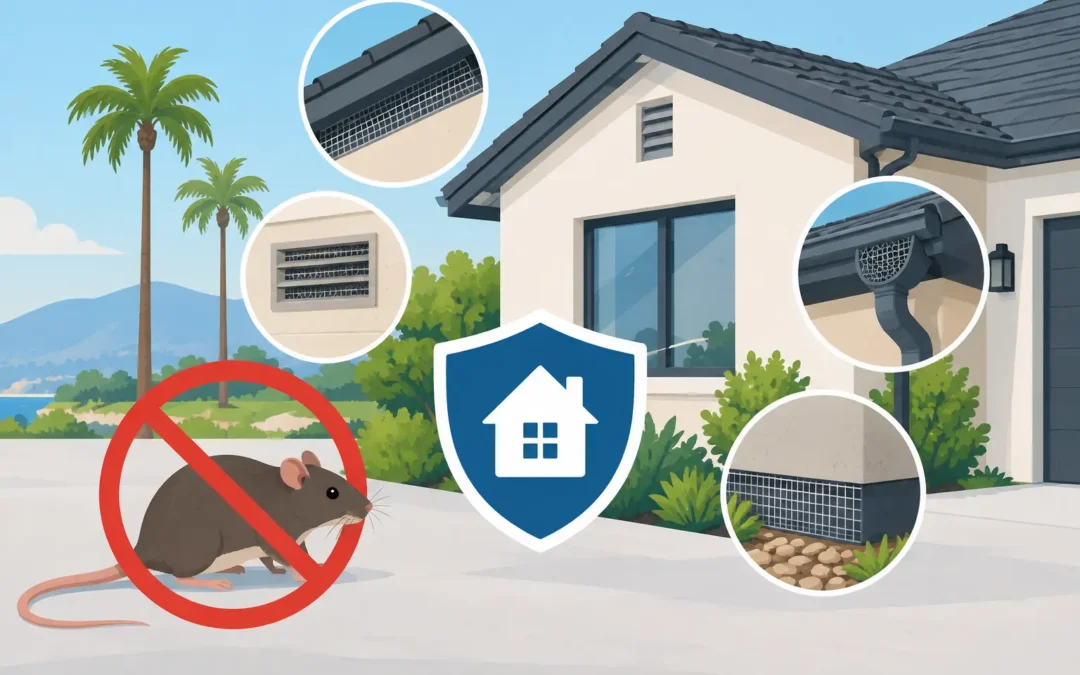
A scratching sound over the bedroom ceiling, droppings near the furnace, or a sour odor when the attic heats up can point to more than a nuisance. A proper rodent exclusion guide starts with one fact many homeowners learn too late: removing visible rodents does not solve the problem if the home still gives them a way back in.
Rodents use attics, crawl spaces, wall cavities, and garages as protected nesting areas. In Southern California, roof rats and mice can enter through openings that appear too small to matter, then damage insulation, chew wiring and ductwork, contaminate stored belongings, and leave odors that move through the home. Lasting protection requires inspection, removal, entry-point sealing, sanitation, and repairs that address the conditions that attracted them.
What Rodent Exclusion Actually Means
Rodent exclusion is the work of finding and closing the gaps, cracks, vents, and construction openings rodents use to enter a structure. It is not simply placing traps or spraying a repellent around the perimeter. Trapping may reduce the active population, but exclusion is what prevents the next rodent from reaching the attic or crawl space.
The work has to account for how a house performs as a system. An opening near the roofline can allow rats into an attic. A damaged crawl space vent may invite mice, moisture, and outside air below the floors. A poorly sealed utility penetration can provide a direct path into wall cavities. The right repair blocks pests without creating moisture, ventilation, drainage, or combustion-safety problems.
That is why sealing every opening with foam alone is not a reliable answer. Rodents can chew through many soft materials. Durable exclusion typically uses properly fitted metal flashing, hardware cloth, pest-resistant materials, and secure repairs integrated with the existing roof, siding, foundation, and ventilation details.
Rodent Exclusion Guide: Find the Entry Points First
The most important part of rodent proofing is the inspection. Rodents often enter well away from the spot where homeowners hear activity. A roof rat in an attic may have climbed a tree, crossed a utility line, entered beneath a roof edge, and traveled through a small gap at a vent or roof intersection.
A thorough inspection should assess the exterior from the foundation to the roofline, along with accessible attic and crawl space areas. Technicians look for rub marks, droppings, nesting material, gnaw marks, greasy travel paths, damaged screens, loose vent covers, and openings around pipes, conduit, air-conditioning lines, and ducts.
Common rodent entry areas include:
- Gaps at roof returns, eaves, fascia boards, and roof-to-wall intersections
- Unscreened or damaged attic, gable, and crawl space vents
- Openings around plumbing, electrical, cable, and HVAC penetrations
- Gaps beneath garage doors, exterior doors, or poorly fitted access panels
- Damaged siding, foundation vents, crawl space doors, and utility openings
The size of the opening matters less than many homeowners assume. Mice can fit through gaps around one-quarter inch wide, and rats can use surprisingly small openings when edges are weak or materials can be chewed. A small gap that looks harmless from the ground may be a regular access point after dark.
Remove Active Rodents Before Final Sealing
Exclusion must be timed correctly. If every opening is sealed while rodents are still inside, they may become trapped in the attic, walls, or crawl space. That can lead to stronger odors, dead animals in inaccessible areas, or new chewing damage as they seek another exit.
The best approach depends on the level of activity, the species, and the location of the entry points. In some cases, trapping is completed before closure. In others, one-way exit devices can allow rodents to leave while preventing re-entry. These devices must be monitored and removed once activity has stopped, then the remaining opening is permanently sealed.
This is also why a quick visual check is not enough. Rodent activity can be intermittent, especially when food sources change outdoors or temperatures shift. A professional can evaluate fresh evidence and determine whether the home is ready for final closure.
Protect Attic Insulation and Indoor Air
Rodent-contaminated insulation is not just an appearance issue. Urine, droppings, nesting debris, and carcasses can create persistent odors and affect the air quality in a home, particularly when attic air leaks into living spaces. Rodents may also compress or tunnel through insulation, reducing its ability to slow heat transfer.
Whether insulation should be removed depends on the extent of contamination. A small, isolated area may be addressed differently than widespread contamination throughout an attic. If droppings are extensive, nesting is visible, or odors remain after rodent removal, partial or full insulation removal may be the safer long-term choice.
Cleaning should be performed with appropriate containment and protective practices. Sweeping or vacuuming dry droppings without the right equipment can stir contaminated dust into the air. After sanitation, damaged air ducts, disconnected vents, and air leaks should be repaired before new insulation is installed. Otherwise, the home may remain vulnerable to both contamination and energy loss.
For homeowners who have noticed unusually high cooling costs, this step can be especially valuable. Attic damage often exposes other issues at the same time, including missing insulation, duct leakage, poor attic ventilation, and unsealed ceiling penetrations. Addressing them together helps restore comfort rather than simply covering up evidence of the infestation.
Do Not Overlook the Crawl Space
Crawl spaces create a different set of rodent risks. Ground-level vents, loose access doors, gaps around pipes, and damaged screens give rodents an easy path beneath the home. Once inside, they may damage flexible ducts, insulation, vapor barriers, wiring, and plumbing insulation.
Moisture changes the equation. A damp crawl space can attract pests while also encouraging wood deterioration, musty odors, and mold growth. Rodent proofing in this area should be coordinated with drainage, vapor barrier, waterproofing, and ventilation needs. Closing a vent without understanding the moisture conditions can create a new problem, especially in homes with existing water intrusion or condensation.
A well-planned crawl space repair may include pest-resistant vent screening, a sealed access door, repairs around utility penetrations, removal of contaminated debris, and a properly installed vapor barrier. The exact scope depends on the foundation design, local conditions, and evidence found during the inspection.
Reduce the Conditions That Invite Rodents
Exclusion is the priority, but exterior conditions can make repeat pressure more likely. Roof rats are strong climbers, so branches that touch or overhang the roof can become convenient travel routes. Dense vegetation against the home, open trash containers, fallen fruit, pet food left outdoors, and clutter near the foundation can also support rodent activity.
Simple maintenance makes exclusion work more effective. Trim branches back from the roofline, keep vegetation from covering vents or siding, secure garbage, and avoid storing cardboard, firewood, or unused materials directly against the house. These measures do not replace structural sealing, but they reduce the opportunities rodents have to test vulnerable areas.
Homeowners should also watch for new damage after heavy rain, wind, roof work, or utility upgrades. A displaced vent screen or a new penetration for cable or air-conditioning equipment can reopen a route that was previously secure.
When Professional Rodent Proofing Is Worth It
A homeowner can often spot obvious gaps at a garage door or damaged vent screen. The challenge is identifying every access point, distinguishing active routes from old damage, and making repairs that hold up against weather and chewing. Work near rooflines, attics, electrical wiring, and crawl spaces also brings safety concerns.
Professional rodent exclusion is particularly worthwhile when activity is in the attic or walls, insulation is contaminated, odors persist, ducts are damaged, or a home has had repeated infestations. A licensed, insured home-performance contractor can evaluate pest entry alongside insulation, ventilation, moisture, and air-sealing conditions. That broader view matters because rodents rarely damage only one part of the home.
For homes in Los Angeles, Orange, Ventura, or Riverside counties, heat can make attic odors and contaminated insulation especially noticeable. A complete repair plan can restore the attic or crawl space as a clean, functional part of the home while helping protect indoor comfort and energy efficiency.
The goal is not merely a quieter ceiling tonight. It is a home where rodents have no practical path in, contaminated materials are handled responsibly, and the attic or crawl space can once again protect the rooms and people above it.