
A hot upstairs bedroom, dusty indoor air, or an air conditioner that seems to run nonstop rarely comes down to insulation alone. In many homes, the real issue is a combination of thin insulation, attic air leaks, damaged ducts, rodent activity, poor ventilation, or moisture. When comparing cellulose versus fiberglass, homeowners need more than an R-value comparison. They need to know which material fits the condition of their attic and protects the home over time.
Both materials can improve comfort and reduce heating and cooling loss when installed correctly. Neither can solve contamination, roof leaks, pest entry points, or poorly sealed ceiling penetrations on its own. The right choice depends on the home, the existing insulation, and the problems found during a professional attic inspection.
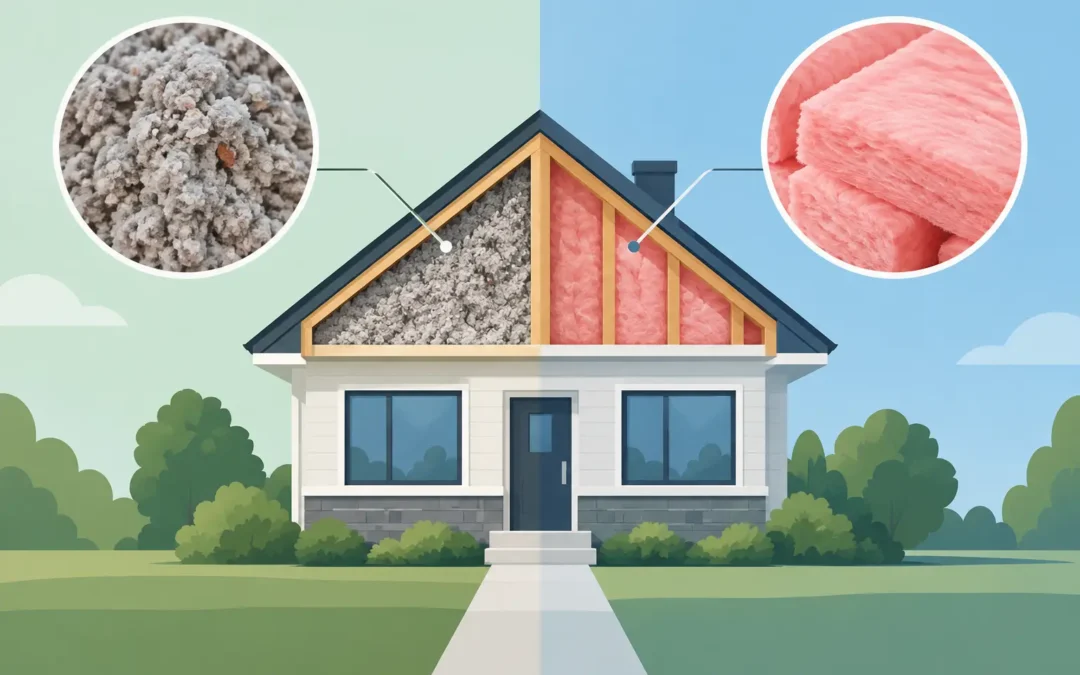
Cellulose Versus Fiberglass: The Main Difference
Cellulose insulation is typically made from recycled paper products that are treated with fire-retardant minerals, commonly borates. It is usually installed as loose-fill insulation in attics or dense-packed into enclosed wall cavities. Its fibers settle together densely, helping reduce airflow through the insulation layer when it is properly installed at the required depth.
Fiberglass insulation is made from spun glass fibers. It is available in batts, rolls, and loose-fill forms. Batts are common in open wall cavities and accessible attic areas, while blown fiberglass is often used to bring an attic up to its recommended insulation level.
Neither product is automatically better in every situation. A clean, dry attic with consistent joist spacing may be a good candidate for fiberglass batts or blown fiberglass. An attic with many irregular spaces, pipes, wiring runs, and hard-to-reach areas may benefit from professionally installed blown cellulose or loose-fill fiberglass. The quality of the installation matters as much as the material selected.
Thermal Performance Is About More Than R-Value
R-value measures resistance to heat flow. Higher R-values generally mean better insulation performance, but the number on a bag or batt is only meaningful when the insulation remains dry, evenly distributed, and uncompacted.
Cellulose often provides strong coverage around obstructions because it is blown into place. It can fill gaps around framing, wiring, and plumbing more easily than poorly cut batt insulation. Dense installation can also limit convective heat movement within the insulation layer.
Fiberglass performs well when installed at the correct thickness without gaps, compression, or voids. Blown fiberglass can provide even attic coverage, while batts can be effective where framing is regular and installation access is straightforward. Problems arise when batts are shoved around ducts, folded, compressed beneath storage boards, or left with open gaps along the edges.
For Southern California homes, attic heat gain can be especially significant. Insulation helps slow that heat transfer, but it does not stop a severely overheated attic by itself. Air sealing ceiling penetrations, repairing disconnected ducts, addressing ventilation concerns, and evaluating radiant heat exposure may be equally important parts of the solution.
Do Not Insulate Over Hidden Problems
New insulation should not be used to cover rodent droppings, urine-contaminated material, visible mold, active roof leaks, or damaged electrical conditions. Installing over these issues can trap odors, preserve contamination, and make future repairs harder.
A responsible project begins by identifying whether existing insulation can remain, needs selective removal, or requires full removal and decontamination. If pests have entered the attic, exclusion and sealing work should be completed before fresh insulation is installed. Otherwise, new material can quickly become another damaged layer.
Moisture Resistance and Mold Risk
Homeowners often ask whether cellulose or fiberglass is better around moisture. The more useful answer is that neither material should be expected to manage a moisture problem.
Fiberglass does not absorb water in the same way cellulose can, but it can still lose performance when wet or compressed. Water can also soak dust, drywall particles, wood debris, and other organic material within an attic, creating conditions that support mold growth on nearby surfaces.
Cellulose can absorb moisture and may settle or lose insulating value after a significant wetting event. Although borate treatment helps resist pests and can discourage mold growth in the insulation itself, it does not make cellulose waterproof or protect roof framing from chronic condensation or leaks.
Before choosing either product, the source of moisture needs to be corrected. That may involve roof repair, bathroom exhaust duct correction, crawl space moisture control, ventilation improvements, air sealing, or addressing condensation around HVAC equipment. A dry, well-managed attic is the foundation for long-lasting insulation performance.
Fire Safety: Understand the Real Trade-Off
Fiberglass is noncombustible, which is one reason homeowners value it for attic applications. However, faced batts and surrounding materials can still burn, and fiberglass insulation should never be treated as a substitute for proper electrical safety or required clearances around heat-producing equipment.
Cellulose is treated to improve fire resistance, but it is not fireproof. Proper installation is essential around recessed fixtures, flues, chimneys, and other heat sources. Required clearances, approved covers, and local code requirements must be followed.
The practical takeaway is simple: both materials can be safely installed in the right setting, but installation details matter. An attic should be evaluated for unsafe wiring, improperly vented combustion appliances, recessed lighting conditions, and clearance requirements before insulation is added.
Pests, Contamination, and Indoor Air Quality
Neither cellulose nor fiberglass is a rodent-proof insulation. Rodents can tunnel through, nest in, and contaminate either material. Cellulose treatments may make it less inviting to some pests, but they do not replace professional rodent proofing.
If an attic contains droppings, nesting, urine odor, carcasses, or chewed ductwork, adding insulation first is the wrong order of operations. Contaminated insulation may release odors and particles into the home through ceiling gaps, duct leaks, recessed lights, and attic access points. The appropriate response is removal when warranted, cleaning and sanitizing, sealing entry points, repairing damage, and then installing new insulation.
For homeowners concerned about indoor air quality, the material choice should be paired with careful air sealing. Gaps around ceiling penetrations can allow attic dust and insulation particles to move into living areas. A properly sealed attic floor helps keep conditioned indoor air inside the home and attic contaminants outside the living space.
Installation Quality Determines the Result
The difference between a high-performing attic and an expensive disappointment often comes down to preparation. Before installing cellulose or fiberglass, a contractor should inspect insulation depth, look for missing areas, identify air leaks, check ducts, assess ventilation pathways, and document signs of pests or moisture.
Loose-fill insulation should be installed at a uniform depth, including difficult perimeter areas. It should not block soffit ventilation where ventilation is required, bury unsafe fixtures, or cover active problems. Batt insulation should fit snugly without compression and should be cut around obstructions rather than forced into place.
Homeowners should also consider future access. Service paths, attic platforms, and equipment clearances need to be planned so that maintenance workers do not repeatedly compress the new insulation. Compressed insulation provides less thermal resistance and can create cold or hot spots below.
Which Insulation Is Right for Your Attic?
Cellulose may be a strong choice when an attic has irregular framing, many penetrations, or a need for dense, consistent loose-fill coverage. Fiberglass may be preferred when noncombustible material characteristics, low weight, or specific installation conditions make it the better fit. In some homes, the best answer is not a single material but a carefully designed scope that includes air sealing, duct repair, pest exclusion, ventilation work, and new insulation.
The Attic Insulation Specialists Inc. approaches insulation as part of a complete home-protection system. For homeowners in Los Angeles, Ventura, Orange, and Riverside counties, that means looking beyond the insulation layer to identify the conditions that caused comfort, energy, moisture, or contamination problems in the first place.
A clean, dry, sealed, and properly insulated attic can make the home more comfortable in every season. Start by correcting what is hidden above the ceiling, then choose the insulation that will protect that investment for years to come.