
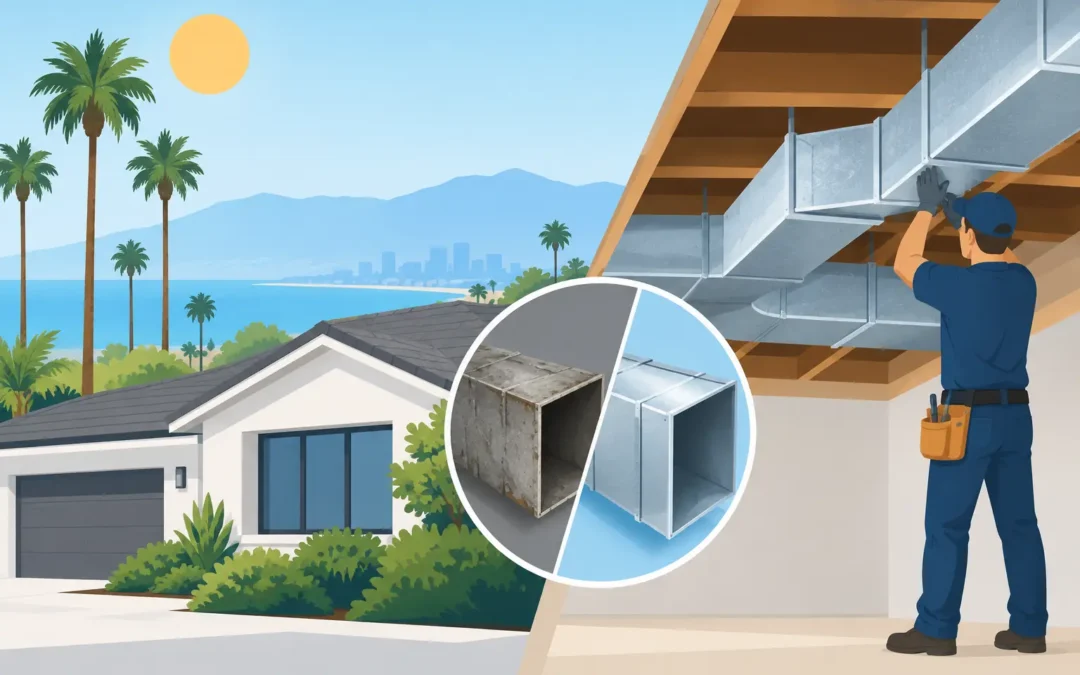
A room that never cools down, dusty air from supply vents, and utility bills that keep climbing often point to a hidden problem: failing ducts. Ductwork replacement cost is not determined by square footage alone. The layout of your home, attic or crawl space access, duct condition, contamination, and the quality of installation all affect what a lasting repair or replacement should cost.
For Southern California homeowners, ductwork deserves more attention than it usually receives. Much of it sits in brutally hot attics, where extreme temperatures magnify air loss, weaken older materials, and force an HVAC system to work harder. Replacing damaged ducts can improve comfort and efficiency, but only when the underlying causes of failure are identified and corrected.
What Is the Typical Ductwork Replacement Cost?
A whole-home duct replacement commonly costs several thousand dollars, with many residential projects falling roughly between $4,000 and $12,000 or more. Smaller, accessible homes with straightforward runs may fall below that range. Larger homes, difficult attic access, multiple HVAC zones, custom sheet-metal work, or extensive cleanup and remediation can move the total higher.
The honest answer is that an accurate price requires an on-site inspection. A quote based only on home size can miss the conditions that make the difference between a basic duct swap and a complete home-performance correction.
For example, a 1,500-square-foot single-story home may have a compact duct layout that is easy to reach from the attic. A similarly sized two-story home may have ducts routed through tight cavities, multiple return paths, and inaccessible sections behind finished walls. Those homes should not receive the same estimate simply because their square footage is similar.
What your estimate should account for
A professional ductwork replacement estimate should identify the existing duct material, the number and location of supply and return runs, access conditions, insulation needs, register connections, and the condition of the air handler or furnace plenum. It should also address whether old ducts contain rodent droppings, dust buildup, moisture damage, or deteriorated insulation.
In many attics, damaged ductwork is only part of the problem. Air leaks around ceiling penetrations, insufficient attic insulation, poor ventilation, or rodent entry points can continue wasting energy and contaminating the space after new ducts are installed. Addressing those issues during the same project may increase the initial investment, but it can prevent repeated work later.
What Raises or Lowers Ductwork Replacement Cost?
Material choice matters, but labor and access often have the greatest effect on price. Flexible ducts are widely used in residential attics because they can be routed around framing and installed efficiently. However, they must be properly sized, supported, stretched tight, and sealed. A flex duct that is sharply bent, compressed, or sagging can restrict airflow even when it is brand new.
Rigid metal ducts can be durable and may be appropriate in certain sections, but custom fabrication and installation typically cost more. Some projects use a combination of materials. The right approach depends on the home’s design, equipment requirements, available space, and local code requirements.
Several conditions commonly increase project cost:
- Restricted access in low-pitch attics, crawl spaces, or areas blocked by framing and stored belongings.
- Long duct runs, multiple systems, additions, converted garages, or rooms with poor existing airflow.
- Rodent contamination, mold concerns, water damage, or deteriorated insulation that must be safely removed.
- Return-air problems, undersized ducts, disconnected boots, or improperly installed prior work that requires redesign.
- Necessary air sealing, attic cleanup, insulation replacement, ventilation improvements, or rodent proofing.
These are not unnecessary extras when the conditions are present. They are often the reason the original duct system failed or never performed properly in the first place.
Replacement vs. Repair: Which Makes Sense?
Not every duct problem calls for full replacement. A disconnected duct, one damaged branch line, or accessible leaking connections may be repairable. Targeted repair can be a sensible option when the overall system is relatively new, clean, correctly sized, and in good condition.
Replacement is often the better long-term choice when ducts are old, crushed, brittle, heavily patched, poorly routed, contaminated, or damaged in multiple locations. It is also worth considering when the system has persistent comfort problems that patches have not solved. Repeated service calls can cost more over time than installing a properly designed system once.
Rodent activity changes the calculation. If pests have chewed duct jackets, created openings, nested near duct runs, or contaminated insulation around the system, replacing affected materials may be the safer choice for indoor air quality. Before new ducts go in, entry points should be located and sealed. Otherwise, a homeowner risks paying for replacement only to have the same problem return.
Signs your ducts may be beyond repair
Look for rooms that remain too hot or too cold despite normal thermostat settings, whistling or rattling near vents, weak airflow, unusual dust, musty odors, visible tears, and ducts lying collapsed in the attic. High energy bills without a clear explanation can also signal leakage or poor duct design.
Some signs are less obvious. An HVAC system that runs for long periods, a return grille that seems weak, or insulation that looks dirty around air leaks can indicate that conditioned air is escaping into the attic. An inspection can separate duct issues from equipment problems, insulation deficiencies, or air leaks in the building envelope.
Why Installation Quality Matters as Much as the Ducts
New ductwork should do more than replace old material. It should deliver the correct amount of conditioned air to each room while minimizing leakage and heat gain. That requires proper sizing, thoughtful routing, secure connections, sealing at joints, and adequate duct insulation.
In a hot Southern California attic, a poorly installed duct system can lose cooled air before it reaches the living space. The HVAC equipment then runs longer, indoor temperatures become uneven, and homeowners may assume they need a larger air conditioner. In reality, the better solution may be to correct the distribution system and the attic conditions around it.
Professional installation also protects against preventable issues such as kinked flex ducts, unsupported runs, loose connections, and undersized returns. These details affect airflow, static pressure, noise, equipment wear, and comfort. They also matter for code-compliant work and the durability of the finished system.
Consider the Attic or Crawl Space as Part of the Project
Ducts do not operate in isolation. When they run through an unsealed, underinsulated attic or a damp crawl space, they are exposed to conditions that reduce their performance and service life. A complete evaluation looks at the entire area, not just the visible tear in a duct jacket.
Attic insulation that is compressed, contaminated, or inadequate allows more heat into the home and makes duct losses more costly. Poor attic ventilation can intensify heat buildup. In crawl spaces, moisture, standing water, and high humidity can contribute to mold, damaged insulation, and corrosion around HVAC components.
This is where a coordinated scope of work can offer real value. Duct replacement may be paired with attic cleaning, insulation removal and replacement, air sealing, ventilation improvements, moisture control, or rodent proofing when inspection findings support it. Homeowners should not be pressured into work they do not need, but ignoring connected problems can limit the benefit of new ductwork.
How to Compare Ductwork Replacement Quotes
When comparing estimates, look beyond the bottom-line number. Confirm whether the proposal includes removal and disposal of old ducts, new insulated duct materials, proper sealing, registers and boots as needed, protection of the work area, cleanup, and any repairs required after access.
Ask whether the contractor inspected the full duct system and identified the cause of damage. Also ask about licensing, insurance, warranties, code compliance, and how the crew will handle contaminated materials if rodents, mold, or moisture are present. A low quote can become expensive if it excludes the work needed to make the replacement perform as intended.
For homeowners in Los Angeles, Orange, Ventura, and Riverside counties, attic heat and pest exposure are especially common reasons to request a full inspection rather than a phone-only estimate. Local experience matters because the conditions inside the home often matter more than a generic price range.
A well-planned duct replacement is an investment in cleaner air, more consistent temperatures, and a home that does not waste conditioned air in the attic or crawl space. The best next step is to understand what is happening around your ducts, then choose repairs or replacement that protect the whole home for the long term.