

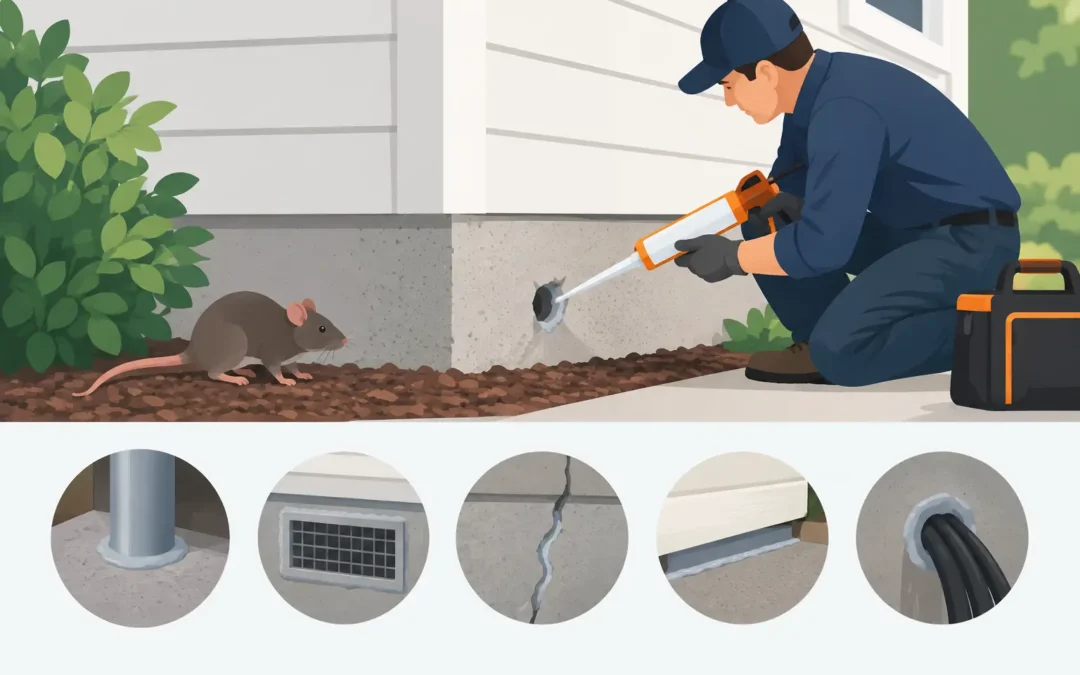
A mouse can enter through an opening about the width of a pencil. A rat needs more room, but often finds it around damaged vents, plumbing lines, roof gaps, or crawl space access doors. Knowing how to seal rodent entryways means looking beyond the animal you saw and addressing the pathways that let rodents reach insulation, ductwork, wiring, and living spaces.
For Southern California homeowners, rodent exclusion is not simply a pest-control chore. It is a home-protection measure. Rodents can contaminate attic insulation with droppings and urine, damage HVAC ducts, chew electrical wiring, and bring odors and airborne particles into the home. A durable repair closes access without creating moisture, ventilation, or drainage problems elsewhere in the structure.
Start With a Complete Exterior and Attic Inspection
Successful rodent proofing begins with identifying every likely entry point, not just the most obvious hole. Rodents commonly travel along fences, utility lines, shrubs, roof edges, and foundation walls. Once they find a protected opening, they may establish nests in attics, wall cavities, crawl spaces, and insulation.
Inspect the home from the ground up. At the foundation, look for gaps where pipes, conduit, cable lines, or air-conditioning lines pass through walls. Check garage corners, weep screed areas, crawl space vents, access doors, and gaps beneath exterior doors. Around the roofline, inspect attic vents, fascia boards, eaves, chimney flashing, roof returns, and locations where two roof sections meet.
Inside, an attic or crawl space inspection often tells the fuller story. Droppings, nesting material, trails through insulation, chewed ducts, gnawed wiring, and soiled insulation can indicate where rodents have traveled, even when the exterior opening is difficult to see. A professional inspection is particularly useful when access is limited, the roof is steep, or contamination may be present.
Watch for Openings Rodents Use Most Often
The most common rodent entryways are not always dramatic. They include gaps around utility penetrations, torn or unprotected vent screens, warped garage weatherstripping, cracked foundation vents, loose soffits, and openings beneath roof tiles or flashing. Rats may enter through damaged attic vents or larger gaps at the eaves. Mice often use small cracks around pipes and wiring that homeowners overlook.
Trees and dense landscaping do not create a hole in the house, but they can give rodents an easy route to one. Branches that touch or overhang a roof can function as a bridge. Keeping vegetation trimmed back supports exclusion work, but it cannot replace properly sealing the building envelope.
Use Materials Rodents Cannot Easily Defeat
Not every filler material belongs in a rodent-proofing repair. Expanding foam alone is not a reliable barrier because rodents can chew through it. Caulk alone may work for a very narrow crack, but it is not suitable for larger voids, moving joints, or damaged framing.
For small openings around pipes and other penetrations, use a combination of metal mesh or copper mesh and a high-quality exterior-rated sealant. The mesh provides chew resistance, while the sealant helps hold the repair in place and closes small edges. Avoid relying on ordinary steel wool as a permanent exterior solution, since it can rust and deteriorate.
Larger holes generally require a more substantial repair using galvanized hardware cloth, sheet metal, or properly fitted flashing. The material must be securely fastened to solid framing or masonry, with no loose edges that rodents can pull back. For damaged soffits, fascia, siding, or roof components, replacing the deteriorated section is usually more durable than covering it with an improvised patch.
Vent openings require special care. Attic, crawl space, dryer, and other vents must still perform their intended function after rodent proofing. Use appropriately sized, corrosion-resistant screening that blocks rodent access without restricting required airflow. Blocking a vent completely can trap moisture, contribute to condensation or mold conditions, and create bigger problems than the original pest issue.
Seal Entryways Only After You Address Active Rodents
One of the biggest mistakes homeowners make is sealing an active entry point while rodents may still be inside. If animals are trapped in the attic, walls, or crawl space, they may chew new escape holes, die in inaccessible areas, or move deeper into the home.
The right timing depends on the infestation and the structure. In some cases, trapping and monitoring should take place before final exclusion. In others, a qualified technician may install one-way exclusion devices at confirmed travel routes, allowing rodents to exit while preventing re-entry. Those devices must be monitored and removed before the opening receives its final permanent repair.
This is also why poison is not a substitute for exclusion. Rodenticides may leave dead animals inside inaccessible building cavities and do nothing to stop future rodents from using the same opening. A lasting plan removes current activity, seals the access points, and corrects conditions that make the space attractive.
Do Not Overlook Attic and Crawl Space Damage
Once rodents have entered, sealing holes is only one part of the work. Contaminated insulation can hold droppings, urine, nesting debris, and odors. Disturbed insulation also loses effectiveness, which can make upper rooms hotter in summer, increase heating and cooling costs, and place additional strain on HVAC equipment.
In an attic, inspect insulation coverage, duct connections, ventilation pathways, and visible wiring after rodent activity is identified. Chewed or disconnected ductwork can pull unconditioned attic air into the HVAC system. Damaged wiring should be evaluated by the appropriate licensed professional before insulation is installed or replaced.
In a crawl space, rodent activity may occur alongside moisture problems. Standing water, plumbing leaks, damp soil, missing vapor barriers, and poor drainage can create an environment that attracts pests and supports mold growth. Rodent proofing should not seal moisture into the crawl space. The repair may need to include cleaning, moisture control, vapor barrier installation, drainage corrections, or crawl space encapsulation, depending on the condition of the home.
Make the Home Less Attractive After Sealing
Exclusion is strongest when paired with basic property maintenance. Keep trash containers closed, clean up fallen fruit, avoid leaving pet food outdoors, and store birdseed or bulk food in sealed containers. Repair dripping hose bibs and irrigation leaks, since rodents need dependable water as well as shelter.
Pay attention to the garage and adjacent storage areas. Cardboard, stored fabric, clutter, and open pet-food bags give rodents nesting material and cover near the home. A clean garage will not stop an animal from using a roof gap, but it reduces the chance that a small problem becomes a larger indoor infestation.
Continue checking prior repair areas after heavy rain, wind, landscaping work, roof repairs, or utility upgrades. New cable installations and plumbing changes can create fresh gaps. Weather can also loosen sealants, screens, and flashing over time.
When Professional Rodent Proofing Is the Better Choice
A homeowner can handle a visible, low-level gap around a pipe or a worn door sweep. Professional help is often the safer choice when rodent activity involves the attic, crawl space, roofline, contaminated insulation, inaccessible vents, electrical damage, mold concerns, or repeated infestations.
The Attic Insulation Specialists Inc. approaches rodent proofing as part of the home’s overall protective system. That means identifying access points, addressing contaminated attic or crawl space conditions, and evaluating insulation, ductwork, ventilation, and moisture issues that can affect comfort and indoor air quality. Licensed, insured work is especially valuable when repairs involve high roof areas, structural openings, or remediation conditions.
A sealed home should still breathe and drain correctly. The goal is not to close every opening indiscriminately. It is to close the openings rodents use while preserving the ventilation, flashing, drainage, and access details your home needs to stay dry, efficient, and protected.
If you hear scratching overhead, find droppings in the garage, or notice insulation disturbed in the attic, act before the damage spreads. A careful inspection and properly selected repairs can protect the spaces you do not see every day, along with the air, comfort, and value of the home you rely on.