
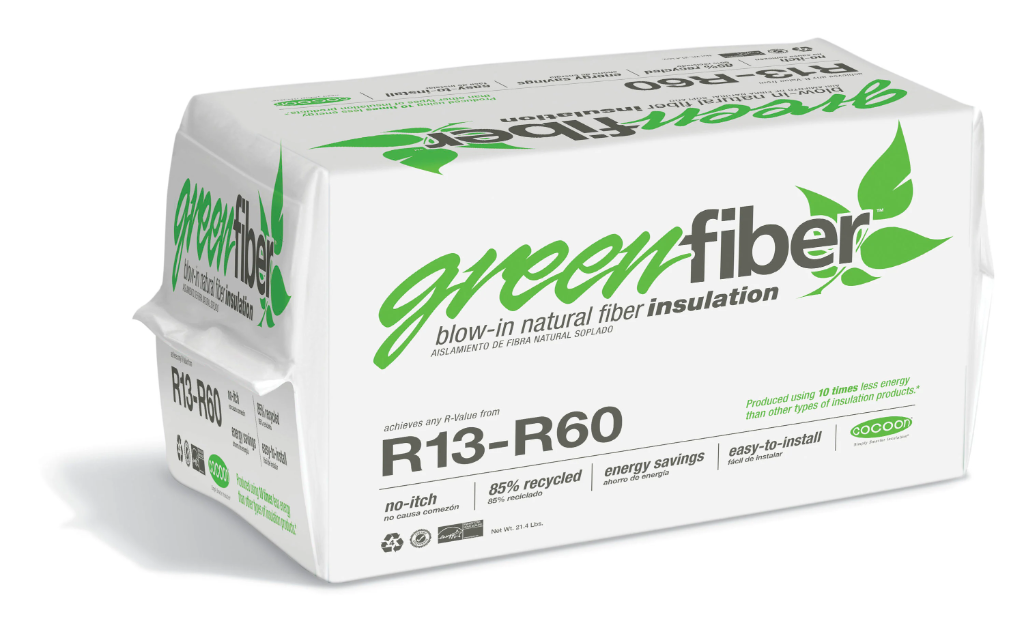
Description
Greenfiber Cellulose: Dense, Quiet, Recycled
Cellulose is shredded recycled paper treated with fire retardants and blown into attics. Because it packs more densely than fiberglass, it resists air movement through the insulation layer, which helps in drafty older homes, and it deadens sound from rain, aircraft and street noise. Greenfiber’s Low Dust formula cuts the dust that makes cellulose installs messy.
Specifications
| Brand | Greenfiber |
|---|---|
| Product | Low Dust blown-in cellulose |
| Material | Recycled paper fiber with fire retardants |
| R-value | Up to R-60 depending on depth |
| Coverage at R-30 | Roughly 40 sq ft per bag (follow bag chart) |
| Installation | Machine-blown |
Cellulose vs Fiberglass
- Air and sound: cellulose is denser and better at both.
- Bags: cellulose needs more bags per square foot because it is heavier.
- Moisture: cellulose absorbs water, so roof leaks must be fixed first; fiberglass does not.
- Settling: cellulose settles more, which the bag chart accounts for with a greater installed depth.
How Many Bags?
At roughly 40 sq ft per bag at R-30, a 1,200 sq ft attic needs about 30 bags. Use the chart on the bag for other R-values.
Buy It or Have It Installed
Order Greenfiber here, or let our licensed crew (CSLB #1139733) install it. See our cellulose insulation installation page and compare all blown-in insulation.
Greenfiber Low Dust Blown-In Cellulose FAQ
- Is cellulose insulation fire safe?
- Cellulose is treated with fire retardants during manufacturing. Keep all insulation away from flues and non-IC recessed lights as required.
- Does cellulose attract rodents?
- Rodents nest in any attic insulation. The fix is sealing entry points; see our attic rodent-proofing service.