Description
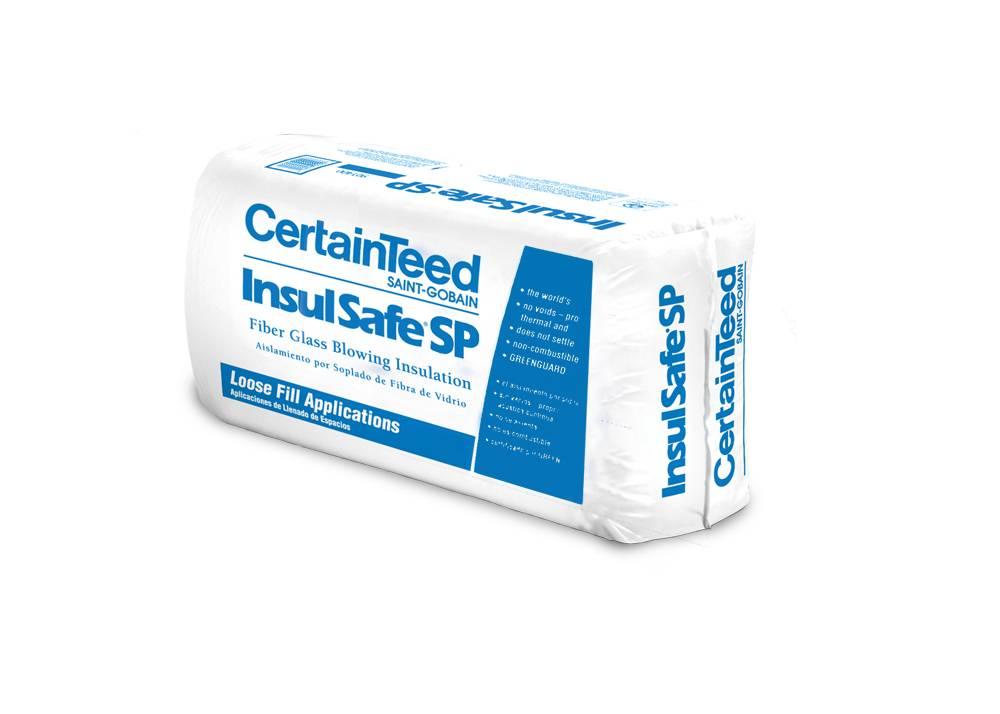
CertainTeed InsulSafe SP: Premium Blown-In for Big Attics
Large, open attic floors, typical of newer tract homes in the Inland Empire, Santa Clarita and Las Vegas, are where blown fiberglass shines. InsulSafe SP is CertainTeed’s premium blowing wool: it covers well per bag, fills evenly around trusses and ducts, and doesn’t absorb water the way organic materials can.
Specifications
| Brand | CertainTeed |
|---|---|
| Product | InsulSafe SP Premium loose-fill fiberglass |
| R-value | Up to R-70 depending on depth |
| Coverage | Follow the coverage chart on the bag for each R-value |
| Installation | Machine-blown |
| Sold by | Bag |
Fiberglass or Cellulose?
- Fiberglass (InsulSafe SP) is lighter, won’t absorb moisture and is non-combustible.
- Cellulose (Greenfiber) is denser, slows air movement and adds sound control, but uses more bags per square foot.
Before You Blow
- Seal top plates, wiring holes and duct chases.
- Add baffles at the eaves so soffit vents stay open.
- Build a dam around the attic hatch.
- Keep insulation away from flues and non-IC recessed lights.
Buy It or Have It Installed
Pick up InsulSafe SP here, or let our licensed crew (CSLB #1139733) blow in your attic across Southern California and Las Vegas. See our CertainTeed insulation installation page and all blown-in insulation.
CertainTeed InsulSafe SP Premium Blown-In Fiberglass FAQ
- How much InsulSafe SP do I need?
- Use the coverage chart printed on the bag. It lists the minimum settled thickness and bags per 1,000 sq ft for each R-value from R-11 up.
- Is blown-in fiberglass better than batts?
- For open attic floors with lots of obstructions, blown-in usually gives more complete coverage. Batts are easier to handle for DIY projects in open, regular framing.