

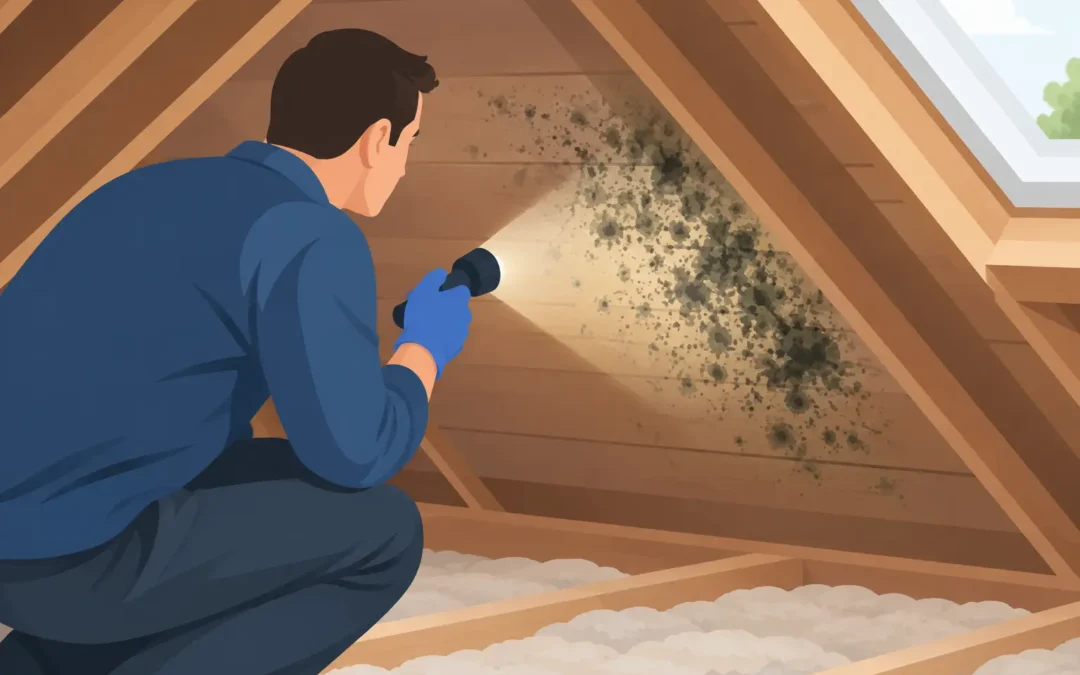
A dark stain on attic plywood is easy to dismiss as old dirt or a harmless mark from construction. That assumption can be expensive. Knowing how to spot attic mold helps you catch a moisture problem before it damages framing, contaminates insulation, affects indoor air, or turns a limited repair into a larger remediation project.
Mold is not the root problem. It is evidence that moisture has been present long enough for growth to begin. In Southern California homes, that moisture may come from a small roof leak, a disconnected bathroom exhaust duct, condensation on HVAC equipment, poor attic ventilation, or humid air escaping from the living space below. Finding the visible growth matters, but finding and correcting its moisture source is what protects the home long term.
How to Spot Attic Mold Safely
Start with a visual inspection only if you can enter the attic safely. Use a bright flashlight, wear gloves, avoid stepping between ceiling joists, and do not compress or disturb insulation. If you see extensive growth, wet materials, damaged electrical wiring, or a sagging roof deck, stop and arrange a professional inspection rather than trying to investigate further.
Look first at the underside of the roof sheathing – the plywood or boards directly beneath the roof covering. Mold often appears there because this is where warm, humid air can condense against cooler surfaces. Check around roof penetrations, including plumbing stacks, chimneys, skylights, vents, and any area beneath a roof valley.
Mold can be black, gray, green, brown, or white. It may look fuzzy, speckled, powdery, or like irregular staining. Color alone cannot identify mold, and not every dark attic stain is active growth. Water marks, soot, wood aging, and old adhesive can look similar. What matters is the pattern, the surface condition, and whether there are signs of ongoing moisture.
A musty, earthy odor is another warning sign. You may notice it most strongly near the attic hatch, in an upstairs closet, or when HVAC equipment starts running. Odor does not prove mold, but it is a reason to inspect for damp insulation, leaks, rodent contamination, or poorly vented air ducts.
Signs the Attic Has a Moisture Problem
Attic mold rarely appears by itself. Homeowners should look for related conditions that point to moisture moving through the attic.
Damp, compressed, or stained insulation is a common clue. Fiberglass insulation that has been wet loses its ability to resist heat flow, which can make rooms harder to cool and raise utility costs. Cellulose insulation may clump, mat down, or develop an odor after water exposure. Insulation contaminated by mold, water, or rodents may need removal rather than a surface treatment.
Look for rust on metal components such as nail heads, HVAC straps, duct connections, electrical boxes, and furnace platforms. Rust forms when humid air repeatedly reaches cold metal surfaces. You may also see water droplets, white mineral residue, peeling wood fibers, or dark rings around roof penetrations.
Pay attention to the location of the growth. A concentrated patch below a roof penetration or beneath a damaged shingle area can indicate a roof leak. Growth spread broadly across the roof deck is more likely connected to condensation, inadequate ventilation, or warm household air leaking into the attic. A professional assessment can distinguish between these causes, which is essential because the repairs are different.
Where Attic Mold Often Hides
Visible roof sheathing is only part of the attic. Mold can develop on framing, insulation facing, stored boxes, duct insulation, and the back side of drywall around the attic opening. The areas below bathroom and laundry exhaust fans deserve special attention. Those fans should discharge outdoors through properly connected, insulated ducting – not into the attic.
HVAC ducts are another frequent concern. A disconnected duct can release conditioned air into the attic, wasting energy while creating condensation conditions. Leaky return ducts can pull dusty or contaminated attic air into the HVAC system. When duct insulation is wet or deteriorated, it may conceal mold growth and should be evaluated before any repair is made.
In older homes, recessed lights, unsealed ceiling openings, wiring penetrations, and poorly weather-stripped attic hatches can allow warm indoor air to enter the attic. This air carries moisture. During cooler nights or seasonal temperature swings, that moisture can condense on the roof deck. Air sealing these gaps is often as important as improving ventilation.
Why Southern California Attics Still Develop Mold
Dry outdoor weather does not make an attic immune to mold. Coastal humidity, marine layers, winter rain, occasional roof damage, and large daily temperature changes can all contribute. Inland homes can also develop serious attic moisture problems when bathroom exhaust, duct leaks, or indoor air leakage introduce humidity into a hot attic.
Overheated attics create another complication. Extreme heat can shorten the life of roofing materials, strain HVAC ducts, and make small ventilation deficiencies more consequential. However, adding ventilation alone is not a universal mold cure. If humid air is entering from the home below or a roof leak is present, more vents will not solve the source. The attic needs a balanced approach that considers roofing, intake and exhaust ventilation, insulation, air sealing, ducts, and moisture control.
What Not to Do When You Find Suspected Mold
Do not spray bleach, paint over the stain, or install new insulation on top of a suspected mold problem. These actions can hide evidence while leaving wet materials and the cause of moisture in place. Bleach is also not an appropriate solution for every porous attic surface, particularly when growth has affected wood fibers or insulation.
Avoid sweeping, vacuuming, or pulling out contaminated insulation without suitable containment and protective equipment. Disturbing dry mold, rodent droppings, or deteriorated insulation can release particles into the home. It also becomes harder to determine the extent of the problem once material has been moved.
Do not assume a roof replacement will automatically correct attic mold. If mold was caused by a disconnected fan duct, condensation, or ceiling air leaks, the condition can return beneath a new roof. A complete diagnosis should identify both the visible damage and the pathway that supplied moisture.
When a Professional Inspection Makes Sense
A professional attic inspection is advisable when growth covers more than a small area, insulation is wet or contaminated, roof decking feels soft, odors are entering the living space, or you cannot safely access the attic. It is also the practical choice when a home has recurring roof leaks, high cooling bills, uneven room temperatures, or signs of rodents alongside suspected mold.
A qualified contractor should assess the attic as a system. That means examining roof sheathing and framing, checking ducts and exhaust terminations, evaluating insulation condition, locating air leaks, and reviewing ventilation pathways. Moisture readings can help determine whether materials are currently wet, while the visible pattern of staining can help identify prior or active conditions.
The remedy may include correcting a roof leak, reconnecting or replacing ductwork, removing contaminated insulation, cleaning or remediating affected structural surfaces, sealing ceiling penetrations, installing appropriate ventilation, and restoring insulation to the right depth. The right scope depends on what caused the moisture and how far contamination has spread. A light surface condition from an isolated, corrected leak is not handled the same way as widespread roof-deck growth with damaged insulation.
Protect the Attic Before Mold Returns
After the moisture source is corrected and affected materials are properly addressed, prevention becomes straightforward: keep roof penetrations maintained, make sure bath and laundry fans vent outdoors, repair duct leaks, and keep the attic hatch sealed. Periodic attic checks after heavy rain or plumbing work can catch changes early.
Your attic is not just empty space above the ceiling. It affects comfort, energy use, air quality, and the condition of the structure protecting your family. If you find suspicious staining or smell persistent mustiness, treat it as a useful warning from the home – one worth investigating before a hidden moisture issue becomes a larger repair.