

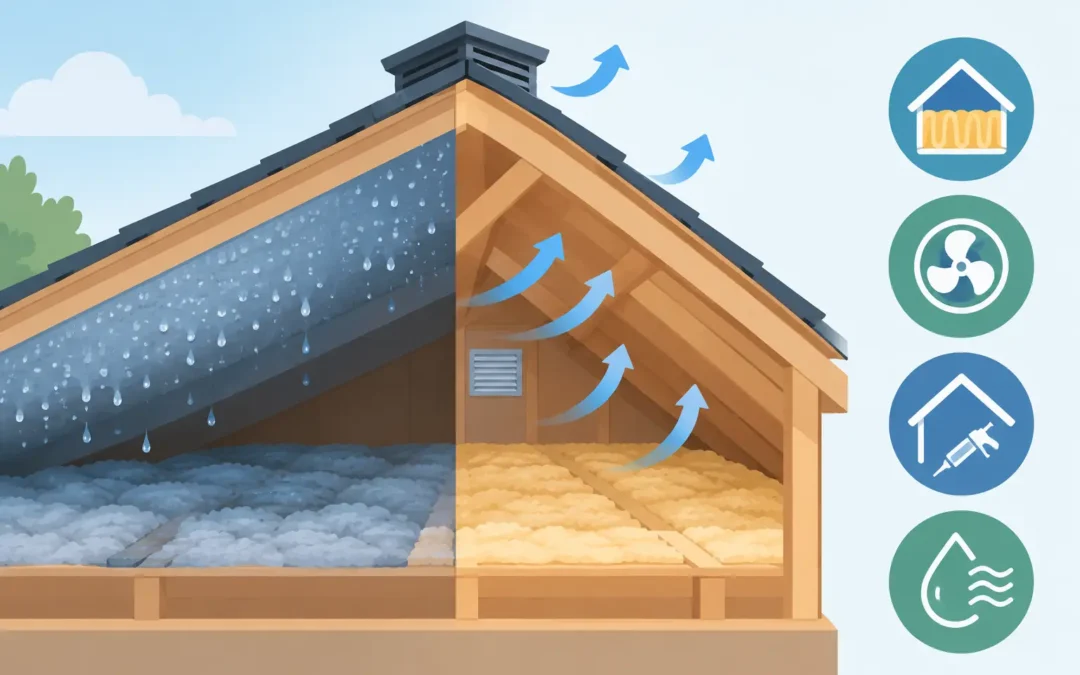
A damp attic is rarely just an attic problem. Moisture above the ceiling can soak insulation, stain framing, corrode metal components, feed mold growth, and eventually affect the air your family breathes. Learning how to prevent attic condensation starts with finding out where the moisture is coming from – because adding a vent alone will not solve every cause.
For Southern California homeowners, attic condensation can be especially confusing. Many homes experience hot days, cool nights, coastal humidity, winter rain, and heavy air-conditioning use in the same year. That combination can expose air leaks, poorly insulated ducts, roof leaks, and ventilation problems that have stayed hidden for years.
Why Attic Condensation Happens
Condensation forms when humid air reaches a surface cold enough for that moisture to turn into water. In an attic, that can mean water droplets on roof sheathing, nails, ducts, or metal vents. The moisture may come from inside the home, from outdoor air, from a plumbing or roof leak, or from wet materials left after a prior water event.
The most common source is warm, humid household air escaping through openings in the ceiling plane. Recessed lights, attic hatches, plumbing penetrations, electrical holes, unsealed duct chases, and gaps around exhaust fans can all allow conditioned indoor air to enter the attic. When that air hits a cooler roof deck or duct surface, condensation can develop.
A bathroom fan that releases moist air into the attic instead of outdoors creates the same issue on a larger scale. So can an unvented dryer, disconnected ductwork, or a leaky HVAC system. If insulation is thin, displaced, rodent-contaminated, or compressed, the ceiling below the attic also stays less protected from temperature changes.
Confirm Condensation Before Choosing a Fix
Water stains and damp insulation do not automatically mean condensation. A roof leak, failed flashing, cracked pipe, disconnected condensate line, or wind-driven rain can leave very similar evidence. The repair depends on the source, so diagnosis matters.
Condensation often appears as widespread dampness on the underside of the roof sheathing, rusted nail tips, or moisture that is worse after cool nights or periods of high indoor humidity. Roof leaks tend to be more localized around penetrations, valleys, chimneys, skylights, or damaged roofing materials. Still, homes can have both conditions at once.
A professional attic inspection should look beyond visible water. The inspection should evaluate insulation condition, air leakage paths, ventilation layout, ductwork, bathroom exhaust routing, rodent activity, mold growth, roof penetrations, and signs of structural deterioration. This whole-system approach prevents a homeowner from paying for a partial fix while moisture continues to move through another opening.
How to Prevent Attic Condensation With Air Sealing
Air sealing is usually the first and most effective line of defense. The goal is to stop humid indoor air from entering the attic through gaps in the ceiling and wall cavities.
Common leakage points include attic access doors, recessed fixtures, wiring holes, plumbing stacks, top plates, open soffits, furnace or duct chases, and gaps around bathroom fan housings. These areas should be sealed with materials appropriate for their location and fire-safety requirements. An attic hatch may also need weatherstripping and an insulated cover so it does not become a weak point in the ceiling.
Air sealing must be done carefully. Some openings are required for safe appliance operation, and recessed lights or flues may require rated clearances. Sealing around combustion equipment without understanding the home’s ventilation needs can create safety concerns. This is one reason a trained contractor should evaluate the attic as part of the complete home envelope rather than treating every gap the same way.
Improve Insulation After the Leaks Are Sealed
Insulation slows heat transfer, helping keep the ceiling plane warmer in winter and reducing attic heat gain during hot weather. But insulation cannot stop moisture-laden air from moving through open gaps. Installing new insulation before air sealing can cover those leaks instead of correcting them.
Once the attic floor is properly sealed, insulation should be evaluated for depth, coverage, contamination, and moisture damage. Wet insulation loses performance and may hold contaminants from rodents or mold. In many cases, affected insulation should be safely removed before new material is installed.
The right insulation level depends on the home’s construction, existing materials, local code requirements, and HVAC design. More insulation is not automatically better if it blocks soffit intake vents, buries unsafe fixtures, or traps an unresolved moisture problem. Proper installation leaves ventilation paths open while creating consistent coverage across the attic floor.
Balance Intake and Exhaust Ventilation
Attic ventilation helps remove heat and moisture, but it works only when air has a clear path in and out. In a vented attic, intake vents near the eaves or soffits bring in outside air, while exhaust vents near the roof ridge or high on the roof allow warm air to leave.
Adding more roof vents without adequate intake can provide little benefit. Likewise, blocked soffit vents, insulation packed against the eaves, or missing baffles can stop airflow before it begins. A contractor should assess the entire ventilation system, including whether the existing roof design supports balanced airflow.
Powered attic fans can be useful in certain situations, but they are not a universal moisture cure. A poorly selected or improperly installed fan may pull conditioned air from the house through ceiling leaks, increasing energy costs and potentially worsening condensation. Homes with gas appliances also need careful evaluation to avoid pressure-related safety issues.
In some homes, the best answer is not more ventilation but better air sealing, duct repair, insulation, or a different attic design. The correct approach depends on how the home was built and how moisture is entering the space.
Keep Bathroom, Laundry, and HVAC Moisture Out of the Attic
Bathrooms produce a surprising amount of moisture. Every bathroom exhaust fan should vent directly outdoors through a properly connected, insulated duct. It should never terminate inside the attic, and it should not discharge near an attic intake where moist air can be drawn back into the space.
Use the fan during showers and for a reasonable period afterward to clear humid air. If the fan is weak, noisy, disconnected, or rarely used because it does not work well, repair or replacement may be needed. A fan that vents outdoors but has crushed, torn, or uninsulated ducting can still release moisture into the attic.
HVAC ducts deserve the same attention. Leaky return ducts can pull hot, dusty, or humid attic air into the system. Leaky supply ducts waste cooled air into the attic and can create temperature differences that encourage condensation on duct surfaces. Damaged duct insulation, disconnected runs, and sweating refrigerant lines should be corrected before they lead to larger comfort or moisture issues.
Address Roof Leaks, Pests, and Existing Damage
No amount of air sealing will solve an active roof leak. Damaged shingles, loose flashing, failed seals around penetrations, and plumbing leaks need prompt repair. Moisture that enters from above can saturate insulation and framing, creating the conditions for mold even in a well-ventilated attic.
Rodents also contribute to attic moisture problems. They can tear insulation, damage ductwork, contaminate materials, and create openings around utility penetrations. If droppings, nesting, chewed wires, or strong odors are present, rodent proofing and attic cleaning should be part of the plan. Installing fresh insulation over contaminated material does not restore a clean or healthy attic.
If mold is already visible, avoid disturbing it without proper containment and safety measures. The source of moisture must be corrected alongside remediation. Otherwise, the mold may return after the surface is cleaned.
When to Call an Attic Professional
Call for an inspection if you see wet roof sheathing, rusty nails, stained ceilings, musty odors, damp insulation, recurring mold, sweating ducts, or unusually high heating and cooling bills. These signs can point to a moisture issue that is affecting more than one part of the home.
The Attic Insulation Specialists Inc. evaluates insulation, ventilation, ductwork, air leakage, contamination, and moisture conditions together, so homeowners are not left guessing which repair comes first. For homes across Los Angeles, Orange, Ventura, and Riverside counties, a focused attic assessment can identify the cause before water damage becomes a structural or indoor-air-quality concern.
A dry attic is not created by one product or one vent. It comes from controlling the moisture source, sealing the paths that let humid air escape, protecting the home with correctly installed insulation, and maintaining ventilation that works with the roof design. Taking action early protects the structure overhead and the comfort of every room below it.