

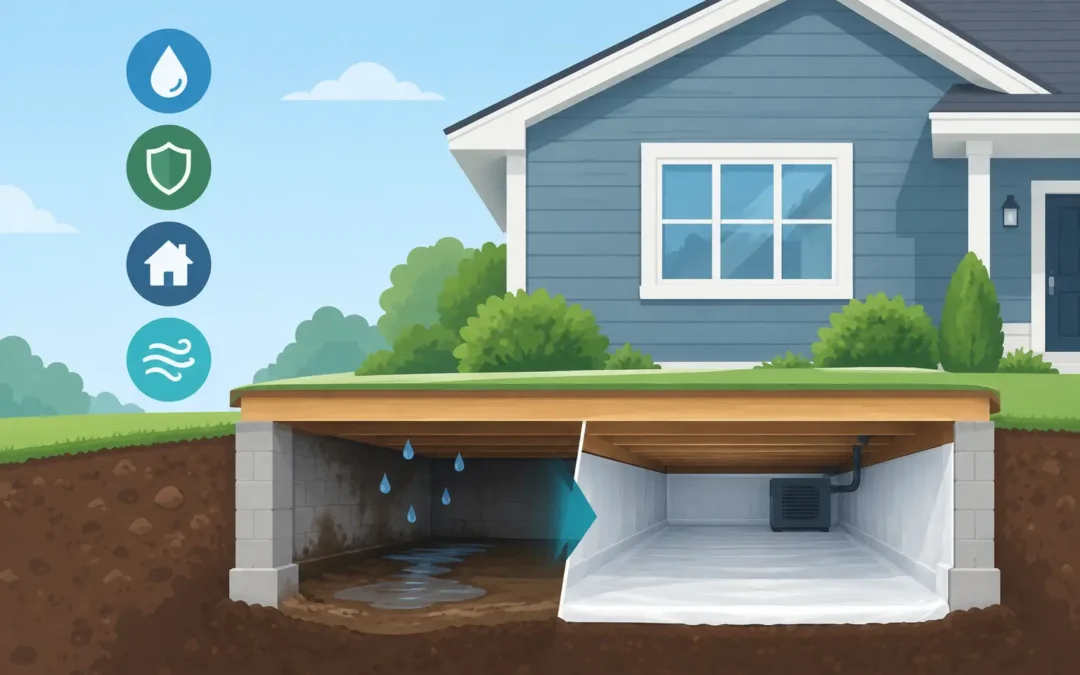
A musty odor near the floor, damp insulation, soft wood, or a spike in indoor humidity can all point to the same hidden problem: moisture below the home. Effective crawlspace moisture solutions do more than cover wet ground with plastic. They identify where water and humid air are entering, correct the source, and protect the structure and air your family breathes.
For Southern California homeowners, crawl space moisture can come from plumbing leaks, poor exterior drainage, irrigation overspray, groundwater, humid coastal air, or condensation on cold ducts and pipes. Because the space is out of sight, damage may continue for months before it becomes obvious upstairs. A professional inspection provides the clearest path to a durable repair rather than a temporary cleanup.
Why Crawl Space Moisture Needs Prompt Attention
A crawl space affects more of the home than many homeowners realize. Air naturally moves upward through a house as warm air escapes through upper levels. This means air from below the home can be drawn into living areas through gaps around plumbing, wiring, ductwork, and framing. If the crawl space smells damp or contains mold, rodent waste, or excessive humidity, those conditions can affect indoor air quality.
Moisture also changes the materials that support your home. Wood framing can absorb water, swell, and become more vulnerable to fungal decay. Metal components may corrode. Fiberglass insulation can sag and lose effectiveness when wet, while duct insulation can deteriorate and allow conditioned air to escape. Over time, the result can include uncomfortable rooms, higher heating and cooling costs, and expensive structural repairs.
Mold is another concern. Mold needs moisture and organic material to grow, and crawl spaces often provide both. Surface discoloration does not always reveal the full extent of the problem, especially beneath insulation or along floor framing. The right response depends on the moisture source, the affected materials, and whether contamination has spread.
The Right Crawlspace Moisture Solutions Start With the Cause
There is no single product that fixes every wet crawl space. A vapor barrier may be the right answer for moisture rising from bare soil, but it will not stop an active pipe leak. A dehumidifier can help manage humidity, but it should not be used to mask standing water or a drainage failure.
A thorough assessment should look for evidence of water entry, condensation, drainage patterns, plumbing concerns, damaged insulation, mold growth, pest activity, and gaps that allow outside air into the crawl space. It should also evaluate ducts, since leaky or poorly insulated ductwork can create condensation and circulate crawl space air through the home.
Repair Leaks and Direct Water Away From the Foundation
The first priority is always liquid water. A leaking supply line, drain line, water heater connection, or HVAC condensate line can keep a crawl space wet even when the soil outside appears dry. These issues need repair before moisture-control materials are installed.
Exterior conditions matter as well. Water should move away from the foundation, not collect beside it. Roof runoff, downspouts, grading, and irrigation should be reviewed when there are signs of repeated dampness. In some cases, crawl space waterproofing or drainage improvements are necessary to control water intrusion. The proper approach depends on the home’s site conditions and the volume of water involved.
Install a Proper Ground Vapor Barrier
A vapor barrier is one of the most common and effective crawl space moisture-control measures. It is a durable membrane installed over exposed soil to reduce the amount of ground moisture evaporating into the crawl space.
Installation quality matters. Thin, loosely placed plastic tears easily and leaves exposed areas where moisture can continue to enter. A professional vapor barrier installation covers the ground thoroughly, overlaps and secures seams, and works around piers, plumbing, and other obstructions. When appropriate, the material can be detailed at perimeter walls and penetrations as part of a broader encapsulation plan.
A vapor barrier is particularly valuable in crawl spaces with dirt floors, but it is not automatically a complete encapsulation system. The right scope depends on whether outside humid air, water intrusion, or internal leaks are also contributing to the problem.
Seal Unwanted Air Paths
Open vents, gaps around utility penetrations, damaged access doors, and unsealed floor openings can bring humid outside air into the crawl space. In some homes, that air meets cooler surfaces and creates condensation. In others, it carries dust, allergens, and pest entry opportunities.
Air sealing should be planned carefully. Closing openings without addressing water, ground vapor, or ventilation strategy can create new issues. A qualified contractor evaluates how the crawl space interacts with the rest of the home, then seals selected leakage paths while maintaining an appropriate moisture-management approach. This is why a complete home-performance assessment is more reliable than treating each symptom separately.
Use Dehumidification When Humidity Remains High
Even after leaks are repaired and ground moisture is controlled, some crawl spaces need active humidity control. This can be especially true in coastal areas, shaded properties, or homes with limited natural drying conditions. A crawl space dehumidifier removes moisture from the air and helps maintain conditions less favorable to mold and wood deterioration.
The equipment must be sized for the space and installed with a reliable drain route. An undersized unit may run constantly without controlling humidity, while an improperly drained unit can introduce water back into the area. Dehumidification is often most effective after vapor-barrier work and air sealing have reduced the moisture load.
When Encapsulation Makes Sense
Crawl space encapsulation is a more comprehensive moisture-control approach. It generally combines a sealed ground membrane with detailed treatment of walls, seams, penetrations, and access points. Depending on the home, it may also include insulation adjustments, air sealing, drainage measures, and dehumidification.
Encapsulation can offer substantial benefits when a crawl space has persistent humidity, mold risk, exposed soil, recurring odors, or damaged insulation. It can also make the area cleaner and easier to inspect over time. However, it is not a one-size-fits-all recommendation. Homes with active drainage problems need those problems corrected first, and homes with combustion appliances or unusual ventilation conditions require careful planning for safety and code compliance.
A licensed contractor should explain what will be sealed, how moisture will be managed afterward, and how the system will be maintained. Homeowners should be wary of proposals that promise to solve a wet crawl space without examining plumbing, drainage, or the condition of the structure.
Do Not Cover Up Mold, Contamination, or Pest Damage
Wet insulation, moldy framing, rodent droppings, and damaged ductwork should not simply be left beneath new materials. Contaminated insulation may need removal, and affected surfaces may require proper cleaning or mold remediation before moisture-control work is completed.
Rodents are closely tied to crawl space conditions. They can enter through small openings, damage insulation and ductwork, and leave contamination behind. If rodent activity is present, exclusion and cleanup should be coordinated with moisture repairs. Otherwise, new insulation or a new vapor barrier can be damaged before it has a chance to protect the home.
This is also the time to inspect ductwork. Disconnected, crushed, or leaking ducts waste energy and can pull crawl space air into the HVAC system. Repairing ducts during crawl space work may improve comfort and reduce utility costs while helping prevent condensation problems.
Signs It Is Time to Schedule an Inspection
A crawl space inspection is worthwhile when you notice a persistent earthy odor, indoor humidity, uneven temperatures, warped flooring, peeling paint, or higher-than-expected utility bills. Visible water, sagging insulation, mold-like growth, pest evidence, and deteriorating wood are more urgent signs.
You do not need to diagnose the exact cause before calling a professional. The goal is to document what is happening beneath the home and build a repair plan in the correct order: stop water, remove damaged or contaminated materials when necessary, control vapor and humid air, then restore insulation and other protective components.
For homeowners in Los Angeles, Orange, Ventura, and Riverside counties, local conditions can vary sharply from one neighborhood to the next. A crawl space near the coast may face different humidity conditions than a property farther inland, while irrigation and plumbing issues can occur anywhere. The Attic Insulation Specialists Inc. approaches crawl space work as part of the home’s full protection system, including insulation, ductwork, air sealing, mold concerns, and pest entry points.
A dry, clean crawl space is not just a hidden improvement. It helps protect the structure under your feet, supports healthier indoor air, and gives the rest of your home a better foundation for comfort. If something below the house smells, feels, or looks wrong, addressing it early is usually the most cost-effective decision.