

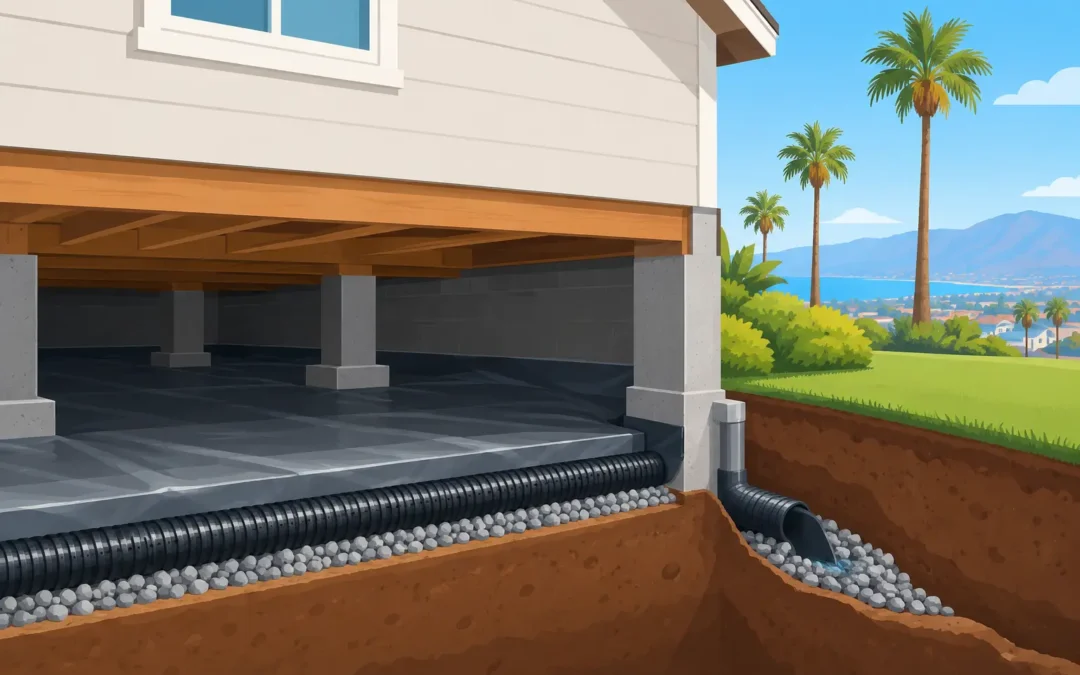
A crawl space can stay out of sight for years, then reveal its condition after one hard rain: wet soil, standing water, a musty odor, sagging insulation, or dark staining on wood framing. This crawl space drainage guide helps Southern California homeowners understand where that water comes from, which repairs solve the actual problem, and when a professional inspection is the safer choice.
Why Crawl Space Drainage Matters
A crawl space is part of your home’s protective envelope, not an empty area beneath the floor. When water enters or moisture stays trapped below the house, it can affect the wood framing, subfloor, insulation, HVAC ducts, and air your family breathes.
Moisture in the crawl space can encourage mold growth and wood-destroying organisms. It may attract pests, create odors that migrate into living areas, and reduce the effectiveness of insulation. Over time, recurring water can contribute to wood deterioration, corrosion at metal components, and conditions that make the home less comfortable and more expensive to maintain.
Southern California’s dry stretches can make crawl space moisture easy to overlook. But a concentrated winter storm, an uphill property, clogged downspouts, overwatering, or a hidden plumbing leak can introduce a surprising amount of water in a short period. The goal is not simply to dry the crawl space once. It is to identify the water path and control it before it reaches the foundation area.
Start With the Source of the Water
Drainage work works best when it follows the source. Installing a vapor barrier over wet ground, for example, may reduce ground vapor but will not stop rainwater flowing into the crawl space. A dehumidifier can lower humidity, but it cannot correct standing water or a broken drain line.
During an inspection, a qualified contractor looks for patterns: where the soil is wettest, whether moisture is near a foundation wall or plumbing line, and whether the issue appears after rain, irrigation, or year-round. Common sources include surface runoff, poor grading, roof runoff, irrigation overspray, groundwater, plumbing leaks, and condensate drainage problems.
Surface runoff and poor grading
The ground around the home should direct water away from the foundation. If soil, landscaping, hardscape, or neighboring drainage channels water toward the house, it can collect along the foundation and seep through openings into the crawl space.
This problem often appears on sloped lots or homes with limited clearance between the exterior grade and crawl space vents. Correcting it may involve reshaping soil, adjusting landscape features, installing a swale, or adding properly designed exterior drainage. The right approach depends on property slope, soil conditions, and where water can legally and safely discharge.
Roof water and downspouts
A roof sheds a large volume of water during a storm. If gutters overflow, downspouts are missing, or discharge occurs beside the foundation, that water can saturate the soil directly next to the crawl space.
Extending and directing downspout discharge away from the home is often one of the most practical early corrections. It still must be planned carefully. Water should not be sent toward a neighbor’s property, a walkway, or an area where it will return toward the home.
Plumbing, irrigation, and HVAC leaks
Not all crawl space water arrives during rain. Slow supply-line leaks, damaged drain pipes, failed appliance connections, irrigation leaks, and air-conditioning condensate lines can wet the soil for weeks before a homeowner sees visible signs upstairs.
A plumbing-related problem should be repaired before drainage or encapsulation work begins. Otherwise, the new moisture-control system is being asked to manage an active leak, which can conceal damage and delay the real repair.
Crawl Space Drainage Guide: Choosing the Right Repair
There is no single drainage product that fits every home. A durable plan usually combines source control with a crawl space system designed for the conditions below the house.
Exterior drainage and grading improvements
When water is entering from outside, exterior corrections are usually the first priority. Improving grade, routing roof runoff, correcting irrigation, and managing hillside flow may prevent water from ever reaching the foundation.
Exterior work can be more disruptive than an interior-only solution because it may involve landscaping, concrete, or access limitations. Still, it often offers the best long-term value when the source is clearly outside the home. A professional should also verify that any drainage discharge complies with local requirements and does not create a new problem elsewhere on the property.
Interior perimeter drains
If water reaches the crawl space despite exterior improvements, an interior perimeter drain may collect it before it spreads across the soil. This system typically uses a perforated drain pipe placed in a prepared trench along the inside perimeter, surrounded by drainage rock and protected with filter fabric where appropriate.
The collected water must have a reliable destination. On some properties, gravity drainage is possible. On others, especially low areas, a sump basin and pump may be necessary. The system should be sized and routed for the expected water volume, not installed as a generic fix.
Sump pumps for low points
A sump pump removes water collected at a low point in the crawl space. It is useful where gravity cannot carry water away or where intermittent heavy water intrusion needs active removal.
A pump is not a substitute for correcting bad grading or leaking plumbing. It is a component of the drainage plan. It also needs dependable power, a correctly installed discharge line, and periodic testing. Homes with significant water exposure may benefit from a battery backup or alarm, depending on the risk and the homeowner’s needs.
Vapor barriers and encapsulation
A vapor barrier covers exposed soil to reduce moisture vapor rising into the crawl space. In a full encapsulation system, the barrier is sealed at seams and foundation walls, penetrations are detailed, and the crawl space may be conditioned or dehumidified based on the home’s design.
This work is valuable for controlling ground moisture, improving air quality, and protecting insulation and ducts. But it should be installed after bulk-water issues are addressed. Trapping recurring liquid water beneath a barrier can create hidden conditions that are difficult to monitor and repair.
Warning Signs That Should Not Wait
A mild earthy smell after a rare storm may dry out with proper ventilation and no lasting damage. Repeated signs deserve a closer look, especially when they involve the structure or indoor air.
Call for an inspection if you notice persistent musty odors, wet or falling insulation, visible mold-like growth, puddles or mud below the house, rusted ducts, damp wood, peeling floor finishes, unusually high indoor humidity, or recurring rodent activity. Rodents are drawn to sheltered, damp environments and can contaminate insulation and ductwork while creating openings that worsen air leakage.
If the crawl space has standing water near electrical wiring, HVAC equipment, or damaged structural wood, avoid entering it without proper training and protective equipment. Wet, confined spaces can contain biological contamination, unstable footing, sharp debris, and electrical hazards.
What a Complete Professional Inspection Should Include
A meaningful crawl space evaluation looks beyond the wettest spot. The inspector should assess exterior drainage patterns, foundation conditions, crawl space access, ventilation openings, plumbing lines, ductwork, insulation, wood framing, pest evidence, and signs of mold or contamination.
The findings should lead to a clear sequence of work. That may mean repairing a leak first, then improving exterior drainage, removing contaminated insulation, installing an interior drain, and adding a vapor barrier or dehumidification system. Not every crawl space needs every service. The correct scope depends on how water is entering, how often it occurs, and what it has already damaged.
For homes in Los Angeles, Orange, Ventura, and Riverside counties, local soil, slope, construction age, and seasonal rain patterns can change the right solution. A licensed, insured home-performance contractor can coordinate moisture control with insulation, air sealing, duct repair, rodent proofing, and remediation so one unresolved condition does not undermine the rest of the work.
Protect the Space Before the Next Storm
Drainage is most affordable when it prevents damage rather than responds to it. Walk the exterior after a rain, watch where roof runoff lands, keep irrigation away from the foundation, and pay attention to new odors or changes in floor comfort. If water has already entered the crawl space, a careful inspection and source-first repair plan can protect the structure, the air inside your home, and the value you have built over time.