

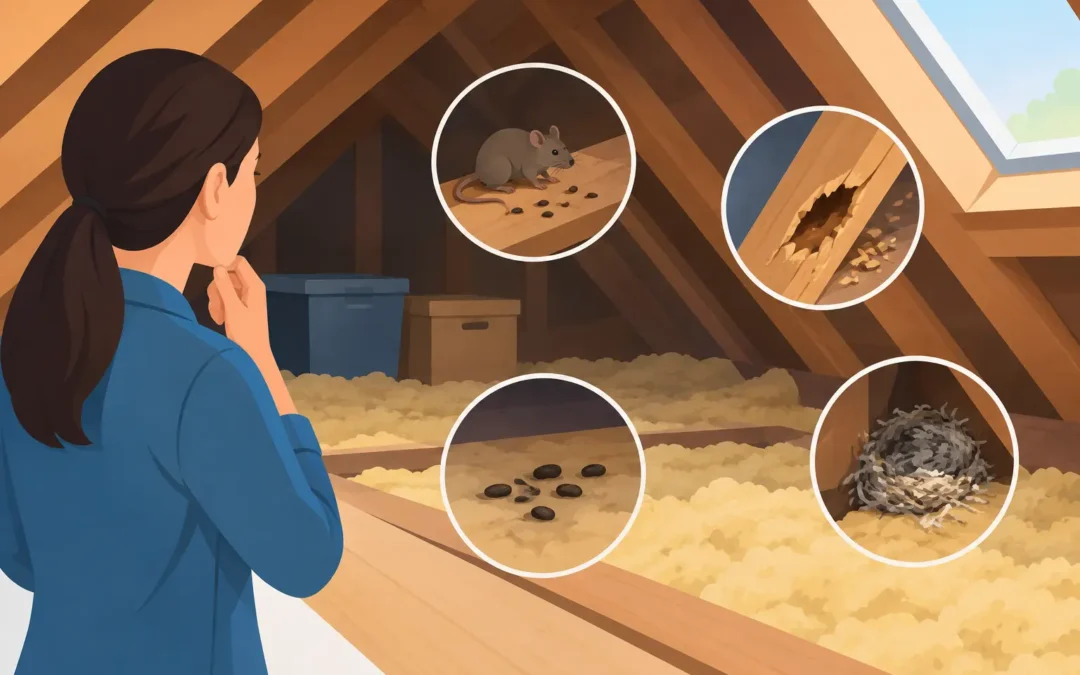
A scratching sound above the ceiling at night is easy to dismiss once or twice. But when that sound is joined by a musty odor, a new stain on the ceiling, or higher cooling bills, your attic may be signaling a larger problem. Attic pest signs often reveal more than an unwanted animal. They can point to contaminated insulation, damaged ductwork, air leaks, moisture issues, and openings that leave your home vulnerable to repeat infestations.
For Southern California homeowners, acting early can prevent a small access point from becoming an expensive cleanup and repair project. The goal is not simply to remove a pest. It is to identify how it entered, what it damaged, and what must be restored to protect indoor air quality, comfort, and the structure of the home.
Why attic pests require more than removal
An attic offers shelter, warmth, nesting material, and quiet space. Rodents can compress or tunnel through insulation, while larger animals may disturb ducts, wiring, and framing. Their urine and droppings can contaminate insulation across areas that are not visible from the attic hatch.
Pest activity also overlaps with home-performance problems. An unsealed roofline gap can let pests in and allow conditioned air out. Damaged or displaced insulation can make rooms below the attic harder to cool. If ventilation is inadequate or a roof leak is present, moisture can add mold risk to an already contaminated space.
That is why trapping alone is rarely a complete answer. Effective attic restoration typically requires exclusion work, safe cleanup, repair of affected materials, and proper insulation replacement where contamination or loss of performance warrants it.
8 attic pest signs to look for
1. Scratching, scurrying, or chewing sounds
Noises are often most noticeable after dark, when rodents are active. Light, fast scurrying may suggest mice or rats. Heavier movement, thumping, or vocal sounds can indicate squirrels, raccoons, or other larger wildlife. Sounds alone do not identify the species with certainty, but they are a clear reason to inspect rather than wait.
Chewing sounds deserve particular attention. Rodents chew constantly and may damage electrical wiring, flexible duct connections, stored materials, and wood components. A professional assessment can determine whether the noise is pest-related or caused by something else, such as loose ductwork or a roof component moving in the wind.
2. Droppings in the attic or near access points
Droppings are among the most recognizable signs of activity, especially near the attic hatch, along framing, or beside stored boxes. Fresh droppings may look darker and slightly moist, while older droppings often appear dry and faded. However, homeowners should avoid handling them or sweeping them dry.
Disturbing rodent waste can send contaminated dust into the air. The safest approach is to limit access to the area and arrange a proper inspection. A technician can evaluate the extent of contamination and recommend the appropriate cleaning, disinfection, and insulation removal process.
3. Insulation that is flattened, tunneled, or visibly soiled
Healthy attic insulation should be reasonably even and dry. Pest activity can leave runways, nesting pockets, flattened areas, and dark staining from urine. Rodents may pull apart loose-fill or batt insulation to create nests, reducing its ability to resist heat transfer.
A small affected section may be repairable, but widespread contamination usually calls for removal and replacement. Adding new insulation over soiled material does not solve the sanitation issue or restore a clean, reliable attic environment.
4. Persistent odors indoors or near the attic hatch
A stale, ammonia-like, or animal odor can travel from the attic into living areas through ceiling penetrations, recessed lights, duct gaps, and other air leaks. The smell may be stronger when the weather is warm, when the HVAC system is operating, or after an animal has died in an inaccessible area.
Odor is not always caused by pests. Moisture, mold, and old insulation can create similar conditions. That is one reason an inspection should look at the full attic system rather than treating the odor as an isolated issue.
5. Openings around rooflines, vents, and utility penetrations
Pests need a way in. Look from the ground for bent vent screens, gaps at eaves, loose fascia, broken soffits, or unprotected openings around pipes and wiring. Do not climb onto a roof or disturb an active nest to investigate.
Exclusion work must be timed correctly. Sealing an entry point while animals are still inside can create a worse problem, including animals dying in walls or finding another route into the home. A qualified contractor can identify active access points and close them after the attic has been cleared.
6. Nesting materials and shredded debris
Paper, fabric, leaves, insulation fibers, and bits of cardboard gathered in one area are common nesting clues. Rodents often choose protected corners near framing or ducts. Squirrels and larger animals may leave more substantial debris and create visibly disturbed areas.
Nesting material should not be treated as ordinary household trash. It may contain droppings, urine, parasites, or damaged insulation. Proper protective equipment and controlled removal methods help prevent contamination from spreading into the living space.
7. Grease marks, tracks, or gnaw damage
Rodents commonly travel the same routes. Their body oils can leave dark rub marks along beams, pipes, and wall edges. Dusty attic surfaces may also show small tracks or tail marks. Gnawing on wood, plastic, duct materials, or cables is another strong sign that the activity is current or recurring.
These details help identify the travel path, but the source still needs to be located. If the exterior opening remains unsealed, a cleaned attic can quickly become contaminated again.
8. Insects gathering around the attic or ceiling
Not every attic pest has fur. Carpenter ants, termites, cockroaches, and wasps can also establish activity in or around attic spaces. Swarming insects, discarded wings, insect frass, or wood that appears damaged or hollow should be evaluated promptly.
Insect activity can be related to water intrusion and decaying wood, particularly around roof leaks, vents, and poorly sealed areas. The remedy may involve pest control as well as repair of moisture sources, damaged materials, and ventilation conditions.
Which attic pests are common in Southern California?
Mice and rats are frequent attic invaders because they can enter through surprisingly small gaps. They are especially damaging when they contaminate insulation or chew flexible ducts and wiring. Squirrels may enter through roofline openings and are often heard during daytime hours. Raccoons and opossums can cause heavier physical damage due to their size and may dislodge vents or tear through weak materials.
The right response depends on the animal, the extent of contamination, and whether there is damage to building materials. A minor mouse issue caught early is different from a long-term rat infestation across a large attic. In either case, the lasting repair begins with finding the entry route and evaluating the condition of the insulation and air barrier.
What to do when you find signs of pests
First, avoid entering a heavily contaminated attic without proper protection. Do not vacuum droppings with a standard household vacuum, sweep dry waste, or place traps where you cannot safely check them. These actions can spread particles or leave a dead animal in a hidden area.
Next, document what you can see from a safe location. Note odors, sounds, stains, visible droppings, and exterior damage. If possible, take photos of accessible areas without disturbing the material. This information helps an inspector assess urgency and identify likely access points.
Then schedule a comprehensive attic evaluation. The inspection should consider pest evidence, insulation condition, air leaks, ductwork, attic ventilation, moisture staining, and structural concerns. A complete scope may include pest exclusion, attic cleaning and decontamination, removal of contaminated insulation, air sealing, duct repair, and installation of new insulation at the appropriate level.
Protect the attic after cleanup
After pests have been removed and entry points sealed, prevention depends on maintaining the full system. Exterior openings should remain protected, roof and vent repairs should be addressed promptly, and attic ventilation should be evaluated for proper operation. Clean, correctly installed insulation and air sealing help improve comfort while reducing the pathways that allow attic air and odors into the home.
For homes in Los Angeles, Orange, Ventura, and Riverside counties, high attic temperatures can make insulation and ventilation concerns more noticeable during long cooling seasons. If pest activity has displaced insulation or damaged ducts, correcting those issues can help restore more consistent indoor temperatures as well as a cleaner attic environment.
The Attic Insulation Specialists Inc. approaches attic pest damage as a home-protection issue, not just a cleanup task. A careful inspection can clarify whether you need limited repairs or a full restoration plan that addresses contamination, entry points, insulation, airflow, and lasting prevention.
The earlier you investigate attic pest signs, the more choices you have. A prompt, thorough evaluation can protect your family from contaminated air pathways and help preserve the comfort, efficiency, and value of the home beneath your roof.