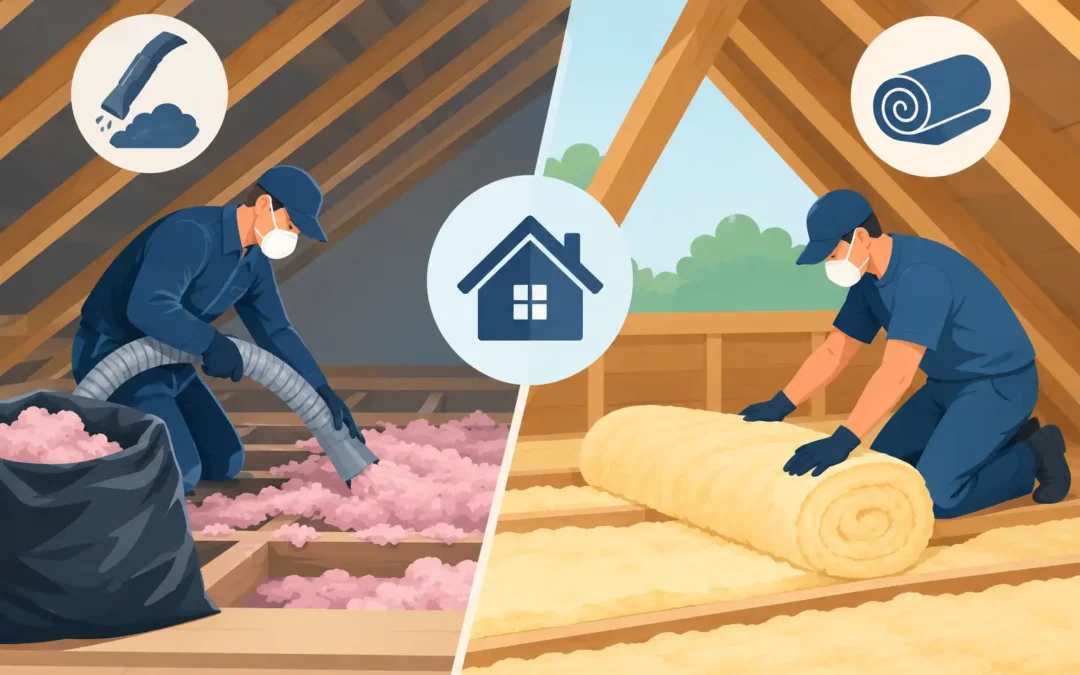
A higher utility bill or a hot upstairs room does not automatically mean all your insulation must come out. The right choice between insulation removal versus replacement depends on what is happening around the insulation: rodent activity, moisture, mold, air leaks, damaged ductwork, or simple age-related settling. A professional inspection should identify the cause before anyone adds material or removes a single bag.
For Southern California homeowners, this distinction matters. Attics can absorb extreme radiant heat, while crawl spaces may hold damp air, plumbing leaks, and pest contamination. Treating insulation as a standalone product can leave the underlying problem in place. Treating it as part of the home’s protective envelope leads to safer, longer-lasting results.
When Insulation Replacement Is the Right Move
Replacement generally means leaving existing insulation in place and installing new material where coverage or performance is inadequate. This can be a practical, cost-conscious option when the insulation is dry, clean, and free of contamination.
Fiberglass and cellulose do not necessarily need removal simply because they are older. If the material has settled below the recommended level, has thin spots around the attic perimeter, or was installed unevenly, additional insulation may restore thermal performance. The same can be true after a minor repair, provided the affected material was protected from water and remains clean.
Replacement is also appropriate when an attic has been air sealed and needs more insulation to support the improvement. Sealing openings around plumbing penetrations, wiring, recessed fixtures, top plates, and duct chases reduces the movement of conditioned air into the attic. New insulation then has a better chance to perform as intended.
Signs You May Be Able to Add Rather Than Remove
Existing insulation may be suitable for replacement or top-off work when it is dry to the touch, has no rodent droppings or nesting material, and does not carry a persistent musty or urine odor. It should also be free of visible mold growth and major debris.
A qualified contractor should still check the entire attic or crawl space, not just the area visible from the access opening. One clean-looking section does not rule out a roof leak at the far end of the attic, crushed ductwork beneath the insulation, or pest entry points along the eaves.
When Insulation Removal Is Necessary
Removal is the safer decision when insulation has become a source of contamination, moisture retention, or poor indoor air quality. Adding clean material on top of damaged insulation may hide the evidence, but it does not correct the condition affecting the home.
Rodent-contaminated insulation is one of the most common reasons for full attic removal. Droppings, urine, nesting debris, and animal carcasses can create odors and introduce contaminants into an area connected to the home through gaps, duct leaks, and ceiling penetrations. Removing affected insulation allows the attic to be cleaned, sanitized when appropriate, and inspected for entry points before new material is installed.
Water damage is another clear concern. Insulation that has been soaked by a roof leak, plumbing leak, or condensation may compress, lose insulating value, and support mold growth on nearby wood framing or drywall. The moisture source must be repaired first. Otherwise, even brand-new insulation can be damaged again.
Mold-related conditions require a careful approach. Mold may be limited to a small surface area, or it may reflect a larger ventilation, humidity, or roof-leak problem. Removal may be needed in the affected area, while remediation, moisture control, and ventilation improvements address the reason the growth occurred.
Older homes deserve special caution. If an attic contains suspected vermiculite insulation or other potentially hazardous materials, do not disturb it. Specialized evaluation is needed before removal or replacement work begins.
Insulation Removal Versus Replacement: The Real Decision Factors
The decision is not based on appearance alone. A professional assessment should consider the insulation’s condition, the home’s moisture history, pest activity, ventilation, air leakage, and the condition of ducts and framing.
Contamination and Health Concerns
Clean insulation can help regulate indoor temperatures. Contaminated insulation can work against a healthier home. Rodent waste, strong odors, and mold concerns are reasons to look beyond a simple insulation top-off.
This is especially relevant when family members notice allergy-like symptoms, musty odors, or inconsistent air quality that seems worse after the HVAC system runs. Insulation is not always the direct cause, but the attic or crawl space may be contributing to the problem through leakage pathways or damaged ductwork.
Moisture and Structural Protection
Moisture changes the equation quickly. Wet insulation has reduced performance, but the larger issue is what the moisture may be doing to the structure. Damp wood can lead to staining, mold, decay, and costly repairs if the source is ignored.
In crawl spaces, a vapor barrier, drainage correction, waterproofing measures, encapsulation, or dehumidification may be part of the proper scope. In attics, the solution may involve roof repairs, bath fan venting, ventilation improvements, or air sealing that reduces condensation. The best insulation decision follows the moisture solution, not the other way around.
Energy Performance and Comfort
If the insulation is clean but thin, replacement or added coverage can improve comfort and reduce strain on heating and cooling equipment. Yet insulation alone cannot solve every comfort complaint.
A second-floor bedroom that overheats each afternoon may also have inadequate attic ventilation, leaky or poorly insulated ducts, insufficient air sealing, or high radiant heat exposure. A radiant barrier can be useful in the right attic, particularly when combined with proper ventilation and insulation. The goal is to reduce heat transfer through the complete system rather than relying on one product.
What a Complete Insulation Project Should Include
Whether your home needs removal or replacement, the work should begin with a clear scope based on the actual conditions. A responsible project does more than place insulation between ceiling joists.
For removal work, the process may include controlled extraction of old material, attic or crawl space cleaning, disposal, pest-related sanitation, rodent proofing, and inspection of framing, wiring, ducts, and ventilation. Once the area is accessible, hidden issues are easier to identify and address.
For replacement work, the scope may include air sealing, correcting insulation depth, protecting ventilation pathways, and confirming that exhaust fans and ducts are routed properly. If ducts are leaking, disconnected, or deteriorated, repairing them before burying them under new insulation helps preserve access and improve HVAC efficiency.
Code requirements, clearances around heat-producing fixtures, and ventilation details should be handled correctly. This is one reason homeowners should work with a licensed, insured contractor rather than treating an attic as a simple storage area with loose insulation added on top.
Questions to Ask Before Approving the Work
Before making a decision, ask what caused the insulation to underperform or become damaged. Ask whether there is evidence of rodents, moisture, mold, duct failure, air leakage, or ventilation problems. You should also understand what will be removed, how the area will be cleaned, what repairs are included, and what warranty applies to the completed work.
The answer may be straightforward: add insulation after air sealing. Or it may involve a more complete restoration: remove contaminated material, clean the space, seal rodent entry points, repair ducts, correct ventilation, and install new insulation. The larger scope costs more upfront, but it can prevent repeated cleanup and protect the home’s value.
The Attic Insulation Specialists Inc. approaches these projects as home-protection work, not just insulation delivery. For homeowners in Los Angeles, Orange, Ventura, and Riverside counties, an inspection can clarify whether a clean top-off is sufficient or whether the attic or crawl space needs a full reset.
A clean, dry, properly sealed attic or crawl space is easier to maintain, healthier for the household, and better equipped to support year-round comfort. Start with the condition of the space, then choose the insulation solution that protects the home for the long term.