

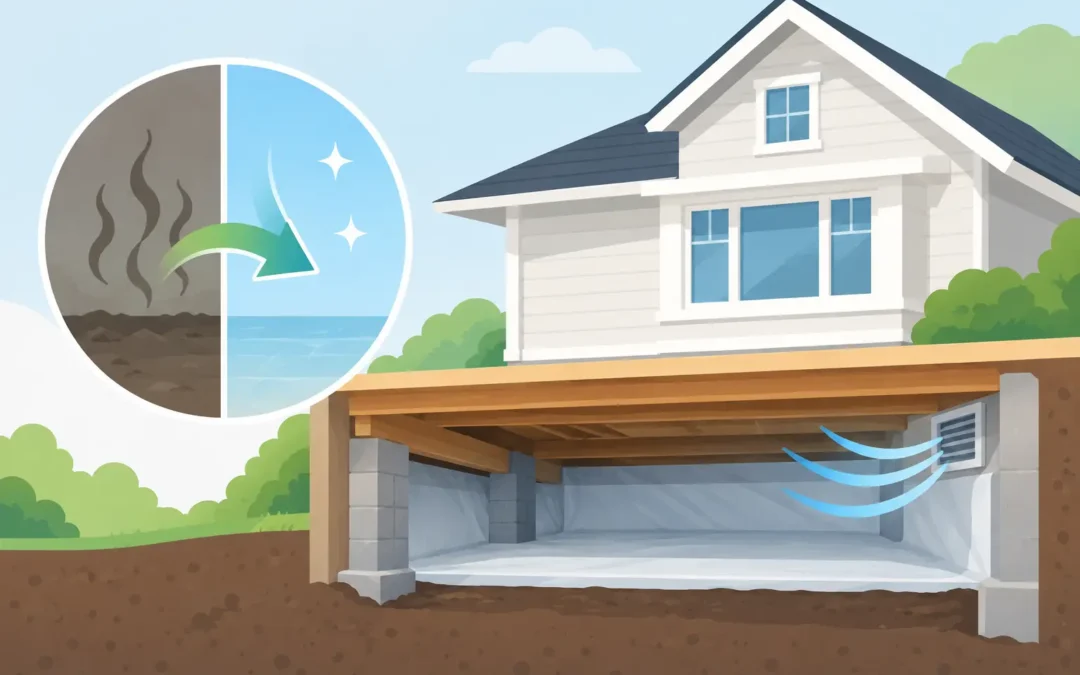
A musty smell that appears after the heat turns on, during humid weather, or when you walk into a lower-level room is often not a room-level problem. It may be air from beneath your home. Knowing how to stop crawlspace odors starts with finding the source, because fragrances, odor absorbers, and open windows cannot correct wet soil, rodent contamination, mold growth, or a plumbing leak below the floor.
For Southern California homeowners, crawl space odors can be easy to dismiss. Our dry climate does not eliminate moisture problems. Irrigation overspray, poor drainage, coastal humidity, foundation leaks, HVAC condensation, and hidden plumbing failures can all create the conditions that allow odors to develop and travel upward into living areas.
Why crawl space smells enter the house
Your home naturally moves air. Warm air rising through the attic, bathroom fans, kitchen exhaust, and leaky ducts can create a slight pressure difference that draws replacement air from lower areas of the house. If gaps around plumbing, wiring, ducts, subfloors, or wall cavities connect the crawl space to the home, that replacement air may carry odors with it.
This is why a crawl space can affect bedrooms, hallways, closets, and return-air areas even when the access door remains closed. The issue is not only unpleasant. Odors can be a warning sign of moisture damage, microbial growth, deteriorating insulation, pest activity, or contaminated debris that deserves attention before it becomes a larger repair.
Identify the odor before trying to remove it
Different smells point to different conditions. A damp, earthy, or musty odor commonly indicates moisture and possible mold or mildew growth on wood, insulation, cardboard, or stored materials. A sharp urine or ammonia smell may signal rodents or other animals. A sewage-like odor can indicate a damaged drain line, failed plumbing connection, or dry plumbing trap. Chemical or solvent-like smells may come from stored products, old building materials, or contamination that requires closer evaluation.
A crawl space inspection should look beyond the smell itself. A qualified professional checks the soil and foundation walls for moisture, looks for standing water and plumbing leaks, evaluates the condition of insulation and ductwork, identifies rodent entry points, and examines framing for staining, mold-like growth, or wood deterioration. This full-picture approach matters because several conditions can exist at once. For example, rodents may contaminate insulation after a moisture issue has already weakened the crawl space environment.
How to stop crawlspace odors at the source
The lasting solution depends on what the inspection finds. In most cases, odor control involves cleaning contamination, stopping moisture, sealing pest access, and reducing the pathways that allow crawl space air into the home.
Remove contaminated materials safely
Wet insulation, rodent droppings, nesting materials, mold-damaged debris, and decaying organic materials can continue producing odors even after the original leak or pest issue has been fixed. Leaving contaminated insulation in place also creates an ongoing indoor-air-quality concern, particularly when air leaks connect the crawl space to the rooms above.
Removal should be handled with appropriate containment and protective measures. Rodent waste and mold-affected materials should not simply be swept, blown around, or covered with new insulation. The area needs to be cleaned and treated as appropriate before replacement materials are installed. If insulation has absorbed moisture or contamination, replacement is often more reliable than trying to deodorize it.
Stop water from reaching the crawl space
Moisture control is the foundation of odor prevention. Start with the obvious sources: active plumbing leaks, dripping condensate lines, broken irrigation components, and exterior drainage that directs water toward the foundation. Water should move away from the home, not collect beside it and migrate below the structure.
The right repair varies by property. A small plumbing leak may require a targeted repair, while recurring moisture from soil or foundation conditions may call for crawl space waterproofing measures. Standing water, damp foundation walls, or consistently wet soil should never be treated as normal. Over time, excess moisture can contribute to mold growth, damaged wood, corroded metal components, insulation failure, and structural concerns.
Install or repair a ground vapor barrier
Exposed soil releases water vapor into the crawl space even when there is no visible puddling. A properly installed vapor barrier helps limit that moisture movement. It should cover the ground continuously, with seams properly overlapped and secured, rather than being loosely placed in sections that shift or leave soil exposed.
A vapor barrier is not a cure for an active leak or flooding. It works best after drainage and water-entry issues have been addressed. In a persistently damp crawl space, it may be part of a broader encapsulation or dehumidification plan designed around the home’s moisture conditions.
Address mold growth and damaged wood
Mold growth is often a symptom, not the primary problem. Cleaning visible growth without correcting the moisture source can lead to recurrence. Professional remediation focuses on identifying the affected materials, containing the work area as needed, removing or treating impacted surfaces, and correcting the water or humidity conditions that allowed growth.
Not every dark mark on framing is active mold, and not every crawl space needs extensive remediation. That is why an inspection is valuable. The goal is to match the scope of work to the actual condition of the crawl space, protect the home’s structure, and avoid paying for unnecessary work.
Seal rodent entry points and sanitize the area
Rodents often enter through small gaps around utility penetrations, foundation vents, damaged screens, and openings at the exterior perimeter. Once inside, they leave droppings, urine, nesting debris, and odor-causing contamination in insulation and on crawl space surfaces.
Trapping alone does not solve the problem if access points remain open. Effective rodent proofing combines exclusion work with cleanup and insulation replacement when contamination is extensive. Sealing the home after cleanup helps prevent the same odor problem from returning with the next infestation.
Improve crawl space air control
Ventilation is not a one-size-fits-all answer. More outside air can help in certain conditions, but it can also bring humid air into a cool crawl space, where moisture may condense on surfaces. The best approach depends on the crawl space design, local conditions, existing vents, moisture level, and how much the crawl space is connected to the home above.
In some homes, air sealing between the crawl space and living area is a major part of the solution. Sealing penetrations around pipes, ducts, and wiring helps reduce the movement of dirty, musty air into the house. Ductwork should also be inspected for damage, disconnected sections, or leakage, since return ducts can pull crawl space air directly into the HVAC system.
When humidity remains elevated after leaks and ground moisture are addressed, a crawl space dehumidifier may be appropriate. The equipment must be properly sized, drained, and maintained. A small portable unit placed in a wet, unsealed crawl space is rarely a complete answer.
What not to do when your crawl space smells
Avoid covering the problem with bleach, fragrance products, or odor bombs. These products may temporarily change the smell, but they do not remove contaminated insulation, dry the framing, repair leaks, or stop rodent activity. Bleach is also not appropriate for every material or every mold-related condition.
Do not seal crawl space vents or install a vapor barrier without first evaluating moisture sources and the overall design. A partial fix can trap moisture or conceal damage. Likewise, avoid entering a tight crawl space without proper lighting, protective equipment, and awareness of hazards such as exposed wiring, unstable access areas, rodent waste, or standing water.
When to schedule a professional crawl space inspection
Schedule an inspection when odors keep returning, become stronger after rain or irrigation, appear near HVAC registers, or accompany high indoor humidity, uneven floors, visible staining, pests, or rising energy costs. These signs can point to a connected home-performance problem rather than an isolated smell.
For homeowners in Los Angeles, Orange, Ventura, and Riverside counties, The Attic Insulation Specialists Inc. can evaluate crawl space moisture, contamination, insulation, air leaks, duct conditions, and pest entry points as one system. A clear inspection and written scope help you understand what is causing the odor and which repairs will protect your home for the long term.
A clean-smelling home should not depend on masking sprays. When the crawl space is dry, clean, protected from pests, and properly separated from living areas, you can breathe easier knowing the space beneath your floors is supporting a healthier, more comfortable home.