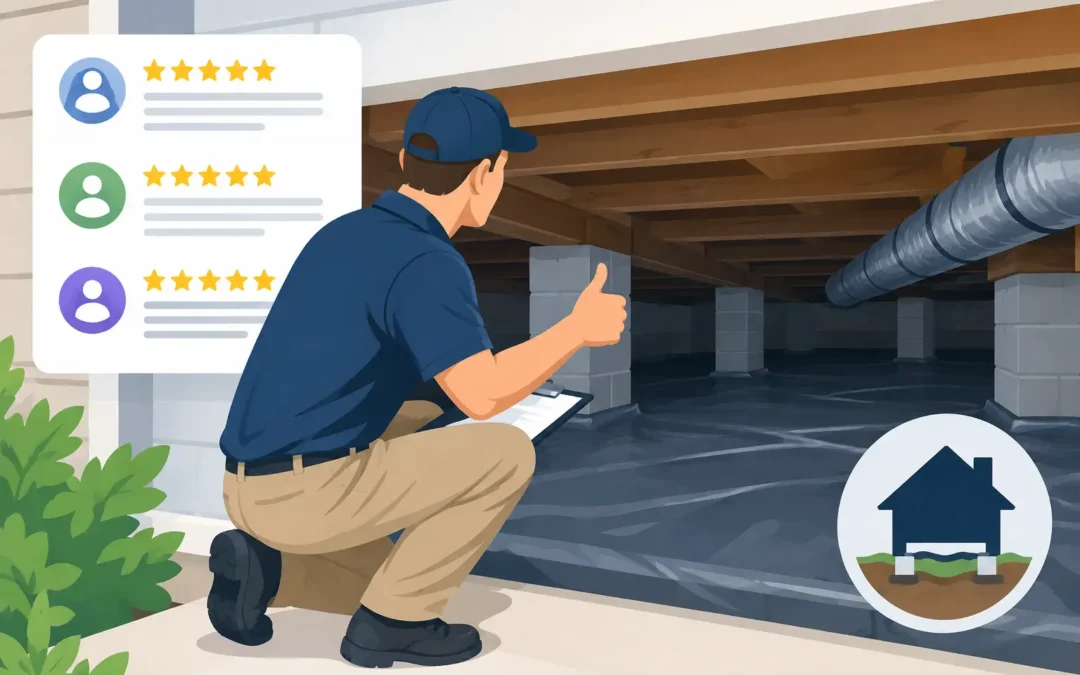
A crawl space can look dry during a quick inspection and still hold the conditions that damage a home over time: damp soil, plumbing leaks, rodent activity, mold growth, damaged insulation, and deteriorating wood. That is why crawlspace repair company reviews deserve more attention than a star rating. The right reviews can show whether a contractor identified the real source of the problem, explained the work clearly, protected the home during construction, and delivered results that lasted.
For homeowners, this research is about more than finding the lowest estimate. Crawl space work affects indoor air quality, structural materials, insulation performance, pest entry points, and the comfort of rooms above. A strong contractor should treat those concerns as connected, not as separate upsells.
Crawlspace Repair Company Reviews: Look Beyond the Rating
A high average rating is encouraging, but it does not tell the full story. Start by reading recent reviews in detail, especially those describing work similar to yours. A homeowner with standing water has different needs from one dealing with rodent-contaminated insulation, musty odors, or condensation on ductwork.
The most useful reviews explain the condition found, the recommended scope of work, and what changed afterward. Look for specific language such as a vapor barrier installed over properly prepared ground, moisture sources identified before encapsulation, damaged insulation removed, entry points sealed, or ventilation and dehumidification evaluated as part of the solution.
Specificity matters because crawl space repairs are rarely one-size-fits-all. A review that simply says, “Great job” can be genuine, but it offers little evidence about workmanship. A review describing careful inspection, clear photos, containment during cleanup, respectful crews, and a dry, cleaner crawl space after the work gives you much more to evaluate.
It also helps to notice whether reviews mention communication. Hidden-space projects can be unsettling because homeowners cannot easily see every area being repaired. A dependable contractor explains what is happening, documents conditions when appropriate, answers questions about materials, and provides a clear proposal before work begins.
Look for Evidence of Complete Problem Solving
Crawl space conditions usually have a cause. Installing a vapor barrier without addressing an active plumbing leak, poor exterior drainage, open pest gaps, or wet framing may leave the underlying risk in place. Likewise, removing mold-damaged insulation without correcting the moisture that allowed mold to grow is not a durable repair.
As you read reviews, look for signs that the company investigated the full system. That can include moisture intrusion, ground vapor, ventilation, insulation condition, air leakage into living areas, ductwork damage, rodent contamination, and structural wood concerns. Not every home needs every service, but a qualified contractor should be able to distinguish between necessary repairs and optional improvements.
In Southern California, crawl space moisture does not always come from heavy rainfall. It may be caused by a slow pipe leak, irrigation runoff, grading problems, humid coastal air, an unsealed ground surface, or condensation on cold plumbing and HVAC components. Reviews that describe a contractor tracing the source rather than immediately selling a single product are worth closer attention.
Pay Attention to Before-and-After Details
Photos and detailed descriptions can be helpful when they are tied to actual work performed. For example, a homeowner may describe sagging or fallen insulation being removed because it was wet or contaminated, followed by air sealing and installation of suitable replacement insulation. Another may explain that a vapor barrier was installed after debris removal and moisture conditions were addressed.
These details show sequence, which is important. Cleanup, repairs, moisture control, pest exclusion, air sealing, insulation, and dehumidification may need to happen in a particular order. A contractor that skips preparation can make a crawl space look improved while leaving contamination or moisture risks behind.
Verify What Reviews Cannot Prove
Even excellent customer feedback should be paired with basic contractor verification. Reviews are personal experiences, not a substitute for licensing, insurance, written scopes, and warranty terms. A company working in your home should be properly licensed for its contracted work, insured, and willing to provide a detailed proposal.
The proposal should identify the areas being addressed and the materials or methods being used. If mold, water damage, rodents, or damaged structural components are present, ask how those conditions will be handled and whether other qualified trades may be needed. Honest contractors do not overstate what a single service can solve.
Ask about permits and code requirements when the work involves structural repairs, electrical equipment, mechanical ventilation, or significant alterations. Requirements vary by location and project scope. A professional should be able to explain whether permits apply rather than treating them as an inconvenience.
Warranty language deserves the same attention. A warranty can be valuable, but only if you understand what it covers. Does it apply to labor, materials, pest exclusion, moisture-control components, or a particular repair? What maintenance or site conditions are required? Clear answers are more meaningful than broad promises.
Read Negative Reviews With Context
No established service contractor is likely to have a perfect review history. The better question is how the company responds when a concern arises. Look for calm, professional responses that address the issue without disclosing personal details or blaming the homeowner.
Some complaints may relate to scheduling, pricing, or expectations rather than poor workmanship. Those issues still matter, but read the review carefully. Was the scope changed because the crew found hidden damage? Was the homeowner notified and given options? Was the final invoice consistent with approved work? Crawl spaces often reveal conditions that were not visible during an initial visit, so change orders are not automatically a warning sign. Unexplained changes are.
Be cautious when several reviews repeat the same concern, such as incomplete cleanup, poor communication, pressure to sign immediately, unexplained added charges, or moisture returning soon after the work. Repetition can reveal a process problem that a single review cannot.
Questions to Ask After Reading Reviews
Once you have narrowed your choices, use the reviews to guide your conversation with each contractor. Ask how they determine whether the problem is ground moisture, a plumbing leak, drainage, condensation, pests, or a combination of factors. Ask what they would inspect before recommending encapsulation, insulation replacement, or a dehumidifier.
You should also ask how the crew protects your home during debris removal and remediation, how they handle contaminated materials, and whether they can show you the condition of the crawl space before and after the project. If there are ducts, wiring, plumbing, or framing in the work area, ask how those components will be protected and evaluated.
A dependable answer should be clear without being overly simplified. For example, a vapor barrier can reduce moisture vapor rising from soil, but it cannot stop water from an active leak or poor drainage. A dehumidifier can help control humidity, but it should not be used to hide an unresolved water source. The contractor should explain these trade-offs in plain language.
Choose the Company That Makes the Scope Make Sense
The lowest quote can be appropriate when two contractors are proposing the same quality of work, materials, preparation, and warranty coverage. In practice, estimates often differ because the scopes differ. One may include debris removal, rodent-proofing, air sealing, moisture remediation, and insulation replacement, while another covers only a thin ground liner.
Compare proposals line by line before deciding. If one scope is more comprehensive, ask why each element is included and what risk it addresses. The goal is not to purchase the most services. It is to correct the conditions that threaten your home without paying for work your crawl space does not need.
Homeowners in Los Angeles, Orange, Ventura, and Riverside counties should also consider local experience. A contractor familiar with the region is more likely to recognize the effects of coastal humidity, seasonal rain, aging plumbing, hillside drainage, and common pest activity. The Attic Insulation Specialists Inc. approaches crawl space work as part of a home-protection system, connecting moisture control, insulation, air quality, pest concerns, and long-term comfort.
A well-chosen contractor will not rely on reviews alone to earn your trust. They will confirm the conditions in your crawl space, provide a written plan, explain the purpose of each repair, and stand behind the completed work. That is the kind of confidence worth bringing into a part of the home you rarely see but depend on every day.