

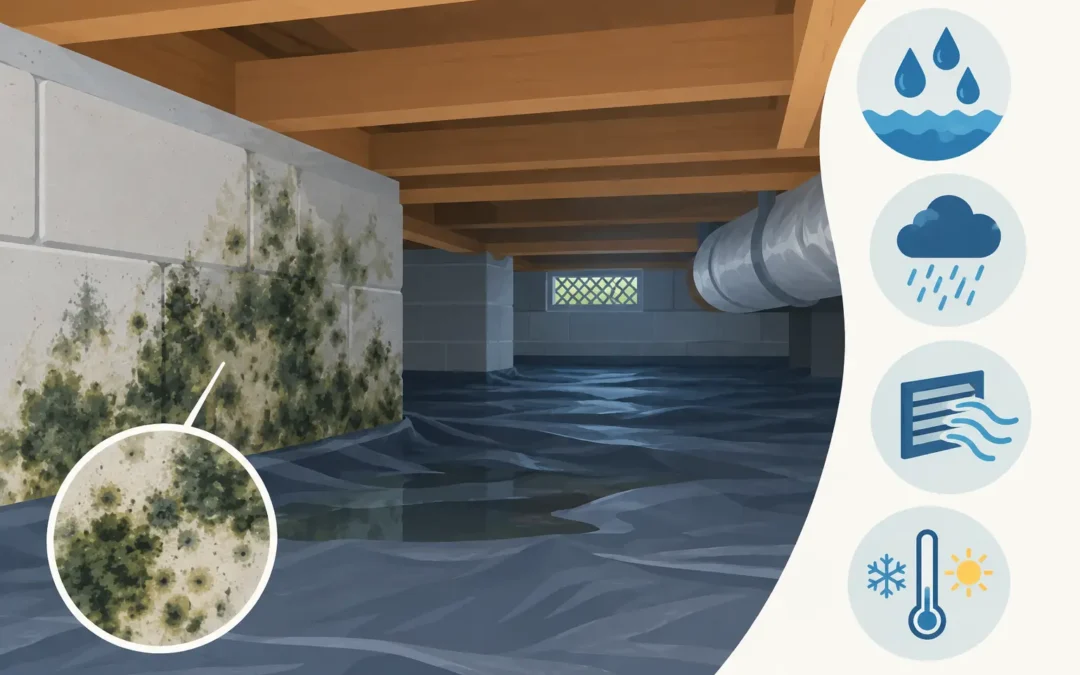
A musty odor near the floor, damp insulation beneath the house, or dark growth on crawl space framing is not a cosmetic issue. Homeowners often ask what causes crawlspace mold, especially when there has been no obvious flood or major plumbing emergency. In most cases, mold is the visible result of a hidden moisture problem that has been developing beneath the home for months or years.
Crawl spaces can be easy to ignore, but they affect the structure above them. Moisture can damage wood framing, ruin insulation, attract pests, and contribute to stale or contaminated air moving into the living space. Finding the source of that moisture is the first step toward a lasting repair.
What Causes Crawlspace Mold?
Mold needs three basic things to grow: moisture, organic material, and time. A crawl space naturally contains plenty of food sources, including wood joists, subflooring, paper-faced insulation, dust, and debris. The real question is where the moisture is coming from and why it is not drying out.
The answer is not always one issue. A plumbing leak may wet the soil and insulation, while poor drainage keeps the area damp and blocked vents prevent the space from drying. Effective mold correction addresses the full moisture path, not just the growth visible on a beam or foundation wall.
Ground moisture rising into the crawl space
Bare soil is one of the most common sources of crawl space moisture. Water vapor naturally moves upward from the ground. During damp weather, after irrigation, or where groundwater is present, that vapor can collect under the home and raise humidity levels high enough for mold growth.
A properly installed vapor barrier helps limit this moisture migration. Thin, torn plastic sheeting or a barrier that does not cover the full ground surface may not provide adequate protection. The seams, edges, piers, and wall transitions matter as much as the material itself.
Plumbing leaks and drainage failures
A slow leak under a kitchen, bathroom, laundry room, or water heater can release a surprising amount of water over time. Unlike a burst pipe, a small supply-line leak or drain leak may go unnoticed until insulation sags, wood darkens, or mold odor becomes noticeable indoors.
Exterior drainage can create the same problem. Gutters that overflow, downspouts that discharge beside the foundation, grading that slopes toward the house, and irrigation aimed too close to the home can allow water to enter or collect beneath the crawl space. In Southern California, a crawl space can remain dry for long periods, then take on significant water during a heavy rain event if drainage is poor.
Humid air and condensation
Warm, humid air can enter through foundation vents, gaps around pipes, open access doors, and unsealed duct penetrations. When that air reaches cooler surfaces beneath the home, it can condense on ductwork, pipes, metal components, and wood framing.
This is why simply adding more ventilation is not always the right answer. Traditional vented crawl spaces may dry effectively in some conditions, but outside air can make moisture worse when it is humid. The correct approach depends on the home’s design, local conditions, drainage, duct layout, and whether the crawl space is being converted into a controlled, encapsulated area.
Damaged insulation and ductwork
Insulation affected by moisture cannot perform as intended. Fiberglass insulation can hold dust and moisture, while rodent activity or falling insulation creates open pathways for humid air. Wet or contaminated insulation may also become a mold reservoir rather than a barrier to heat transfer.
Leaky HVAC ducts add another layer of concern. Cool air leaking into a humid crawl space can create condensation, while gaps in return ducts may pull musty crawl space air into the HVAC system. That combination can increase cooling costs and affect indoor air quality. Repairing moisture damage without inspecting nearby insulation and ductwork can leave an important part of the problem unresolved.
Rodents, debris, and organic contamination
Rodents do not directly cause every mold problem, but they can make one much harder to control. Nesting materials, droppings, urine, damaged insulation, and torn vapor barriers add contamination and create paths for moisture and outside air. Stored cardboard, wood scraps, leaves, and construction debris also hold moisture and provide material mold can grow on.
A crawl space cleanup may be necessary before moisture-control work can be completed correctly. Removing contaminated insulation and debris gives a contractor a clear view of leaks, damaged framing, pest entry points, and areas that need treatment.
Why Crawlspace Mold Matters Above the Floor
Mold in a crawl space does not always stay isolated below the house. Air can move upward through gaps around plumbing, wiring, recessed fixtures, duct openings, and flooring transitions. This upward movement, often called the stack effect, can carry odors and airborne particles into rooms where your family spends time.
Not every musty smell means there is a serious mold condition, and not every dark mark on wood is active mold. Some wood discoloration may be old staining. However, persistent odor, visible growth, damp wood, recurring condensation, or damaged insulation deserves a professional inspection. The risk is not limited to air quality. Long-term moisture can weaken subflooring, promote wood rot, corrode metal connections, and reduce the value of the home.
Signs the Moisture Problem Is Active
The most obvious sign is visible mold growth on joists, subflooring, insulation facing, or stored materials. But many crawl space problems show up in less direct ways. Floors may feel unusually cold, rooms may develop a lingering earthy odor, or utility bills may rise when wet insulation and leaking ducts make heating and cooling equipment work harder.
Other warning signs include standing water, damp soil, rust on metal components, white mineral deposits on foundation walls, sagging insulation, and condensation on ducts or pipes. If the smell becomes stronger after rain or when the air conditioner runs, that detail can help identify the likely moisture source.
The Right Fix Depends on the Water Source
Surface cleaning alone does not solve crawl space mold. Bleach applied to framing, for example, may lighten staining but will not stop moisture entering from the soil, a plumbing leak, or poor drainage. It can also create a false sense that the problem has been corrected while growth continues in insulation or hidden areas.
A complete solution often includes several connected steps: correcting plumbing or exterior water entry, removing wet or contaminated materials, treating mold-affected surfaces as appropriate, sealing pest entry points, installing a properly detailed vapor barrier, and improving the crawl space moisture strategy. Some homes benefit from crawl space encapsulation and dehumidification; others need targeted waterproofing, drainage correction, or ventilation adjustments.
There are trade-offs. Encapsulation can provide stronger control over ground moisture and outside air, but it must be installed carefully around foundations, access points, utilities, and combustion appliances. A dehumidifier can help maintain a dry environment, but it is not a substitute for fixing a leak or standing-water condition. The goal is a crawl space that stays dry by design, not one that relies on temporary cleanup.
When to Call a Professional
Homeowners can sometimes spot a disconnected downspout or a small plumbing drip. Entering a tight, damp crawl space to inspect suspected mold, rodent contamination, damaged wiring, or compromised framing is a different matter. Conditions can be unsafe, and it is easy to miss the actual source of the moisture.
A qualified crawl space inspection should look beyond visible mold. It should evaluate soil moisture, vapor barriers, drainage, plumbing, ducts, insulation, ventilation, pest activity, structural wood, and access conditions. For homeowners in Los Angeles, Orange, Ventura, and Riverside counties, this whole-system approach is especially useful because homes vary widely in age, foundation design, and exposure to coastal humidity, irrigation, and seasonal rain.
The Attic Insulation Specialists Inc. approaches crawl space conditions as a home-protection issue, connecting mold remediation with moisture control, insulation, air sealing, ductwork, and pest-related repairs when needed. A dry, clean crawl space protects more than the area beneath your floor. It helps protect the air your family breathes, the comfort of your rooms, and the structure that supports your home.
If you notice musty odors, damp insulation, or signs of water beneath the house, address the source before the next wet season turns a manageable condition into a larger repair.