A faint scratching sound above the ceiling, a new musty odor, or insulation pushed into uneven trails can point to a problem that is already affecting more than your attic. Rodent proofing attic spaces is not simply about keeping pests out. It is about protecting the insulation, ductwork, wiring, framing, and indoor air your family depends on.
In Southern California, rodents can enter through surprisingly small gaps around rooflines, utility penetrations, vents, eaves, and damaged screens. Once inside, they seek warm, sheltered areas where they can nest undisturbed. An attic with accessible insulation and little foot traffic gives them exactly that.
The right solution starts with finding out how they got in, how far the contamination has spread, and whether moisture, ventilation, or damaged construction has made the area more vulnerable. Sealing a visible hole without addressing those conditions may only move the problem to another part of the home.
Why attic rodents create a larger home problem
Rodents do not stay neatly contained in one corner of an attic. They travel along framing, ducts, pipes, and wall cavities. As they nest, they can compress or tear insulation, reducing its ability to slow heat transfer. That can make rooms harder to cool during hot weather and may contribute to higher utility costs.
Droppings, urine, nesting materials, and carcasses can also contaminate insulation. Air from an attic can enter the living space through recessed lights, ceiling openings, gaps around plumbing, duct leaks, and other pathways. This is why a rodent issue can become an indoor-air-quality concern, especially for households with allergies, asthma, young children, or older family members.
Damage to ductwork is another common concern. Flexible ducts can be torn, disconnected, or crushed by rodent activity. A damaged duct may leak conditioned air into the attic while drawing dusty, unconditioned attic air into the HVAC system. Wiring should also be evaluated carefully, since gnawed electrical insulation can create a safety concern that requires appropriate repair.
Signs your attic may need rodent proofing
Homeowners often notice the problem indirectly before they see an animal. Nighttime noises above ceilings are one clue, but silence does not rule out activity. Rodents may be active while the home is empty or in areas that are difficult to hear.
Look for droppings near the attic access, chewed cardboard or stored items, insulation that appears tunneled or flattened, greasy rub marks near openings, and unusual odors. Outside, damaged vent screens, gaps at roof intersections, loose fascia, openings around pipes, and separated construction joints can all provide entry points.
A sudden change in heating or cooling performance can be relevant as well. If attic insulation has been disturbed or ducts have been damaged, one part of the home may feel noticeably warmer or cooler than the rest. These comfort issues are not always caused by rodents, but they are worth evaluating as part of a complete attic inspection.
Rodent proofing an attic requires more than traps
Trapping can reduce active rodent populations, but it does not correct the reason rodents entered the structure. Effective rodent proofing combines exclusion, cleanup, repair, and prevention. The order matters.
1. Inspect the attic and exterior entry points
A thorough inspection should assess the attic itself and the exterior areas that connect to it. Professionals look at roof edges, attic and gable vents, soffits, eaves, utility lines, plumbing penetrations, chimney areas, garage connections, and other transition points.
The goal is to identify active entry routes, not just obvious holes. Mice can pass through openings around one-quarter inch wide. Rats need somewhat more space, but gaps around pipes, vents, and damaged building materials may still be enough. A small opening can become a larger one when rodents chew or pry at weakened materials.
The inspection should also identify the condition of the insulation, ductwork, ventilation components, electrical wiring, and framing. This helps determine whether exclusion alone is appropriate or whether the project needs contamination removal and repairs.
2. Remove contaminated materials safely
If rodents have heavily soiled the insulation, simply placing new insulation over it is not a clean or durable remedy. The contamination remains below, odors can persist, and damaged insulation will continue to provide poor thermal performance.
Professional attic cleaning and insulation removal can contain and remove affected material while reducing the chance of spreading dust and contaminants into living areas. The attic can then be cleaned and treated as appropriate before new insulation is installed.
The scope depends on what is found. A limited nest in an otherwise clean attic may require a different approach than widespread droppings and urine contamination throughout the insulation. The condition of the home, the age of the insulation, and the presence of moisture or mold all affect the recommended solution.
3. Seal openings with durable materials
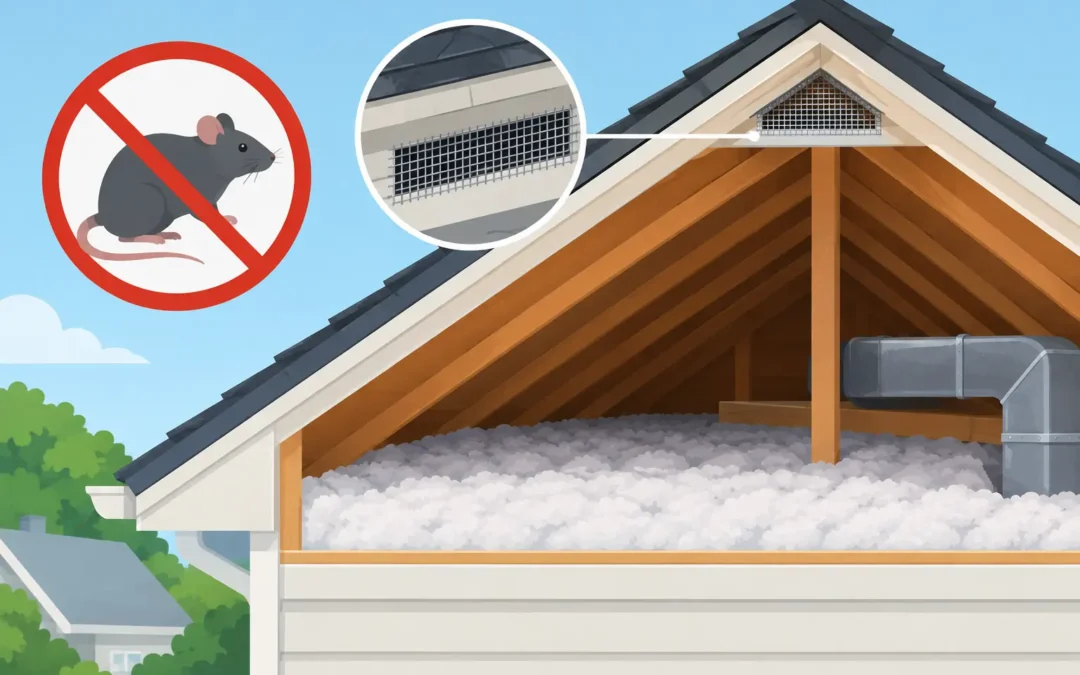
Exclusion work should use materials suited to the location and type of opening. Durable metal mesh, properly fitted vent covers, flashing, repair materials, and secure sealing methods are more dependable than temporary foam or loosely attached screening alone. Rodents can chew through many common materials, and weather exposure can cause poor repairs to fail.
Attic ventilation needs special attention. Blocking a vent completely may keep out pests, but it can also interfere with needed attic airflow and contribute to heat buildup or moisture problems. The solution is to protect the opening with an appropriate rodent-resistant cover while preserving the ventilation design required for the home.
This is one reason rodent proofing should be coordinated with a broader home-performance assessment. A home needs to keep pests out without trapping excess heat or moisture inside.
4. Repair insulation, ducts, and air leaks
After cleanup and exclusion, the attic should be restored as a working part of the home’s thermal and air-control system. New insulation may be needed where existing material has been contaminated, compressed, or removed. Proper insulation levels help reduce heat transfer and support more consistent indoor comfort.
Air sealing is often valuable at the same time. Gaps around ceiling penetrations allow conditioned air to escape and can allow attic air, dust, and odors to move toward the living space. Sealing these pathways before insulation is installed helps improve both energy efficiency and air quality.
If ducts are torn, disconnected, or poorly supported, they should be repaired or replaced rather than covered with insulation and forgotten. A clean, rodent-proofed attic will not deliver its full benefit if the HVAC system is still losing air above the ceiling.
When moisture and rodents are connected
Rodent activity is not always a stand-alone issue. A roof leak, condensation around ducts, inadequate attic ventilation, or plumbing leak can create damp conditions that damage materials and make an attic more attractive to pests. Moisture can also lead to mold growth, wood deterioration, and insulation failure.
For that reason, a careful inspection should look for staining, wet insulation, rusted vent components, darkened framing, and musty odors. Excluding rodents without correcting a moisture source may protect the opening while allowing another expensive problem to continue out of sight.
In homes with both contamination and moisture concerns, coordinating rodent proofing, cleaning, mold remediation where needed, ventilation improvements, and insulation replacement can prevent repeated disruption. It also avoids installing new materials over unresolved conditions.
Why professional attic work is often the safer choice
Attics are difficult work areas. Low clearance, unstable footing, exposed nails, electrical components, heat, and contaminated insulation can make a do-it-yourself approach risky. It is also easy to miss hidden entry points or damage ventilation details while trying to seal them.
A licensed and insured contractor can evaluate the attic as a system, recommend repairs that fit the home, and complete the work with attention to building requirements and long-term performance. For homeowners in Los Angeles, Orange, Ventura, Riverside, and San Bernardino counties, The Attic Insulation Specialists Inc. can assess rodent-related attic damage alongside insulation, air sealing, ductwork, ventilation, moisture, and cleanup needs.
If you suspect activity above your ceiling, do not wait for a stronger odor or a larger repair bill. An attic inspection can give you a clear picture of what is happening overhead and a practical plan to restore a cleaner, safer, more comfortable home.