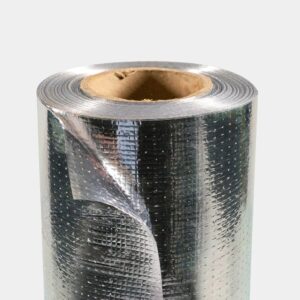

Description
Double-Sided Radiant Barrier: Block Roof Heat Before It Reaches Your Insulation
On a summer afternoon in the San Fernando Valley or Las Vegas, the underside of a roof deck can radiate enough heat to push attic air well past 130°F. Insulation slows that heat down, but a radiant barrier reflects most of it back before it gets there. Double-sided foil reflects from both faces, so it works whichever side faces the roof and keeps the attic side from re-radiating heat.
Specifications
| Type | Double-sided aluminum foil |
|---|---|
| Reflectivity | 97% |
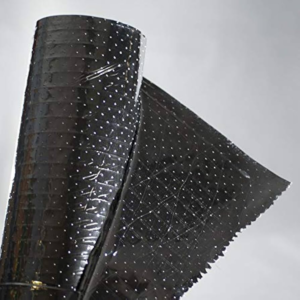
| Permeability | Perforated (vapor-permeable) |
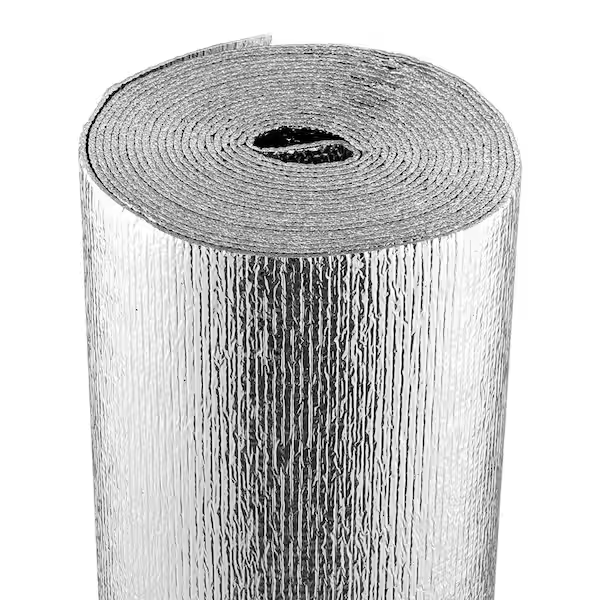
| Roll size | 4 ft x 250 ft |
| Coverage | 1,000 sq ft per roll |
| Sold by | Roll |
How to Install It
- Staple to the underside of the rafters or truss top chords, leaving an air gap below the roof deck. Radiant barriers need an air space to work.
- Overlap seams by a few inches; small gaps are fine.
- Keep it clear of soffit and ridge vents so attic ventilation isn’t blocked.
- Don’t lay foil directly on attic-floor insulation; dust buildup there reduces its effect over time.
How Many Rolls?
Measure the roof area (not the floor). A 1,500 sq ft single-story home with a moderate-pitch roof typically has roughly 1,700 to 1,900 sq ft of roof deck: about 2 rolls.
Buy It or Have It Installed
Order rolls here, or let our licensed crew (CSLB #1139733) install it along with new insulation. See our radiant barrier installation service and attic ventilation.
Double-Sided Perforated Radiant Barrier Foil FAQ
- Does a radiant barrier replace attic insulation?
- No. A radiant barrier reflects radiant heat; insulation slows conducted heat. They work best together.
- Is double-sided better than single-sided radiant barrier?
- Double-sided reflects on both faces and is more forgiving to install. Single-sided costs less and works well when the foil side faces the attic air space correctly.