

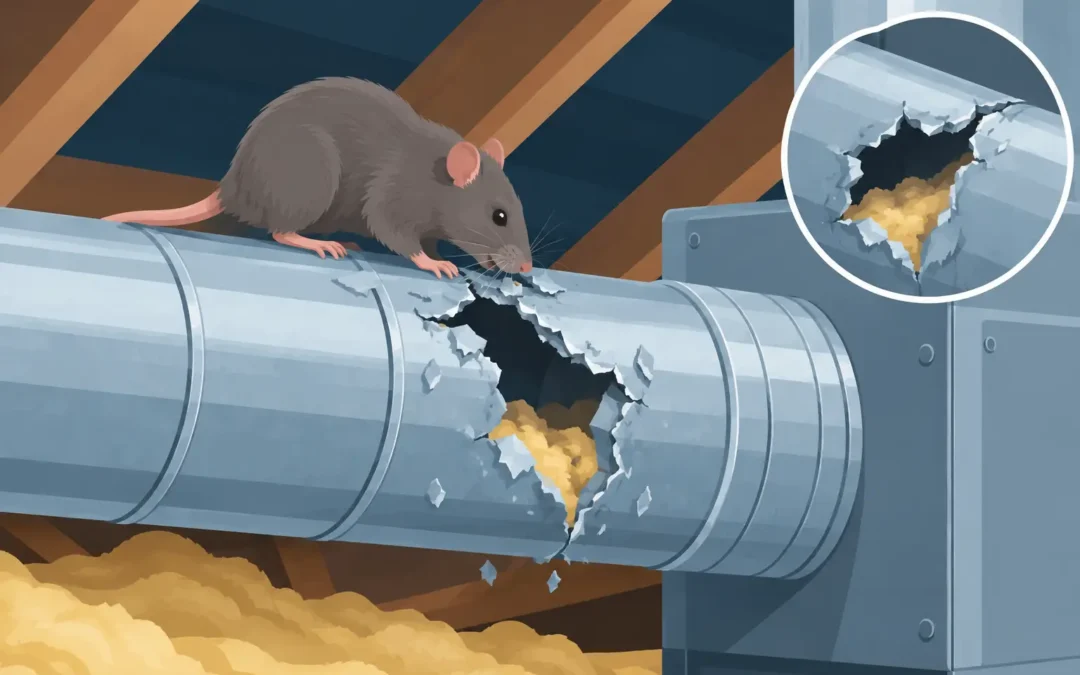
A rodent problem in the attic or crawl space is not limited to droppings and damaged insulation. Can rodents damage ductwork? Absolutely. Mice, rats, and other pests can tear flexible ducts, chew wiring near HVAC equipment, build nests around duct runs, and leave contamination that may affect the air moving through your home.
For Southern California homeowners, this damage often stays hidden until the warning signs show up indoors: rooms that will not cool evenly, an unexplained jump in utility costs, dusty air from supply vents, or a persistent odor when the HVAC system runs. Addressing the rodent activity without inspecting the duct system can leave an expensive comfort and air-quality problem behind.
How Rodents Damage Ductwork
Most residential duct systems are not designed to withstand animal activity. Flexible ductwork is especially vulnerable because it has a thin inner liner, insulation layer, and outer vapor barrier. Rats can chew through those layers to create access paths or nesting material. Even a small opening can release conditioned air into an attic or crawl space instead of delivering it to the intended room.
Rodents also damage ductwork by pulling apart taped connections, crushing unsupported sections, and nesting against ducts. A nest may compress insulation around a duct or block airflow near registers and return openings. In some cases, animals chew nearby thermostat wires, refrigerant-line insulation, condensate lines, or electrical wiring. The duct damage may be only one part of a larger attic or crawl space repair need.
Metal ductwork is more resistant to chewing, but it is not immune to rodent-related problems. Pests can enter through loose connections, damaged boots, unsealed penetrations, or open returns. They may contaminate the exterior of metal ducts, dislodge insulation, or create nesting areas around joints that are already leaking.
Why Damaged Ducts Affect More Than Energy Bills
A torn or disconnected duct loses heated or cooled air before it reaches your living space. Your HVAC system may then run longer to satisfy the thermostat, increasing energy use while certain rooms remain too warm in summer or too cool in winter. In an attic exposed to Southern California heat, even a modest duct leak can create a noticeable comfort difference.
The greater concern is often contamination. Rodent urine, droppings, nesting debris, and dust can accumulate around or inside compromised ductwork. If rodents have entered a return duct or an opening communicates with the air stream, contaminants may be drawn toward the HVAC system and circulated through the home.
The level of risk depends on where the damage is located and whether the duct liner has been breached. Not every rodent nest near a duct means the entire system needs replacement. But damaged, contaminated, or heavily soiled flexible ducts are generally not a good candidate for a simple patch. The interior liner and insulation can retain odors and contaminants that are difficult to remove reliably.
Signs Rodents May Have Damaged Your Ductwork
Some duct problems are visible during an attic or crawl space inspection, but homeowners usually notice the effects first. Pay attention to a new stale or animal-like odor when the air conditioner or furnace starts, especially after the system has been off for several hours.
Uneven temperatures are another common clue. A bedroom with weak airflow, a room that never seems to cool, or a vent that suddenly produces less air may point to a torn, crushed, or disconnected supply duct. Higher utility bills without a change in household usage can also indicate conditioned air is being lost outside the living area.
Other signs of active rodent activity include scratching sounds, droppings in the attic or crawl space, chewed insulation, grease marks along framing, and shredded paper or insulation gathered around ducts. These signs do not confirm the condition of the duct interior, but they do justify a professional inspection.
Why Sealing the Holes Alone Is Not Enough
Rodent proofing is essential, but it should be completed as part of a coordinated repair plan. If entry points are sealed before active rodents are removed, animals can become trapped inside the structure. If duct damage is repaired before exterior access points are secured, new rodents may return and cause the same problem again.
A complete approach begins by identifying entry points around rooflines, vents, utility penetrations, crawl space openings, and construction gaps. Rodent exclusion materials must be installed correctly and in locations that will hold up over time. Foam alone, for example, is not a durable barrier where rodents can chew through it.
Next, the attic or crawl space should be evaluated for contaminated insulation, damaged vapor barriers, moisture concerns, and compromised ducts. This matters because rodents are often attracted to protected, undisturbed spaces. A damp crawl space, poorly sealed attic opening, or damaged vent screen can create conditions that make repeat activity more likely.
Repair or Replace: What Is the Right Choice?
The right ductwork solution depends on the material, extent of damage, contamination level, and overall age of the system. A secure metal duct connection with minor exterior damage may be repairable through proper sealing, fastening, and insulation restoration. A localized tear in otherwise clean flexible duct may also be evaluated for repair.
Replacement is often the safer long-term choice when flexible ducts are chewed through, crushed, disconnected in multiple areas, water-damaged, or contaminated with rodent waste. Replacing affected runs removes compromised materials rather than covering up an underlying hygiene and performance issue.
Duct replacement also creates an opportunity to correct installation problems that may have existed before the rodent issue. Properly sized ducts, supported runs, sealed joints, and adequate insulation help the HVAC system deliver air more efficiently. The goal is not simply to make the ducts look intact. It is to restore safe airflow, improve comfort, and reduce unnecessary energy loss.
What a Professional Inspection Should Cover
A qualified attic or crawl space inspection should look beyond visible droppings. The inspection should identify active entry points, determine whether rodents have reached the duct interior, and assess the condition of insulation and surrounding building materials.
The contractor should also check for disconnected ducts, torn flex duct, damaged boots, loose registers, failed duct seals, compressed insulation, and signs of moisture. Moisture matters because wet insulation and condensation can create conditions that support mold growth and further reduce the effectiveness of the home’s thermal barrier.
For homes with significant rodent contamination, cleanup should be handled with appropriate safety procedures rather than dry sweeping or disturbing droppings. Contaminated insulation may need removal, followed by sanitation, air sealing, rodent proofing, duct repair or replacement, and installation of clean insulation where needed. Completing these steps in the right order helps prevent a clean new duct system from being exposed to the same problem.
Protecting Ductwork From Future Rodent Damage
The most reliable prevention is to make the attic and crawl space less accessible and less hospitable to pests. Maintain secure vent screens, seal construction gaps around penetrations, keep crawl space access doors in good condition, and correct water intrusion that can attract animals or damage building materials.
Homeowners should also avoid treating insulation as a separate issue from pests, airflow, and moisture. Insulation that has been tunneled through or contaminated no longer performs as intended. Ducts that are buried under disturbed insulation can be difficult to inspect and may continue leaking for years.
If you suspect rodent activity near your HVAC ducts, act before the next heating or cooling season places added strain on the system. A thorough inspection can identify whether you need exclusion work, decontamination, duct repair, insulation replacement, or a combination of services. The best result is a home that is sealed against pests, cleaner to live in, and more comfortable room by room.